Book Extract
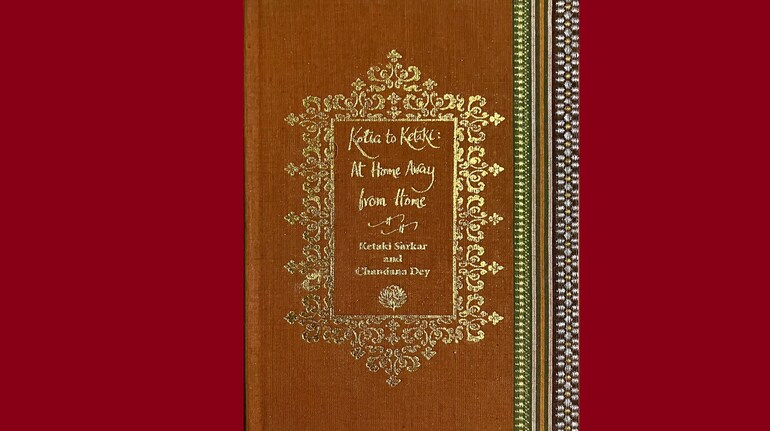
Excerpted with permission from the publisher Kotia to Ketaki: At Home Away from Home, Ketaki Sarkar and Chandana Dey, published by Writers Workshop India.
*******
I was not very interested in my studies at school. All I knew was that I had to go to school everyday and do my homework. I loved music. My cousin Dora began giving me lessons in piano. I recollect how thrilled I was when after a year or two I was able to play the original compositions of Chopin, Beethoven and Bach—the easy pieces, I mean.
After the War was over, Moscow had a spell of violence: the October Revolution. I was still a child. I will not write about this period as I hardly remember the events. There was regular fighting in the streets. We were so scared at night by the sound of shooting and machineguns. The intelligentsia was of course jubilant and so were my parents. That was what they had lived for, worked for and waited for, for so long. Huge processions were passing in the streets with red banners. It seemed that the whole city was out on the streets, including my mother.
We saw her from our balcony carrying a red flag and proudly waving at us. Father stayed with us at home. He was a theorist, not a man of processions.
Soon, famine followed. The schools were closed, communications were disrupted, and there was no food, no bread and no fuel. Winter was setting in. Life became very difficult in the cities. My father had to either join the revolutionary government or starve. One day a client of my father’s, Stepan Ivanovich, came to see him and brought us some food: flour, potatoes, butter. He also offered to give us shelter in his village as he apparently had an empty hut. My father jumped at this offer. My mother and the four of us were sent to that village somewhere in central Russia. The village was about 50 miles from the nearest railway station.
It was our first contact with village life. So far we had spent our summer holidays in fashionable resorts or abroad. We knew very little of Russian village life, their occupations, traditions, superstitions. The Russian countryside is of infinite beauty; just imagine endless stretches of golden wheat. It is a pity I am not a writer; I lack words to convey my feelings. As the snow melts in spring, the fields become a tender green shade and the peasants get busy weeding out the wheat fields. The winter was cold that year, but in our isba (a Russian village hut) it was nice and warm. We had plenty of firewood. At night, Mother was the only one to sleep on a bed. The rest of us slept on the oven, a sort of kiln built inside the hut, on which we cooked our meals and baked our bread.
Let me try to describe to you our isba. The Russian village hasa wide street with houses on both sides. At the back of each there is a cattleshed (as we had no cattle, we used it as our W.C.). The kitchen garden, a barn, a threshing yard and a small hut called bania, a place to bathe once a week. All the houses are made of wood, the walls, the floor, the ceiling. The roof is thatched with fresh straw every year. A new isba has a lovely smell as the walls are made of pine trunks. So was ours.
As you enter from the street there is a porch, a passage leading to the door of the house. First a corridor called serio, finally the door of the house. The isba consists of one square room (of the size of our Akanda sitting room in Santiniketan) with two windows facing the street. As one enters, on the right, there is a bed made of planks, also on the right there is a bed in the corner, a table with three benches, an icon over the table. On the left, the oven and a partition—that is the kitchen with a window, shelves of all kinds to keep utensils, food, water, etc. The oven is heated from the kitchen early in the morning and stays warm the whole day. There is no chimney; the smoke goes out of the door kept open. Ziga was our woodchopper.
I am surprised how my mother adapted herself to this new mode of living. She cooked every day the same food: a soup with cabbage and potatoes with a big chunk of meat and a kasha, a sort of lentil boiled that we had with butter, sometimes eggs only in summer. She also baked bread for the whole week. All along the two windows there was a long bench where Tina and I sat spinning in the afternoon. The light in the evening was primitive, too. There was neither kerosene, nor any candles. A long strip of pinewood stuck into a stand in the middle of the room with a vessel underneath with water where the ash would fall, called a luchina; it gave beautiful light. When one luchina burnt out, another was put in the stand. Luchina is a thing of the past; it can be found only in a Russian dictionary or in some classics and songs.
Late in the afternoon, we would watch girls and boys, dressed in their best clothes, walking in a row in the middle of the street holding each other, singing folk songs, some of them improvised on the spot by the poet of the village. He generally walked in front of the group, singing, and all would repeat in chorus. We enjoyed listening to those songs. Some of the boys had most beautiful voices. We rarely joined them as we always felt we were intruding. They called us “those Muscovites”.
Once, we woke up in the morning to find our house pitch-dark. Mother decided that the watch had stopped and told us to sleep. Suddenly, we heard a scraping noise on the window. It was our good neighbour, Stepan Ivanovich, who was clearing the snow from our doors and windows. That night, almost every house in the village was buried under the snow. A robust mouzhik (peasant)with reddish beard and hair down his neck, Stepan Ivanovich was our self-appointed guardian. He looked after us and provided us with all we needed. His isba was next to ours. His family consisted of his wife and two sons, both of whom were in the Red Army. His wife helped my mother by teaching her many new things, such as how to bake bread in the big oven, which was so different from the stove we had at home.
We had identified ourselves completely with the villagers. We wore our clothes the way they did. In winter, our overcoats were made of sheep’s skin called shuba and we had high woollen boots. In summer, we wore colourful skirts with embroidered white blouses and a kerchief covering the head. Once, a neighbour of ours asked my mother whether she would agree to his son marrying me. I was only twelve. That day, we had a good laugh over my “proposal”!
That was also the beginning of our apprenticeship in manual labour. In order to survive, it was necessary for us to work alongside the peasants in the fields. We were paid in kind: a bag of wheat or a bag of potatoes. In this way, we went through a whole cycle of village life, its beauty and experiences.
The hay-making was an easy and gay job. Women enjoyed it. They would turn and rake the hay while singing and laughing all the way. The meadow was like as if there was a festival, so very fragrant and colourful. This life of ours lasted for about two years. We were enriched by our experiences; we did not regret a day.
The news from Moscow, on the other hand, was most distressing. My father had no fuel and suffered from the cold. He had only one meal in his office. We began baking a large amount of bread and regularly sent him a supply of dried bread. The freshly baked bread would be cut in small pieces, pushed into the oven and dried like biscuits. They would then be packed into small parcels and sent by post. These parcels took a long time to reach my father but, all the same, they helped to keep him alive.
At last my father managed his exit papers to leave Russia. We had to join him in Moscow. For some reason, he could not come to fetch us. We knew it would take us a long time to reach him. Stepan Ivanovich drove us in his horse cart to the station where we were told that the trains were irregular. The entire railway was at the service of the Red Army. We waited for three days, eating and sleeping on the platform.
Ziga and Serge had brought along three small rabbits in a basket. They had saved them from our mother, who had meant to eat them, and refused to leave them behind. From time to time, these rabbits were taken out of the basket to be fed. Soon a crowd collected around us to watch the children, passing remarks both moved and amused.
Meanwhile, trains passed the station without stopping; others stopped but were packed to capacity with army men. We struck lucky when one day a bogie came to a halt right in front of us. The men stretched their big hands and lifted us all into the bogie. I guess they were moved by the sight of two children feeding their rabbits. Being separated from their families, it must have reminded them of their own homes, their children.
All through the journey, the men were kind and considerate, sharing their rations with us, running to fetch drinking water at stations. They sang and chatted with us, telling us stories full of horrors of the front. But in a crowd of men there will always be some who are coarse, sadistic or cynical. At one point on the journey, Ziga let out a scream. One of the men had stuck his burning cigarette at the back of his neck.
We found Father shattered, both physically and morally. He looked reduced and tired. Most of his friends were behind bars or were killed. He was impatient to leave Russia. His faith in the Revolution was shattered, too.
* * *
Father wrote to his sister Sonia and her husband, Dr Frumkin, who lived in Kaunas, to send him his birth certificate so that he could apply for Lithuanian nationality, citizenship, in order to leave Russia.
In the meantime, some of his friends in Moscow approached him to join them to form a commune. A new government order being issued said that anyone who has a small property, a house and some land, may retain it, provided he can prove that it is run by a commune without any hired labour. One of those friends, a barrister, had a house, land and cattle not far from Moscow, where he lived with his family. After the new order, he was threatened with confiscation. So he collected a few barristers and professors and also invited my father. The number required for a small commune was twenty-five persons. In all we were twenty-six, including a small baby.
Directly from the village with a few days of stay in Moscow, we left for the commune. I forget the name, but I clearly remember it as well as the people we lived with.
The house was a beautiful, two-storeyed building with any number of rooms, a huge park, an orchard, a vegetable garden, barns, a cattleshed with cows, poultry, etc. The farmer who worked there for most of his life was sent away. The conditions of the commune were that work was to be done by the members only. It was a strange crowd of intellectuals who knew nothing about country life. The owner of the property was also not a worker. He and his wife were helpless as they were used to a number of servants. One can easily imagine how lost … any amount of hardship … in order to survive. But this place compared to Moscow was a paradise, full of fruits and vegetables. We were the only few who knew how to milk a cow, feed the cattle, work in the fields. My mother used to cook and bake the bread for the whole crowd; she was helped by one of the wives. All of them tried hard, I must say, to do some work, learning how to handle tools, chopping wood, weeding the garden, etc.
The evenings were spent talking endlessly round a table with a samovar on. There was a piano, someone played. We youngsters found boys and girls of our age, got friendly. One woman I do clearly remember. Her name was Grusinskaya, her husband a talented man. He translated some poems of Tagore from English, which I found here in the library. He was a professor of history. His wife was a tall, handsome woman who had some chronic illness, always lying in bed. A professor friend of theirs, a bachelor, was adoringly devoted to her. It is he who ran to fetch a doctor, spent days by her side. It became a topic of gossip. My mother in particular disliked Grusinskaya; she was shocked and indignant.
The time came to part. Our passports were ready. We left for Moscow to pack and go to Kaunas. Before leaving Moscow for Lithuania, Father carefully explained to us all that we were not allowed to take. We must not have more than ten kilos of luggage per head, no gold or silver, no books or pictures, specially no photographs. It broke our hearts to leave our home behind, full of beautiful things and a big library. My father the lawyer would not compromise, even on the smallest matters.
Without a word to anybody, Serge, who was only seven, collected a few photographs from our family album and hid them in between some clothes at the bottom of a suitcase. Before boarding the train, we were elaborately searched by the militia. Serge revealed his secret only when we were safely across the frontier. I brought my share with me when coming to India. I still have them. In one of them, my mother looks so grand and regal in her long evening dress. The photograph was taken by a professional in a studio. Another is a snapshot of my father, young and handsome, sitting on a bench with two of his children, Tina and myself. I can still hear him saying, “Life is so beautiful, so rich. What a wonderful world it is.” Our journey took eighteen days, which in normal times would have taken one night. We were about eight hundred people, old and young, travelling in a goods train like cattle, under the most appalling conditions. The floor of the bogie was covered with straw; we were supposed to sleep on it. In one corner there was an improvised latrine, in another corner a sick old man sat, writhing in pain. Right in the middle sat a young group of young boys and girls with their guitars and balalaikas, singing. At times, the train would stop for three or four days in some wilderness for want of coal. We would rush to the nearest village to buy fruit and other eatables. Once bought, they were cooked right there and we enjoyed a meal in the open.
I suppose it is part of human nature to adapt oneself to changes of all kinds, irrespective of the nature and extent of the hardships. We survived and reached our destination in one piece. In Kaunas, we were received by our aunt Sonia and her family, those very relatives to whom we had extended our hospitality in 1914. My uncle the doctor had become very successful. Their children were finishing their musical education. Fanny was engaged to be married. Dora was giving piano recitals. Salia played cello quite well by then but still bit his tongue while playing. Aunt Sonia spent most of her time in the kitchen cooking and feeding us all. All four of us were admitted in good schools in Kaunas. It took us a while to adjust. I did love that school and my studies. At home, Dora continued teaching me the piano. She often took me to concerts and explained the history of music and the lives of some of the composers.
**********
Ketaki Sarkar and Chandana Dey, Kotia to Ketaki: At Home Away from Home, Writers Workshop India, 2025. Hb. Pp. 186
After Ketaki Sarkar had retired (around 1970), her children urged her to write about her life as an archive of family history primarily for her children and grandchildren. She completed her memoir, entitled “My Life” in 1982. In her preface to the book, Ketaki’s granddaughter, Chandana Dey writes:
My Life traces her life from 1907 to 1946, or till just before India’s Independence. This is the story of a Russian woman who lived through the Russian Revolution, famine and the civil war, and whose family first took refuge in Lithuania and then Switzerland. After marriage to my grandfather, she left her family in Europe and made a new life in India. Calcutta [as it was known then] would become home and where she would become a teacher of spoken French in the Alliance Française, while Nitai [her husband] practised medicine. Kotia always wore a sari, spoke Bengali and was completely immersed in her surroundings. Santiniketan would become an integral part of their lives and she would live here in sylvan surroundings in the family home named “Akanda” (the Bengali name of the large shrub Calotropis gigantea) that she built and added to over the years, with her own earnings and savings.
Kotia to Ketaki: At Home Away from Home is in two parts: the first is Kotia Jonas or Ketaki Sarkar’s memoir, entitled My Life. The second is the historical background. Chandana Dey begins this account in the 1850s and took it up to the Second World War. She became interested in the Jonas family antecedents and found historical material on the Russian-Jewish bourgeoisie of the mid-nineteenth century. Chandana adds, that she “attempted to write a micro-history, taking up particular aspects mentioned in the memoir and expanding on the history of the period. When I first read the memoir, soon after it was written, I felt a historical backdrop was needed for readers to appreciate the life and times of the Jonas and Sarkar families. The photographs in the book are from family archives.”
The extract that has been published here is taken from Ketaki’s My Life. It is an account of her witnessing the 1917 Russian Revolution and then experiencing the aftermath, the new government, living with the communist principles, including living in a commune.
Ketaki Sarkar was born Kotia Jonas to a middle-class family in Moscow in 1907. She lived through the Russian Revolution, Famine and the Civil War. The family moved to Switzerland in 1921. Kotya met her husband, Nitai De Sarkar, a medical student. They married in 1930 and came to India in 1934. Kotia learnt Bengali, always wore a sari and made India her home. On one of their visits to Santiniketan, Rabindranath Tagore bestowed the name, Ketaki, on Katia Jonas. This is the name she retained for the rest of her life. Ketaki made Santiniketan her home and died at the age of ninety-one.
Chandana Dey studied Modern Indian History at the Jawaharlal Nehru University, Delhi and International Affairs at the School of International Studies (SAIS), Washington D.C. She has worked in an NGO for over 25 years. She lives in Santiniketan, in her grandmother's home, 'Akanda'. She speaks Bengali, English and French. This is her first book.
Discover the latest Business News, Sensex, and Nifty updates. Obtain Personal Finance insights, tax queries, and expert opinions on Moneycontrol or download the Moneycontrol App to stay updated!

Find the best of Al News in one place, specially curated for you every weekend.
Stay on top of the latest tech trends and biggest startup news.