




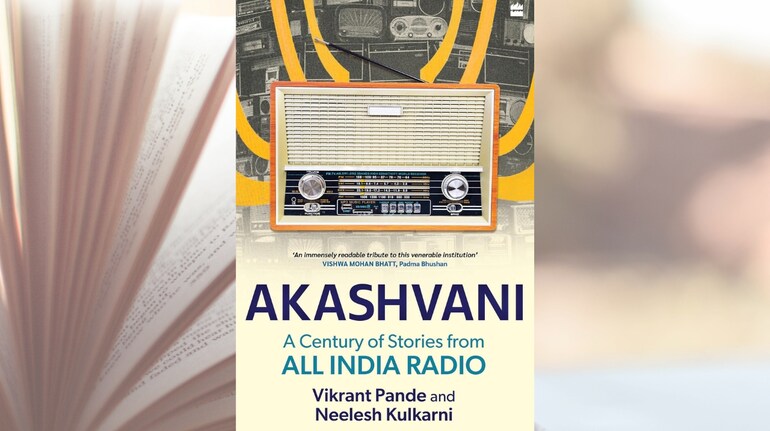
Extracted with permission from Akashvani: A Century of Stories from All India Radio, Vikrant Pande and Neelesh Kulkarni, HarperCollins Publishers India.
IT WAS THE ’50S AND AIR WAS IN TURMOIL—IT WAS LOSING thousands of listeners daily. They were all deserting it to listen to Radio Ceylon (now Sri Lanka Broadcasting Corporation). The reason was not far to see. It was not just the excellence of Radio Ceylon that was causing it, but that it was pressing the right nerves in the listener’s mind. AIR was blind to the changing tastes of its listeners.
The desertions were primarily because of AIR’s decision not to play film songs. Many classical music purists within AIR had been grumbling against film music and its ‘low quality’ in AIR for years and questioning why AIR had to depend on film music and why a programme of light music created by AIR did not take the place of film songs.
When Dr Keskar took over as I&B minister, he acted against film music and set limits on how much it could be broadcast in a day. He ruled that film music should not, within six months of the order, constitute more than 10 per cent of the broadcast time devoted to music (15 per cent in exceptional cases) and was to be totally eliminated in eighteen months.
The order, when implemented, naturally created vacant slots to fill and AIR set up special light music production units in individual stations to create content. These units took many steps to ensure quality and offered prizes to independent producers for content creation. In addition, tie-ups were initiated with music companies for recording and releasing such content. However, all the effort came to naught as the programme did not meet the listening public’s approval. They migrated to Radio Ceylon.
We dig into the history of Radio Ceylon. We discover that it is South Asia’s first broadcasting station, which began operations in 1925. During the Second World War, Radio Ceylon was used by the British to counter propaganda from Japan and Germany. Early on, realizing the popularity of Indian film music both in Hindi and Tamil, Radio Ceylon started playing these songs as part of many iconic programmes. The foremost amongst them was Binaca Geetmala. It was a film music-based programme, started in 1952, in which, in the initial years, seven contemporary songs were played in no particular order. Soon after, pieces began to be graded, considering listener’s choices and the number of records sold in the Indian market. This concept is believed to come from the American ‘Top 40’.
The silken voice of the iconic Ameen Sayani saying, ‘Bhaiyon aur behno, main hoon aapka dost Ameen Sayani, aur le kar aaya hoon aapka pasandida programme, Binaca Geetmala’, had the Indian listening public drooling. Arguments about which songs would make it to the top and whether the one there was deserving were often heard on street corners and in high society parties alike. The famous word on everyone’s lips was ‘paaydaan’, used by Sayani to indicate levels. Sayani played the songs in the reverse order of their popularity from twenty, charted the movement of each piece and infused tremendous energy into announcing the climb up the paaydaan. Whether it was the format, Sayani’s silky voice or the energy he invested into the programme, the fact remains that listeners thronged to it.
The loss was entirely AIR’s as Radio Ceylon lapped up revenues from sponsoring Indian companies. It pinched AIR and many sections of society hard because everything about the programme was Indian. It had Indian film music, was produced by an Indian (Hamid Sayani), compered by an Indian (Ameen Sayani, Hamid’s younger brother) and heard by Indians. It was even recorded in India (in the studio of the technical department of St. Xavier’s College, Bombay) advertising Indian products. The listenership and the revenue, though, were going to Sri Lanka.
It was not just Hindi-speaking listeners but also the Tamil-speaking ones who flocked to Radio Ceylon. Tamil, a common language for many in Ceylon, had its own Ameen Sayani. His name was Mayilvaganam and many of the senior generation in Chennai still remember his soothing voice speaking in Jaffna Tamil.
‘Mayilvaganam was very involved with Tamil stars such as Sivaji Ganesan, MGR and other famous stars; such was his pulling power on the Indian subcontinent,’ Prof. M.V. Krishnamoorthy, now eighty-eight and a resident of Chennai, tells us.
‘Mayilvaganam and his wife were the catalysts who brought stars like MGR and Saroja Devi to Sri Lanka on their first visit in October 1965. They came to judge a beauty pageant in Kandy, sponsored by Independent Newspapers Ltd. My father recalls the day MGR and Saroja Devi visited Mayilvaganam’s residence in Colombo. The railway tracks, streets and beaches were spilling with crowds shouting and screaming to see the stars,’ adds Suresh Subramaniam, a retired travel guide in Colombo.
Such was the popularity of Radio Ceylon that the broadcaster had to announce ‘Ceylon Radio does not indulge in politics’ when Indian newspapers spread a rumour that candidates contesting for the elections in India in 1957 could campaign on it.
Meanwhile, in India, people were out in the streets demanding an entertainment-based programme on AIR. This found an echo in the Parliament, too. On 7 April 1954, Harindranath Chattopadhyay, a broadcasting veteran and film actor, then a member of the Lok Sabha, launched a scathing attack, criticized the functioning of AIR. He argued that the government should allow film and popular music.
The thought began to crystallize in the ministry and, bowing to public pressure, Dr Keskar agreed to the demands. As a result, the newly formed entertainment channel called the ‘All India Variety Programme’ began broadcasting on 3 October 1957.
This broadcast began with a song penned by Pandit Narendra Sharma, the noted poet and film lyricist, sung by the famous playback singer Manna Dey and set to music by Anil Biswas. The song ‘Naach Re Mayura’ became very popular on Vividh Bharati and later, HMV included it in their album during the rainy season. The lyrics symbolizing the successful culmination of a dream becoming a reality were apt for the occasion. In the song, Sharma compares the happiness at Vividh Bharati’s launch with the joy a dancing peacock feels in the rainy season.
He had reason to feel joyful at the launch since he had played a significant role in conceptualizing the channel. He was the Hindi advisor to Jawaharlal Nehru, the then Prime Minister, and it was rumoured that Nehru himself had asked Sharma to create such a channel.
The announcement ‘Ye Akashvani ka panchrangi karyakram hai’ started the broadcast many years ago. The announcement’s wording stated its intent to have film music plus a programme featuring other arts like painting, sculpture, theatre, etc. Whereas other art forms featured in Vividh Bharati eventually got edged out by film music.
A few words by Maithili Sharan Gupt, designated by people as the rashtra kavi, preceded the first announcement. He said:
‘Manas bhavan mein aryajan jiski utaare aarti
Bhagwan Bharatvarsh mein gunje humari Bharati.’
(In the temple of the mind, people worship the Lord
In India, our language echoes.)
He took the lines from his epic poem Bharat Bharati. It was probably taking a cue from these lines that Pandit Narendra Sharma suggested that the channel be called Vividh Bharati. If the word Bharati were taken to mean India, it would mean the diversity of India.
*****
Vikrant Pande and Neelesh Kulkarni Akashvani: A Century of Stories from All India Radio HarperCollins Publishers India, Gurugram, 2025. Pb. Pp. 218. Rs. 399
'To harness the ether for those who dwell upon the earth is one of the loveliest services that the modern age can render to humanity-Upward Radio!' — Sarojini Naidu's note in the AIR visitors' book.
For decades, All India Radio or Akashvani, India's national broadcaster, has been 'the sound of India'. Be it Jawaharlal Nehru's iconic 'Tryst with Destiny' speech, shows such as Binaca Geetmala, cricket matches, movies or, more recently, Prime Minister Narendra Modi's Mann ki Baat, AIR has been and continues to be the primary source for programmes on news, entertainment and knowledge for many Indians. But there are innumerable fascinating stories associated with the radio channel itself.
For instance, did you know that Rabindranath Tagore dedicated a poem to AIR called 'Akashvani', which was adopted as the Hindi name? Or that an AIR producer was one of the first civilians to be let inside the Golden Temple after Operation Blue Star? Or that noted Pakistani ghazal singer Ghulam Ali used to make his disciples listen to AIR's Urdu service to understand correct Urdu pronunciation?
AIR was the staple fare for every Indian citizen in accessing news, music, cultural programmes, socially relevant commentaries/plays and of course, film songs. The book extract that has been published here is about the immensely popular channel Vividh Bharti. It is also inextricably linked with the late Ameen Sayani and his Bianca Geetmala on Radio Ceylon. Coincidentally, this book, Akashvani, was released a few days before (12 Feb 2025) Ameen Sayani’s first death anniversary (20 Feb 2024) was commemorated.
These and many other such tales make up Akashvani: A Century of Stories from All India Radio. With anecdotes from producers, broadcasters, radio jockeys and listeners, this book is a wonderful way to understand AIR's pivotal role in the average Indian's life, particularly at a time when we only had the state television and radio channels in India.
Discover the latest Business News, Sensex, and Nifty updates. Obtain Personal Finance insights, tax queries, and expert opinions on Moneycontrol or download the Moneycontrol App to stay updated!
Find the best of Al News in one place, specially curated for you every weekend.
Stay on top of the latest tech trends and biggest startup news.