
American car and two-wheeler brands continue to remain marginal players in India, despite India being one of the largest automobile markets in the world and renewed focus on India-US trade ties.
Data from automotive analytics and consulting firm JATO Dynamics India shows that American brands accounted for just 0.10% of total passenger vehicle (PV) sales in India in calendar year (CY) 2025, while their share in the two-wheeler market was an even smaller 0.0013%.
The decline has been consistent. American PV brands' share fell from 1.45% in CY21 to 0.10% in CY25, while non-American manufacturers strengthened their dominance to nearly 99.9%. A similar trend is visible in two-wheelers, where American brands have remained statistically negligible throughout the five-year period.
| Make | Non-American | American |
| CY21 | 98.55% | 1.45% |
| CY22 | 99.65% | 0.35% |
| CY23 | 99.84% | 0.16% |
| CY24 | 99.90% | 0.10% |
| CY25 | 99.90% | 0.10% |
| Make | Non-American | American |
| CY21 | 99.999% | 0.0009% |
| CY22 | 99.998% | 0.0023% |
| CY23 | 99.999% | 0.0013% |
| CY24 | 99.999% | 0.0013% |
| CY25 | 99.999% | 0.0013% |
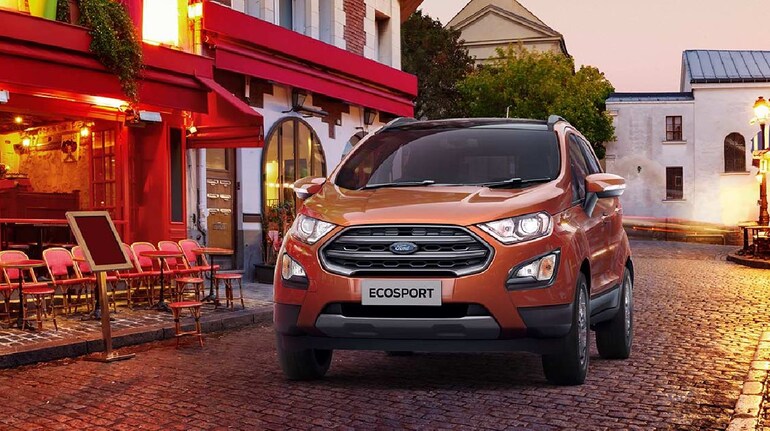
Analysts attribute this performance to product-market mismatch and limited localisation. JATO Dynamics India President and Director Ravi Bhatia told Moneycontrol that American brands have shown a mixed trajectory in India over the past five years. "Jeep carved out a steady niche in the premium SUV segment, while Tesla, which entered the market in CY25, has had a slow and challenging start, selling just 160 cars during the year due to high import duties. Harley-Davidson regained momentum through localisation, while others such as Ford and General Motors (Chevrolet) struggled to sustain volumes or competitiveness and eventually exited the market."
Bhatia observed that structural factors weighed heavily on viability. "The core reasons are structural. Most American carmakers did not align tightly enough with India's value-driven segments, especially compact SUVs and fuel-efficient entry models. High operating costs, regulatory complexity and limited localisation further pressured viability. In contrast, Harley's improved performance comes from the opposite -- local co-development, improved pricing, and sharper segment targeting."
For reference, India is the world's third-largest PV market and the largest two-wheeler market. The domestic PV sales stood at a record 44,89,717 units in the country in CY25, while the two-wheeler sales came in at 2,05,00,639 units during the year, according to industry body Society of Indian Automobile Manufacturers (SIAM).
Grant Thornton Bharat Auto and EV Industry Leader and Partner Saket Mehra pointed to pricing and scale challenges. "Over the past two decades, companies such as Ford, Chevrolet, Harley-Davidson, UM Motorcycles and Cleveland CycleWerks entered India with strong global reputations but struggled to achieve scale, which eventually led to exits or significant downsizing."
According to Mehra, high import duties have historically limited affordability for global brands, and any future tariff rationalisation could directly support American entrants by improving pricing competitiveness.
In India, completely built units (CBUs) priced up to USD 40,000 currently attract a Basic Customs Duty of 70%. Those above this threshold are taxed 70% Basic Customs Duty in addition to a 40% Agriculture Infrastructure and Development Cess, taking the effective total import tax to around 110%.
According to Crisil Intelligence Director Hemal Thakkar, product customisation remains critical. "There has been a mixed performance. Many American original equipment manufacturers (OEMs) tried to launch products which are not customised to Indian customers' requirements and hence found it difficult to survive."
Looking ahead, analysts see selective opportunities rather than mass-market scale. JATO's Bhatia said: "The outlook varies by brand. Jeep will likely continue scaling its premium niche as India's SUV market expands. Harley-Davidson appears positioned for steady growth through wider accessibility."
Thakkar noted that the Indian market is too big and diverse to be ignored. "American car and two-wheeler manufacturers could look at the Indian market by customising products basis the customer expectations to succeed in India. It will also offer possible cost advantages as well as opportunities for exports from India."
US President Donald Trump announced the India-US trade deal on Truth Social on February 2, stating that the agreement would significantly roll back reciprocal tariffs imposed from mid-2025. As part of the deal, he said the US would reduce reciprocal tariffs on Indian goods to 18% from 50%, while import duties on American products entering India would be cut to zero.
While discussions around tariff reductions under the India-US trade deal may improve operating conditions, analysts caution that pricing alone will not be sufficient. Deeper localisation, wider service networks and long-term commitment will ultimately determine whether American brands can move beyond niche relevance in India.

Discover the latest Business News, Sensex, and Nifty updates. Obtain Personal Finance insights, tax queries, and expert opinions on Moneycontrol or download the Moneycontrol App to stay updated!
Find the best of Al News in one place, specially curated for you every weekend.
Stay on top of the latest tech trends and biggest startup news.