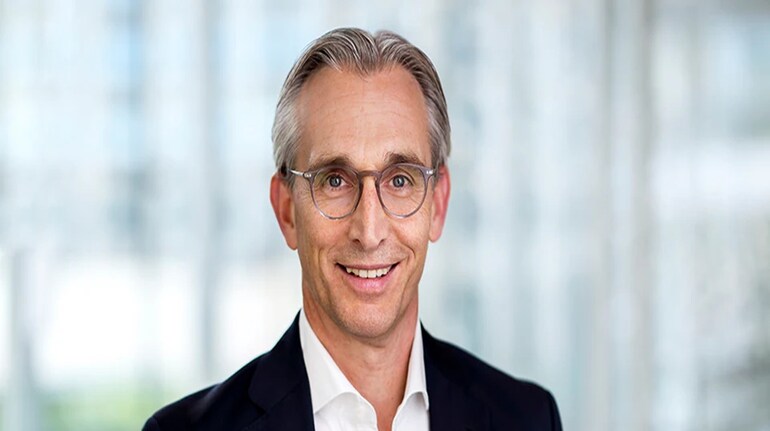
Artificial Intelligence (AI) in healthcare is no longer a futuristic promise, it is already transforming clinical practice, according to Roy Jakobs, Global CEO of Philips. And India, he said, will play a pivotal role in scaling that transformation globally.
“What’s great about AI in healthcare is that it’s already being used today. It’s not a promise anymore,” Jakobs said in an interaction with Moneycontrol. “It’s finding its way into daily practice.”
India plays a critical role in Philips' strategy.
“India has traditionally been a very strong software innovation hub for Philips globally,” Jakobs said. “A significant part of our AI and data science work is done in India. We are using that innovation power not just for the local market, but to scale solutions worldwide.”
According to Jakobs, India offers a unique combination of high healthcare demand and deep engineering talent. “On one hand, India pushes the boundaries of healthcare delivery because of the scale and access challenges. On the other, it has incredible engineering capabilities and innovation talent. That makes it a powerful innovation ground.”
He added that Philips sees India as both a development hub and a launchpad for global AI applications. “We strongly believe in the power we can pull from India for the globe.”
He pointed to practical, real-world examples. In MRI imaging, AI can now generate high-quality scans in nearly half the time required for complex cardiac imaging. It also ensures patients are positioned correctly for scans, reducing the need for repeat examinations and enabling “first-time right” diagnosis.
In hospital settings, AI-powered monitoring systems can predict the likelihood of a heart attack 24 to 48 hours in advance, allowing clinicians to intervene early. AI is also helping ease administrative burdens — an area often overlooked in healthcare efficiency. “A nurse typically spends about 20 minutes of every hour on administrative work. With AI, that can be reduced to around seven minutes,” Jakobs noted.
For Philips, AI is not a side initiative but a core strategic focus. The company invests approximately €1.7 billion annually in innovation, with nearly half of its portfolio now centered on software. “The biggest part of what we are doing now is in data, data science and AI,” he said.
On concerns around AI taking over clinical decision-making, Jakobs was clear that the technology is meant to assist, not replace, clinicians. “AI is a supportive technology. It must always operate with human oversight,” he said. He emphasised the importance of developing AI systems that are safe, regulated and responsibly deployed.
As healthcare systems worldwide grapple with workforce shortages and rising patient loads, Jakobs believes AI-driven efficiency gains could be transformative — and that India will be central to building those solutions.
“India has a great future ahead with AI,” he said. “And we see it as a key driver of global healthcare innovation.”

Discover the latest Business News, Sensex, and Nifty updates. Obtain Personal Finance insights, tax queries, and expert opinions on Moneycontrol or download the Moneycontrol App to stay updated!
Find the best of Al News in one place, specially curated for you every weekend.
Stay on top of the latest tech trends and biggest startup news.