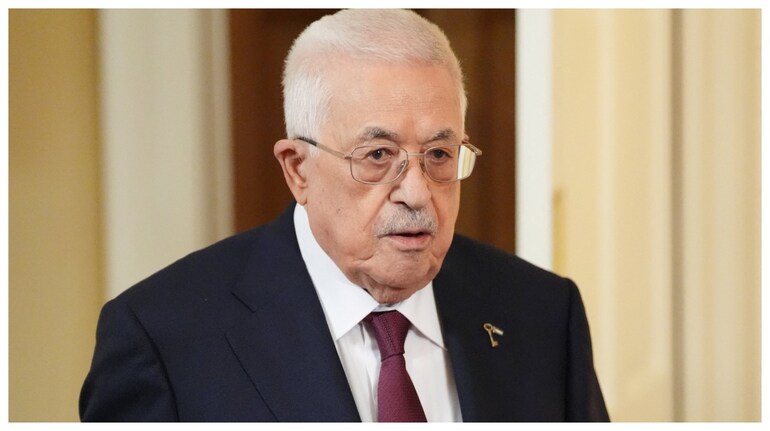
When world leaders gather in New York for the United Nations General Assembly next week, the absence of Palestinian Authority President Mahmoud Abbas will be impossible to miss. The Trump administration has denied visas to Abbas and his delegation, citing national security grounds. The move comes as the Gaza war and Palestinian statehood dominate the global agenda, leaving the Palestinian voice out of one of the world’s most important diplomatic stages, the New York Times reported.
Host-country obligations under scrutiny
The controversy turns on a 1947 agreement between the United States and the United Nations that guaranteed representatives of member states access to UN headquarters, regardless of relations with Washington. Section 11 of the agreement explicitly prohibits the US from imposing barriers to entry for official UN business. UN officials argue the decision violates this legally binding pact, which was incorporated into federal law and has governed the headquarters’ functioning for nearly eight decades.
Washington’s national security defence
US lawmakers have long maintained that while the host agreement ensures access to the UN, it does not override America’s right to protect its own national security. A clause in domestic legislation asserts that the US retains full control over entry to its territory, apart from the UN district itself. This has allowed administrations from both parties to justify restrictions, though outright visa denials for heads of government remain almost unheard of.
Rare precedent in UN history
The last time the US refused a visa for a Palestinian leader attending the General Assembly was in 1988, when Yasir Arafat was barred. Even then, Arafat later returned to the UN in following years. More commonly, the US has used delays or narrow movement restrictions to impede access for adversarial governments like Iran, Russia, Venezuela, and China. Iranian diplomats, for example, are confined to a 25-mile radius of the UN building in Manhattan.
Global recognition and rising tensions
The timing of the decision is striking. France, Britain, Canada, and Australia are set to announce their formal recognition of a Palestinian state at a conference on the eve of the General Assembly, joined by more than 100 countries. The United States has opposed the move, arguing Palestinian statehood must emerge from direct negotiations with Israel. By denying Abbas entry, Washington has amplified criticism that it is using its host-country role to suppress voices that challenge its foreign policy.
Legal and political fallout
The UN has already raised the matter with the US and may refer the dispute to its committee on host-country issues or even arbitration. Legal experts argue the language of the 1947 agreement leaves little room for exceptions, while former American diplomats acknowledge that visa denials for leaders are “extremely rare and highly controversial.” For critics, the episode underscores the risks of politicizing access to the world body.
What comes next
Whether this standoff escalates into a formal UN–US confrontation remains to be seen. But with the Middle East in turmoil and Western allies recognizing Palestinian statehood, Washington’s decision to bar Abbas is likely to deepen divisions at a moment when international consensus is already fragile. For the UN, the case raises an uncomfortable question: can its headquarters truly serve as neutral ground if the host nation decides who is allowed to enter?
Discover the latest Business News, Sensex, and Nifty updates. Obtain Personal Finance insights, tax queries, and expert opinions on Moneycontrol or download the Moneycontrol App to stay updated!





Find the best of Al News in one place, specially curated for you every weekend.
Stay on top of the latest tech trends and biggest startup news.