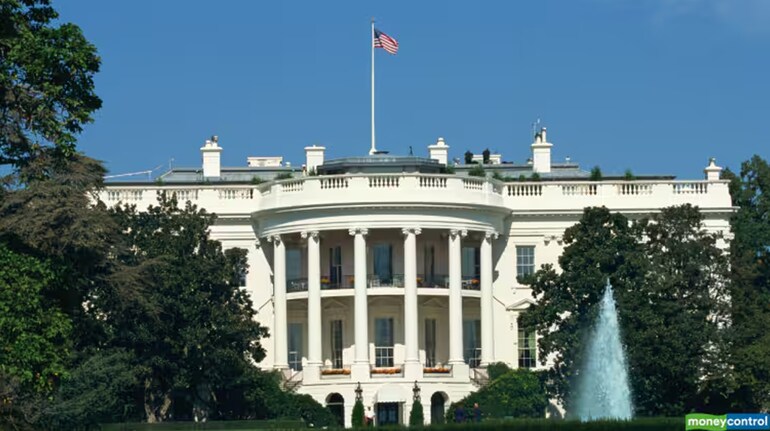
The facade of the East Wing of the White House came crashing down on Monday, marking the start of one of the largest construction projects on the presidential grounds in decades. Crews began demolishing walls and clearing debris as President Donald Trump’s 90,000-square-foot ballroom project moved from blueprint to reality. Reporters stationed near the Treasury Department watched as excavators clawed at the historic structure, tossing aside glass, bricks, and steel wiring, the New York Times reported.
By late afternoon, the long arm of a track excavator could be seen tearing through the walls, sending clouds of dust into the autumn air. Trump, speaking nearby to a visiting collegiate baseball team, cheerfully pointed out the noise. “You know, we’re building right behind us, we’re building a ballroom,” he said. “You might hear construction periodically — it just started today.”
Trump’s biggest mark yet on Washington
The ballroom is the latest and grandest of Trump’s attempts to physically remake Washington. Inside the White House, he has already transformed the interiors: the Oval Office and Cabinet Room gleam with gold accents, the Rose Garden now evokes the manicured lawns of Mar-a-Lago, and oversized flagpoles stand on both the North and South lawns. Even beyond the White House, Trump has directed renovations at the Kennedy Center and floated the idea of an Arc de Triomphe-style monument across the Potomac River.
The East Wing, which traditionally houses the first lady’s offices, was one of the last sections left untouched — until now. “Having already changed so much about the way Washington works,” wrote The New York Times, “he is increasingly changing the way Washington looks.”
A $200 million ballroom with room for 999 guests
Trump first announced plans for his ballroom in July, boasting that construction “wouldn’t interfere with the current building,” a promise that Monday’s demolition has rendered implausible. The president says the ballroom will hold “999” guests — just shy of 1,000, in compliance with certain building regulations — and will serve as a venue for grand state dinners, corporate galas, and other political events.
The cost of the project exceeds $200 million, and Trump says it is being financed privately. Last week, he hosted a dinner at the White House attended by dozens of corporate executives who pledged to contribute funds for the project. Ethics experts, however, have raised alarms that these donations could become another means for wealthy individuals and companies to gain access to the president.
Melania Trump’s office forced to move
The construction has forced major reshuffling inside the White House. Early last month, staff members working for Melania Trump began packing up their offices in the East Wing and relocating to other parts of the complex. The East Wing has historically been the centre of first lady operations, housing her team, event planners, and communications aides.
While the White House insists that the renovation will “modernize and beautify” the area, the demolition marks the first time in decades that a sitting president has altered the East Wing’s architecture so extensively. Not since President Harry S. Truman expanded and reinforced the West Wing in the mid-20th century has there been a project of this scale.
A history of demolition and ambition
For Trump, demolition has long been part of his personal and professional narrative. In 1980, he demolished Manhattan’s Bonwit Teller building to make way for Trump Tower, reneging on a promise to preserve its limestone friezes for the Metropolitan Museum of Art. When asked later whether destroying the sculptures had hurt his reputation, Trump famously replied, “Who cares?”
His father, Fred Trump, shared a similar flair for spectacle. In 1966, the elder Trump tore down a beloved Coney Island amusement park and celebrated the demolition with a champagne party featuring bikini-clad models in hard hats. Guests were invited to hurl bricks at the glass pavilion — a gesture that blended showmanship with ruthlessness, qualities his son would later inherit.
A transformation of image and power
Trump has justified the new ballroom as fulfilling a historic dream. “For more than 150 years, every President has dreamt about having a Ballroom at the White House to accommodate people for grand parties, State Visits, etc.,” he wrote on social media. “The East Wing is being fully modernized as part of this process, and will be more beautiful than ever when it is complete!”
But the project has raised broader questions about Trump’s use of power and his tendency to conflate public office with personal branding. The White House’s makeover — from gilded rooms to expanded entertainment spaces — mirrors Trump’s aesthetic and business instincts, where grandeur, size, and spectacle often eclipse subtlety and tradition.
The new face of the White House
By the time the project is finished, the East Wing’s transformation will stand as one of the most significant architectural shifts in presidential history. To critics, it represents another example of Trump’s impulse to reshape American institutions in his own image. To supporters, it’s a long-overdue modernization of a building meant to host global leaders and ceremonial gatherings.
Either way, Monday’s demolition signalled the start of a new era for the White House — one literally built upon the rubble of the old.
Discover the latest Business News, Sensex, and Nifty updates. Obtain Personal Finance insights, tax queries, and expert opinions on Moneycontrol or download the Moneycontrol App to stay updated!
Find the best of Al News in one place, specially curated for you every weekend.
Stay on top of the latest tech trends and biggest startup news.