When oil prices begin to spike, governments have one immediate tool they can reach for. They can release crude from their emergency stockpiles, known as strategic reserves.
That is exactly what happened this week. More than 30 countries agreed to release a record 400 million barrels of oil from their emergency reserves in an attempt to stabilise global markets after fighting erupted between the United States, Israel and Iran.
Normally, such a move would calm traders. Instead, oil prices climbed again and futures crossed the USD100-a-barrel mark.
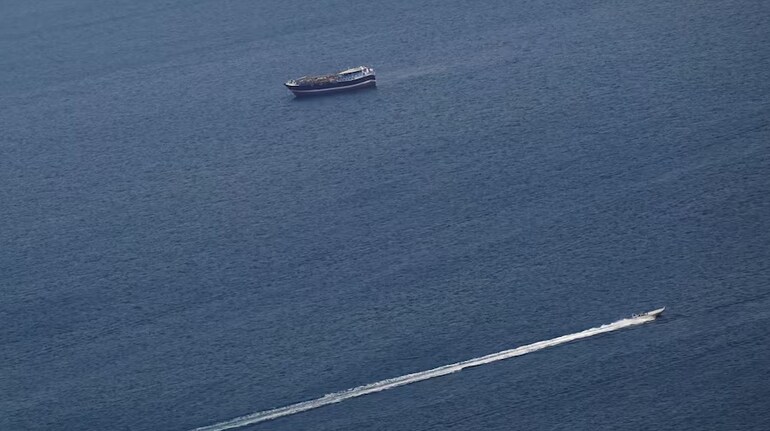
The reason is simple. Traders are not worried about short-term supply. They are worried about the disruption of the Strait of Hormuz, one of the most important oil routes in the world, the New York Times reported.
Why the Strait of Hormuz matters so much
Before the war began, more than 20 million barrels of oil passed through the Strait of Hormuz every day. That represents roughly one-fifth of global oil supply.
Now most of that traffic has effectively stopped.
Oil tankers are avoiding the narrow waterway after attacks on ships and rising military tensions in the area. On Wednesday alone, three vessels were reportedly targeted in the channel.
When a shipping lane that important shuts down, the market quickly realises that even massive emergency reserves cannot fully replace the lost flow.
Edward Chow, an energy expert at the Center for Strategic and International Studies and a former Chevron executive, summed up the problem bluntly. No amount of stored oil can replace a constant daily flow of 20 million barrels.
Why emergency reserves are only a temporary fix
The release of 400 million barrels sounds enormous, but when placed in context it looks much smaller.
The amount equals roughly 20 days of oil that would normally pass through the Strait of Hormuz.
And the war has already been underway for nearly two weeks.
Strategic reserves are designed to buy time, not solve a long-term disruption. They give governments breathing space while markets adjust or while shipping routes reopen.
But they cannot replace a major trade route indefinitely.
There are also practical challenges in getting that oil into the market. Strategic reserves are stored in massive underground facilities scattered across the world.
In South Korea, for instance, oil is kept in storage sites across the peninsula. Some reserves are also stored in shared facilities, including large storage hubs in places like Okinawa, Japan, where companies such as Saudi Aramco maintain commercial inventories.
Releasing the oil involves contracts, transportation logistics and shipping arrangements. It cannot happen overnight.
How quickly oil can actually be released
Even the largest reserves have limits on how quickly oil can be pumped out. In the United States, the maximum withdrawal rate from the Strategic Petroleum Reserve is about 4.4 million barrels per day, according to the US Department of Energy.
That sounds like a lot, but it is still far below the 20 million barrels that normally move daily through the Strait of Hormuz.
This gap is exactly what oil traders are now focusing on.
Markets had initially hoped the conflict would be brief and that tensions might cool quickly. But after nearly two weeks of fighting, that optimism is fading.
Why traders think the disruption may last
Another factor unsettling markets is uncertainty about who can actually reopen the shipping lane.
Unlike many economic disputes, the Strait of Hormuz cannot be reopened simply by a policy announcement in Washington.
Iran controls the northern side of the waterway and has repeatedly warned that it could shut the route in response to military pressure.
Even if the United States were to stop its military operations tomorrow, analysts say there is no guarantee Iran would immediately allow oil tankers to resume normal passage.
Edward Fishman, a senior fellow at the Council on Foreign Relations, says the market is beginning to recognise that reality.
In his view, there is only one country that can reopen the strait.
And that country is Iran.
Until the shipping lane is fully operational again, traders believe the oil market will remain volatile. Emergency reserves may slow the shock, but they cannot erase it.
Discover the latest Business News, Sensex, and Nifty updates. Obtain Personal Finance insights, tax queries, and expert opinions on Moneycontrol or download the Moneycontrol App to stay updated!
Find the best of Al News in one place, specially curated for you every weekend.
Stay on top of the latest tech trends and biggest startup news.