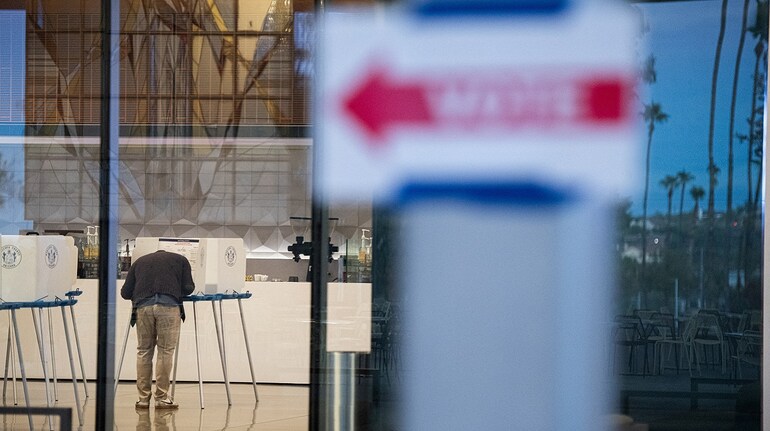
Over the last three months, the U.S. Department of Justice (DOJ) has requested voter registration lists and election-related data from at least 15 states, sparking concerns from both Democratic and Republican officials.
The requests, confirmed by the Associated Press, range from procedural queries to sensitive voter information like birthdates and ID numbers, prompting pushback over voter privacy, legal authority, and timing ahead of the 2026 midterms.
Letters, emails, phone calls: The outreach pattern
According to AP’s tally, states that received requests include Colorado, California, Michigan, Arizona, Wisconsin, Florida, and New York, among others. In Colorado, the DOJ went as far as demanding “all records” related to the 2024 election and retained records from 2020.
Some states were also approached for meetings to discuss possible “information-sharing agreements”. The goal, DOJ lawyers said in their emails, was to collaborate on enforcing federal election laws and investigating fraud.
A legal and constitutional tightrope
While election security is a shared concern, states retain constitutional control over elections, and the DOJ’s push has alarmed several secretaries of state.
As per the report by Associated Press, Maine’s Democratic Secretary of State Shenna Bellows rejected the request outright: “The department doesn’t get to know everything about you just because they want to.”
Minnesota’s Secretary of State Steve Simon, also a Democrat, cited state and federal privacy laws in refusing to share the full voter roll.
In contrast, some Republican lawmakers in Minnesota urged Simon to comply, citing the need to “protect the voting rights of citizens.”
What data is the DOJ asking for?
The scope varies, but the requests often include:
Full voter registration lists
Details on how states remove duplicate, deceased, or ineligible voters
Information on noncitizens removed from rolls
Voter birthdates, registration dates, and ID numbers
In four major California counties (Los Angeles, Orange, San Diego, and San Francisco), letters requested voter removal records, including details on noncitizens and voting histories.
The Trump-era shift in DOJ’s election role
Traditionally, the DOJ’s voting section has focused on ensuring access to the ballot box. But under President Donald Trump, the department is pivoting to investigating alleged voter fraud and noncitizen voting, issues often amplified by Trump despite limited evidence.
Trump continues to claim he won the 2020 election and has called for a special prosecutor to investigate election fraud. His March 2025 executive order directs the Attorney General to pursue information-sharing with states “to the maximum extent possible.”
Legal Experts Weigh In: Privacy Law and Intimidation Concerns
Former DOJ officials say this level of outreach is unusual and potentially problematic, AP reports.
David Becker, a former DOJ attorney, told AP: “This seems like a fishing expedition, and it’s not how the DOJ has historically operated.”
Justin Levitt, an election law expert, pointed out that under the Privacy Act of 1974, the federal government must publicly notify Congress and publish in the Federal Register before collecting personally identifiable information, something not yet done.
The involvement of criminal division lawyers in the outreach has also raised eyebrows.
“That kind of presence can feel intimidating,” Becker added, even if the questions appear routine.
The DOJ has not responded to specific questions but told the National Association of Secretaries of State (NASS) that "all states would eventually be contacted." NASS has invited the department to a virtual meeting to address growing concerns about privacy, legality, and the use of data.
While some states have provided redacted versions of their voter rolls, others are still reviewing the request, or refusing entirely.
Discover the latest Business News, Sensex, and Nifty updates. Obtain Personal Finance insights, tax queries, and expert opinions on Moneycontrol or download the Moneycontrol App to stay updated!
Find the best of Al News in one place, specially curated for you every weekend.
Stay on top of the latest tech trends and biggest startup news.