
Iran’s government has weathered waves of protests before, often relying on force to restore control. This time, officials and analysts say, the challenge is more complex. Growing domestic unrest is unfolding alongside the prospect of renewed foreign military strikes, leaving the country’s leaders with few clear paths to stability.
For a week, demonstrations have convulsed parts of Iran, initially sparked by merchants in Tehran’s historic bazaar shutting their shops to protest soaring prices and a collapsing currency. The unrest has since spread to smaller towns, poorer neighbourhoods and university campuses, where chants have increasingly turned from economic grievances to direct calls for an end to clerical rule, the New York Times reported.
Economic collapse at the heart of the anger
Although the protests are smaller than the nationwide uprisings of 2019 and 2022, they have rattled senior officials. Inflation, unemployment and currency volatility have eroded living standards, leaving many Iranians struggling to afford basic goods.
President Masoud Pezeshkian has publicly acknowledged the depth of the crisis, admitting in recent speeches that he has “no ideas” for solving Iran’s many problems. Steps taken so far, including replacing the central bank governor and tweaking currency policy, have had little effect.
Analysts say meaningful recovery would require lifting U.S. sanctions through a nuclear deal and tackling entrenched corruption. Iran’s leadership, however, appears either unwilling or unable to pursue such changes.
Pressure from abroad sharpens the stakes
As protests spread, external threats have intensified. Donald Trump warned that the United States could intervene if Iranian authorities killed “peaceful protesters,” saying American forces were “locked and loaded.” Israeli officials have also voiced support for demonstrators, language Tehran interprets as a signal of potential action.
Those fears were amplified after Washington’s weekend military operation in Venezuela, an Iranian ally, where US forces captured President Nicolás Maduro. At a news conference, American officials suggested other governments should take note of the consequences of defying Washington.
Leaders scramble behind closed doors
According to Iranian officials familiar with internal deliberations, the Supreme National Security Council held a late-night emergency meeting to discuss how to contain protests with less violence while also preparing for the possibility of foreign strikes. In private, senior figures acknowledged that the Islamic Republic had entered survival mode.
Hard-line commentators have warned that economic decay can sap the loyalty of security forces, pointing to the collapse of regimes in Syria and Venezuela. “When the police and military are struggling for their livelihood, the defence lines collapse,” one conservative pundit said.
A hard line from the top
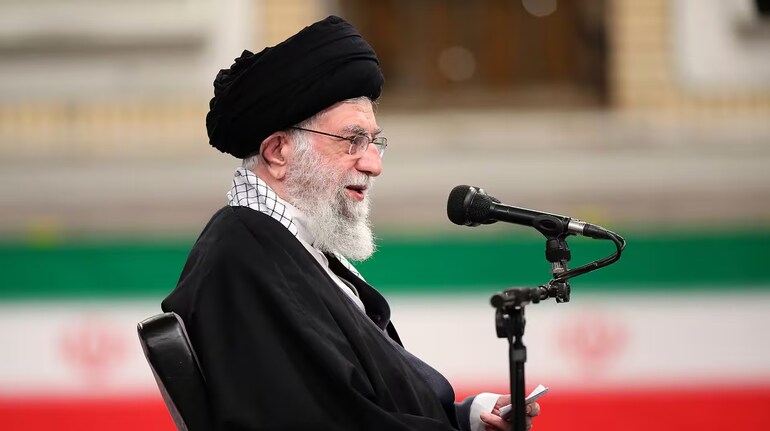
Supreme Leader Ayatollah Ali Khamenei struck a tougher tone over the weekend, calling protesters “rioters” and blaming foreign enemies for Iran’s economic troubles, while still acknowledging merchants’ right to complain about price instability.
Security forces have since used tear gas, beatings and, in some areas, gunfire. At least eight protesters and two security personnel have been reported killed, according to official media, rights groups and video evidence.
An uncertain path ahead
Life in parts of Tehran continues largely as normal, even as unrest intensifies elsewhere. But analysts say the combination of raw public anger and credible foreign threats makes this moment unusually dangerous for Iran’s rulers.
Whether the leadership can defuse the protests without inviting external confrontation, or deter foreign action without worsening domestic fury, may determine not only the fate of the current unrest but the future of the Islamic Republic itself.
Discover the latest Business News, Sensex, and Nifty updates. Obtain Personal Finance insights, tax queries, and expert opinions on Moneycontrol or download the Moneycontrol App to stay updated!
Find the best of Al News in one place, specially curated for you every weekend.
Stay on top of the latest tech trends and biggest startup news.