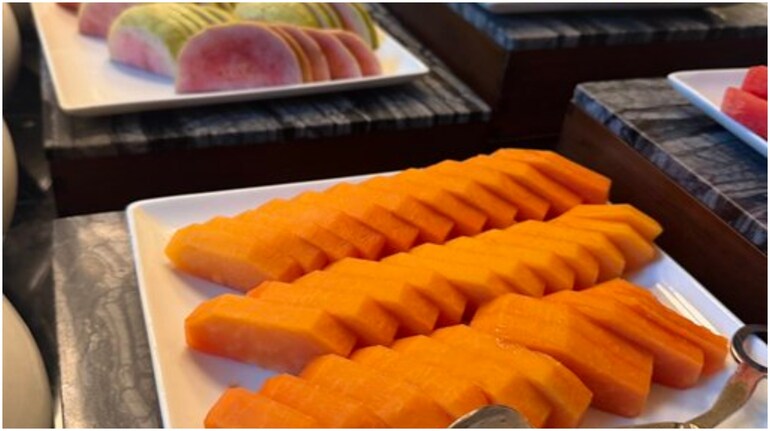
When Sara Hooker, co-founder and CEO of US-based Adaption Labs, shared a photo of neatly cut fruit at a Delhi hotel buffet last week, she did not expect it to resonate so widely. “One of the things I’ll miss the most about Delhi is fruit that tastes like fruit,” she wrote, adding that in the United States, fruit often tastes like it has been sanitised. The remark, shared while she was in India for the India AI Impact Summit, quickly struck a chord online.
Hooker’s comment may sound flippant, but it touches on a real and well-documented difference in how food systems work in India and the United States. The gap has less to do with nostalgia and more to do with how fruits are grown, stored, transported and sold.
In India, most fresh fruit moves through relatively short supply chains. Mangoes, papayas and melons are often harvested closer to ripeness and reach markets within days. Cold storage exists, but it is still uneven, which means produce is more likely to be seasonal and locally sourced. According to data from India’s Ministry of Agriculture and multiple FAO studies, this shorter time from farm to consumer helps preserve flavour, even if it reduces shelf life.
In contrast, fruit sold in the US is designed to travel long distances and last weeks, not days. Produce is typically harvested before it ripens, stored in controlled-atmosphere warehouses, transported across states or borders, and treated with food-safe waxes and fungicides to prevent spoilage. The US Department of Agriculture allows these practices because they reduce waste and improve food safety, but researchers have long noted that early harvesting limits sugar development and aroma compounds, which directly affects taste.
There is also the issue of breeding priorities. Over decades, commercial farming in the US has selected fruit varieties for size, uniform appearance and durability rather than flavour. Studies published by agricultural universities in California and Florida show that many modern fruit cultivars trade sweetness and texture for longer shelf stability. India’s produce markets, by contrast, still sell a wide mix of local varieties that are less standardised and more flavour-forward.
Food safety concerns also play a role. American consumers expect washed, disinfected produce because of past outbreaks of foodborne illness. This leads to heavier processing, which can subtly alter taste and smell. Indian consumers, especially in cities, rely more on freshness and home washing than industrial sanitisation.
Discover the latest Business News, Sensex, and Nifty updates. Obtain Personal Finance insights, tax queries, and expert opinions on Moneycontrol or download the Moneycontrol App to stay updated!
Find the best of Al News in one place, specially curated for you every weekend.
Stay on top of the latest tech trends and biggest startup news.