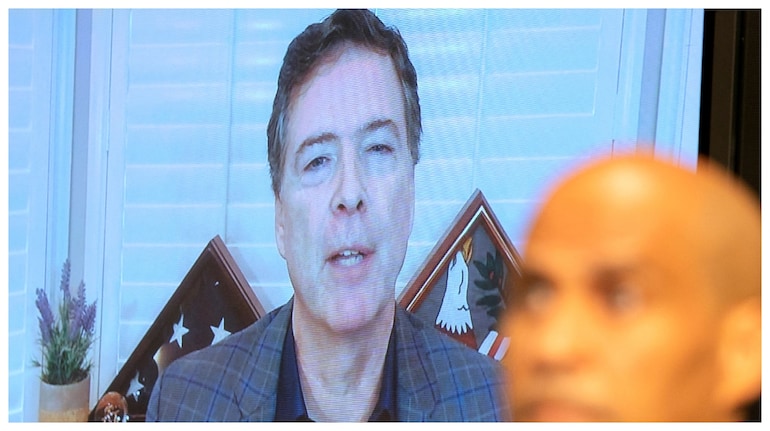
The Trump administration’s indictment of former FBI director James B. Comey rests on testimony he gave to the Senate Judiciary Committee in September 2020. He faces one count of making a false statement to Congress and one of obstructing a congressional proceeding. The charges were brought by Lindsey Halligan, a lawyer and Trump ally recently installed as US attorney in Virginia after her predecessor refused to prosecute. Critics note the indictment is unusually thin on detail, the New York Times reported.
The disputed testimony
The core allegation is that Comey falsely denied ever authorizing FBI officials to act as anonymous sources in news reports about agency investigations. But the wording is murky. The quotation attributed to Comey in the indictment was actually spoken by Senator Ted Cruz, who paraphrased an earlier 2017 exchange between Comey and Senator Charles Grassley. The legal difficulty lies in proving not only that Comey misstated facts in 2020 but also that he did so intentionally.
The McCabe connection
The backdrop includes a 2016 Wall Street Journal article about internal tensions over the Clinton Foundation inquiry. Then–deputy FBI director Andrew McCabe authorized an aide to speak to a reporter but later clashed with Comey over whether he disclosed that fact. The inspector general accused McCabe of being misleading, but Comey’s recollection differed. Trump viewed McCabe as hostile, and his dismissal in 2018 became a political flashpoint. Whether this episode is central to Comey’s charges remains unclear.
Leaks and outside contacts
Prosecutors also scrutinized leaks involving Comey’s conversations with Trump and the FBI’s handling of Russian intelligence documents in 2017. Comey had admitted asking Columbia law professor Daniel Richman to share his memos of Trump conversations with the press after his firing. Investigators questioned whether Richman, a former special government employee at the FBI, was improperly authorized to do so. Records show agents concluded there was insufficient evidence to charge Comey or Richman with leaking classified material.
The rejected charge
Prosecutors sought an additional false statement charge tied to Comey’s 2020 testimony that he did not recall hearing about a supposed Clinton-approved plan to link Trump to Russia. The grand jury declined to indict on that count. The claim itself derived from Russian intelligence widely believed to be fabricated, and later investigations found no original evidence of such a scheme. The rejection highlights the weaknesses in building a case around contested recollections.
Political backdrop and legal hurdles
The indictment arrives amid sharp partisan divisions over Trump’s use of the Justice Department. Legal experts note that perjury and obstruction cases typically require clear-cut falsehoods, not ambiguous or paraphrased exchanges. The fact that much of the disputed testimony involves Russian disinformation further complicates the case. As the proceedings move forward, the question is whether prosecutors can convince a jury that Comey deliberately misled Congress—or whether the charges will collapse under their vagueness.
Discover the latest Business News, Sensex, and Nifty updates. Obtain Personal Finance insights, tax queries, and expert opinions on Moneycontrol or download the Moneycontrol App to stay updated!
Find the best of Al News in one place, specially curated for you every weekend.
Stay on top of the latest tech trends and biggest startup news.