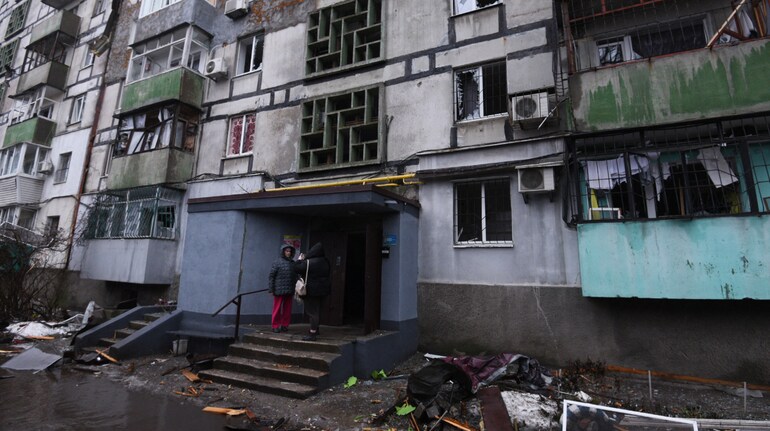

As Russian and Ukrainian negotiators prepare to meet again in Abu Dhabi under talks encouraged by Donald Trump, one stubborn question keeps coming back to the table: who controls the remaining Ukrainian-held part of Donetsk?
On paper, it is just over 2,000 square miles. In reality, it has become the emotional and political core of the negotiations.
US Secretary of State Marco Rubio recently called Donetsk the “one remaining item” in the talks. Moscow pushed back, saying other issues still need sorting out, including security guarantees for Ukraine. Even so, Donetsk is clearly where things are stuck, the New York Times reported.
Why Donetsk matters so much to Putin
For Vladimir Putin, Donetsk is not just territory. It is part of the story he has been telling Russians since 2014.
That year, unrest broke out in eastern Ukraine after Kyiv’s political shift toward Europe. In cities like Sloviansk, armed separatists declared breakaway republics. Moscow cast the movement as a defence of Russian-speaking people in the Donbas. Over time, that narrative hardened into a broader claim that the region was historically Russian land.
Russia now fully controls Luhansk, the neighbouring region. Donetsk is unfinished business. If the war ends with Ukraine still holding part of it, Putin cannot easily say he completed the mission he laid out more than a decade ago.
The pressure from home
There is also domestic politics to think about. In 2022, Russia formally announced it was annexing Donetsk, Luhansk, Kherson and Zaporizhzhia, even though it did not control all of them. Since then, Moscow has been quieter about the parts of Kherson and Zaporizhzhia it does not hold. But Donetsk remains central.
If Russia accepts a deal that leaves part of Donetsk under Ukrainian control, pro-war nationalists could see that as backing down. After years of fighting and heavy losses, that would be a difficult message to sell.
Taking the rest of Donetsk, on the other hand, would allow Putin to present any peace deal as a clear win.
The “Anchorage formula”
Talk of Donetsk sharpened after a reported summit between Trump and Putin in Alaska. Russian officials have since referred to the “Anchorage formula,” widely understood to mean that Moscow would stop large-scale fighting if Ukraine handed over the remaining part of Donetsk along with other concessions.
Kyiv never agreed. Volodymyr Zelensky has said he is open to compromises to end the war, but not at the cost of Ukraine’s territorial integrity. Under Ukraine’s constitution, giving up territory would require a nationwide referendum.
There have been proposals for a demilitarized buffer zone instead. But even that is deeply sensitive inside Ukraine, where soldiers have been fighting over these lines since 2014.
Fortifications and water
The land Ukraine still controls in Donetsk is not empty ground. It contains some of the strongest defensive positions along the front, many built years before the full-scale invasion in 2022. Giving them up would weaken Ukraine’s ability to defend itself if fighting resumes.
There is also a practical issue: water. The Siverskyi Donets–Donbas Canal, which supplies water to the Russian-occupied city of Donetsk, begins near Sloviansk, in territory still under Ukrainian control. The city has struggled with water shortages. Putin has publicly said that the problem can only be fully solved if Russian forces control that intake point.
So Donetsk is about more than lines on a map. It is about narrative, domestic politics, military advantage and even basic infrastructure. Until both sides decide how much they are willing to give up, this small slice of land is likely to remain the biggest obstacle to ending the war.
Discover the latest Business News, Sensex, and Nifty updates. Obtain Personal Finance insights, tax queries, and expert opinions on Moneycontrol or download the Moneycontrol App to stay updated!
Find the best of Al News in one place, specially curated for you every weekend.
Stay on top of the latest tech trends and biggest startup news.