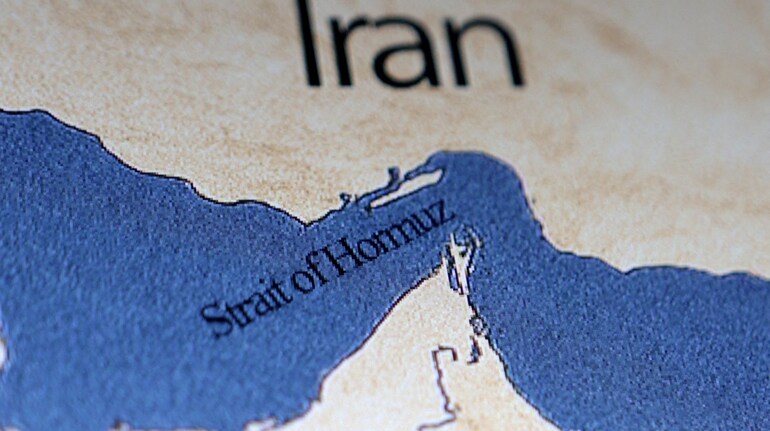
The White House said Tuesday that the US Navy has not escorted any commercial vessel through the Strait of Hormuz, clarifying confusion sparked by a social media post from the US energy secretary that was quickly removed.
"I can confirm that the US Navy has not escorted a tanker or a vessel at this time, though of course that's an option," White House Press Secretary Karoline Leavitt said during a briefing.
The clarification came after US Energy Secretary Chris Wright briefly posted online that an American warship had escorted an oil tanker through the strategic shipping route. The message disappeared within minutes of appearing.
The now-deleted post had stated that the "US Navy successfully escorted an oil tanker through the Strait of Hormuz to ensure oil remains flowing to global markets."
The episode unfolded as markets remain on edge during the ongoing conflict involving the United States, Israel and Iran. Oil prices reacted sharply to the initial claim before easing once the message was taken down.
Iran’s Revolutionary Guards also dismissed the idea that US naval vessels were operating near the waterway.
"None of the US warships have dared to approach even the Sea of Oman, the Persian Gulf or the Strait of Hormuz during the war," Guards spokesman Ali Mohammad Naini said, calling the claim a "pure falsehood".
The US Energy Department and the Pentagon did not immediately respond to requests for clarification following the confusion created by the original post.
No confirmed case has emerged of American naval forces escorting oil tankers through the passage since hostilities began on February 28. Wright’s initial statement appeared to be the first time a senior US official publicly suggested such an operation had taken place.
The swift deletion of the message added to uncertainty surrounding shipping security in the area.
The Strait of Hormuz is among the world’s most critical energy chokepoints, carrying nearly a fifth of global oil supply.
Tehran warned Tuesday that exports from Gulf producers would halt while the war continues.
Despite the tensions, shipping traffic has continued through the narrow waterway. Analysis of Marine Traffic tracking data by AFP shows more than 20 commercial ships have crossed the strait since March 2.
Some vessels have passed through without broadcasting their positions, switching off transponders to avoid detection and only reappearing on tracking systems once they had cleared the area.
Among ships that emitted at least one tracking signal while attempting the crossing, AFP counted nine crude carriers and two liquefied natural gas tankers.
Before the conflict erupted, an average of 138 vessels traveled through the strait each day.
The administration of President Donald Trump has attempted to calm global energy markets since launching the military campaign. Measures include offering reinsurance support for shipping firms and indicating that the US Navy could provide escort services if necessary.
Oil markets have remained highly volatile. Prices surged about 30 percent on Monday, briefly approaching $120 per barrel, before retreating later in the day.
Crude continued to decline after Trump suggested the conflict might conclude soon, even as his defense secretary pledged to carry out the "most intense day of strikes inside Iran."
The fighting has already spread to energy infrastructure, with attacks reported on Iranian oil depots as well as facilities in Gulf states that were previously regarded as relatively secure in the region.
Discover the latest Business News, Sensex, and Nifty updates. Obtain Personal Finance insights, tax queries, and expert opinions on Moneycontrol or download the Moneycontrol App to stay updated!
Find the best of Al News in one place, specially curated for you every weekend.
Stay on top of the latest tech trends and biggest startup news.