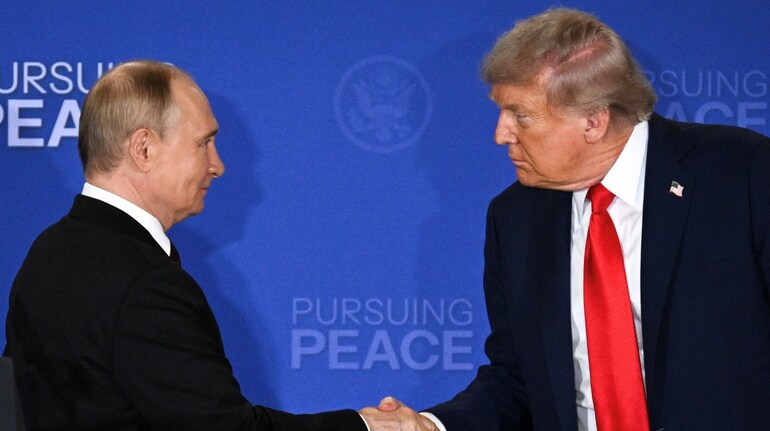
A 28-point peace proposal emerging from talks between the Trump administration and Russia lays out terms that would fundamentally reshape Ukraine’s borders and security posture. According to officials familiar with the document, it was drawn up without Ukrainian participation and largely mirrors long-standing Kremlin demands that Kyiv has repeatedly rejected as tantamount to surrender. The plan surfaces at a moment of Ukrainian weakness, with corruption scandal pressures at home, fraying patience among some allies and a stretched army facing renewed Russian advances, the New York Times reported.
Territorial concessions at the heart of the plan
At the core of the proposal is a requirement that Ukraine formally cede the entire eastern Donbas region to Russia, including areas that Russian forces have not yet captured. Ukrainian battlefield mapping groups estimate that, at the current pace, Moscow would need years of further fighting to seize all of this territory. The draft would shortcut that by treating Russia’s maximal war aims as the starting line for diplomacy. It would also enshrine Russian control over Crimea and other occupied territories, locking in gains that Moscow first made in 2014 and expanded after the full-scale invasion in 2022.
Shrinking Ukraine’s army and limiting its weapons
Beyond borders, the draft deal would sharply limit Ukraine’s future military strength. Officials say it includes caps on the size of Ukraine’s armed forces well below current levels and would require Kyiv to give up certain long-range weapons. That would affect the domestically produced drones and other systems Ukraine now uses to strike deep inside Russia, including targets in and around Moscow. Russia is also seeking a prohibition on foreign troops inside Ukraine after any cease-fire, blocking ideas floated in Europe about stationing a reassurance force of British or French troops to help secure a postwar settlement.
Washington’s role and Kyiv’s pushback
The proposal emerged from discussions between Steve Witkoff, serving as a Trump administration envoy, and Russian counterpart Kirill Dmitriev. A senior Ukrainian official says Kyiv was informed that talks were happening but was not asked to shape the terms. From Ukraine’s perspective, the document crosses every red line: it requires giving up sovereign territory, accepting a permanently weaker army and limiting future Western security guarantees. Officials in Kyiv have signaled that such terms are unacceptable and say the plan reflects Russian pressure rather than a balanced peace framework.
Why the proposal is surfacing now
The timing underscores how battlefield and political dynamics are shaping diplomacy. On the ground, Russian forces have regained momentum after earlier setbacks, making slow but steady advances, including toward the embattled eastern city of Pokrovsk. Ukrainian units are short of manpower, with some stretches of the front reportedly thinly held and increasingly reliant on drone operators rather than infantry to slow Russian assaults. Politically, President Volodymyr Zelensky is grappling with a high-level corruption scandal that risks undermining support among Western partners and could complicate further aid. Critics inside Ukraine say Moscow and Washington both see an opportunity to press Kyiv when its leverage is at a low ebb.
A broader diplomatic push, but on whose terms?
The Trump administration has been trying to restart peace efforts after earlier meetings between Ukrainian and Russian officials, and between President Trump and President Vladimir Putin, failed to produce a breakthrough. Washington has now pressed both sides to set out written terms that might serve as a negotiation baseline. A delegation of senior US military officials has arrived in Kyiv for talks, while Zelensky has been seeking parallel diplomatic channels, including a meeting in Turkey with President Recep Tayyip Erdogan, who has again offered to mediate. For now, however, the only detailed written framework in circulation appears to reflect Russia’s vision far more than Ukraine’s.
Kyiv’s fear of a frozen conflict on Russian terms
For Ukraine, the danger is not just immediate loss of land but the creation of a structurally weakened state, boxed in militarily and diplomatically. Accepting limits on army size, weapons and foreign deployments would, Ukrainian officials argue, reward aggression and leave the country exposed to future attacks once Russia has reconstituted its forces. The new proposal closely echoes Russian ideas from early 2022, before Moscow lost substantial territory and then clawed some of it back in grinding offensives. Ukrainian leaders insist that any settlement that locks in those demands would not be a just peace but a pause that invites the next war.
Discover the latest Business News, Sensex, and Nifty updates. Obtain Personal Finance insights, tax queries, and expert opinions on Moneycontrol or download the Moneycontrol App to stay updated!
Find the best of Al News in one place, specially curated for you every weekend.
Stay on top of the latest tech trends and biggest startup news.