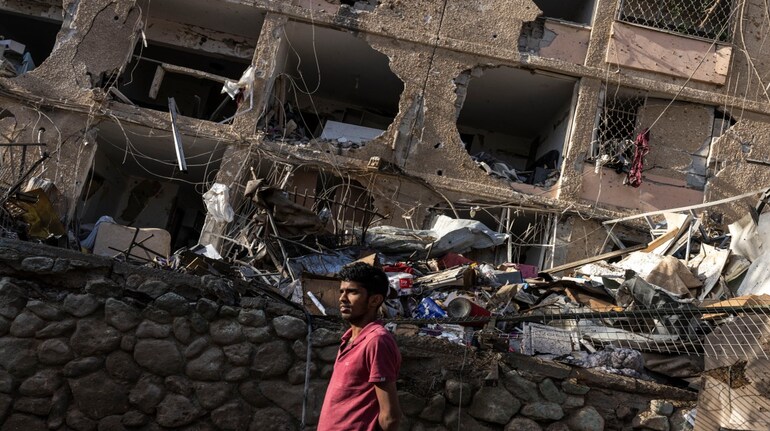

The war between the US, Israel and Iran has now entered its fourth week, and it’s already having effects far beyond the battlefield.
Oil prices have surged, shipping routes are under threat, and the conflict is beginning to pull in more countries, both directly and indirectly. At the same time, there are signs that the military campaign is evolving into something longer and more complicated than initially expected, CNN reported.
Different goals, same war
One of the more interesting shifts is the difference in tone between the US and Israel. President Donald Trump has been suggesting he wants the war to wrap up relatively soon, without committing to a timeline. Israel, on the other hand, appears to be preparing for a longer campaign, talking about expanding strikes over the coming weeks.
That gap doesn’t mean a split yet, but it does show that both sides may be looking at different endgames.
Energy has become a battlefield
The conflict has clearly moved beyond military targets. In the third week, the US and Israel began hitting Iran’s oil and gas infrastructure, including major facilities linked to production. Iran has responded by targeting energy sites in other countries across the region.
That shift matters because energy isn’t just a local issue. It feeds directly into global prices, inflation and economic stability.
You’re now seeing oil markets reacting almost in real time to military developments.
The Strait of Hormuz is the pressure point
At the centre of all this is the Strait of Hormuz. Roughly a fifth of the world’s oil passes through that narrow stretch of water. Iran has threatened shipping and carried out attacks on tankers, making it one of the most sensitive choke points in the global economy.
Even if the US is producing more of its own oil today, the global market is still interconnected. Any disruption here quickly shows up in prices everywhere.
The military campaign is huge, but it hasn’t settled things
On paper, the scale of the US campaign is massive. Thousands of strikes, thousands of missions, and a long list of targets hit across Iran.
A lot of Iran’s conventional military has taken a hit. Parts of its missile systems, navy and air force have been damaged.
And yet, the system hasn’t collapsed.
The leadership is not built around just one or two people. It’s layered, with multiple centres of control. So even after key figures have been taken out, the machinery keeps moving and the response continues.
Iran isn’t keeping the fight contained
What’s also changed is how Iran is responding.
It hasn’t limited itself to hitting US or Israeli targets. Instead, it’s been striking across the region.
Countries in the Gulf that usually feel a step removed from direct conflict are now being pulled in, with drones and missiles landing much closer to home.
At the same time, Iran is leaning into energy as leverage. The message is fairly clear: if the pressure continues, it can disrupt oil flows in a way that affects everyone.
The costs are starting to show up
You can already see the economic impact. Oil has pushed past USD100 a barrel and keeps moving. That doesn’t stay confined to markets, it shows up at fuel pumps, in transport costs and eventually in everyday prices.
For the US, that creates a real squeeze. Higher fuel costs hit households directly, and they also make it harder for policymakers to deal with inflation or think about cutting rates.
Then there’s the cost of the war itself. The administration is expected to seek around USD200 billion more, which only adds to an already stretched fiscal situation.
The US is running into diplomatic limits
There’s also a quieter shift happening on the diplomatic side.
The US has been asking allies to help secure shipping routes, but the response has been hesitant at best. Some countries are uncomfortable with how the conflict began, others are still dealing with trade tensions, and many simply don’t want to get pulled in deeper.
That’s led to some mixed signalling. At times Washington has asked for help, then said it can manage on its own, while also expressing frustration that allies aren’t stepping up.
Still no clear way this ends
Right now, there isn’t a neat conclusion in sight. The strikes have been heavy, but they haven’t produced a decisive outcome. The conflict is spreading beyond its original scope, and the economic effects are starting to build.
What was expected to be a contained operation is beginning to look more like a longer, more complicated phase, with no obvious off-ramp yet.
What started as a targeted operation is gradually turning into a more complex and open-ended situation, and it’s still not clear how or when it winds down.
Discover the latest Business News, Sensex, and Nifty updates. Obtain Personal Finance insights, tax queries, and expert opinions on Moneycontrol or download the Moneycontrol App to stay updated!





Find the best of Al News in one place, specially curated for you every weekend.
Stay on top of the latest tech trends and biggest startup news.