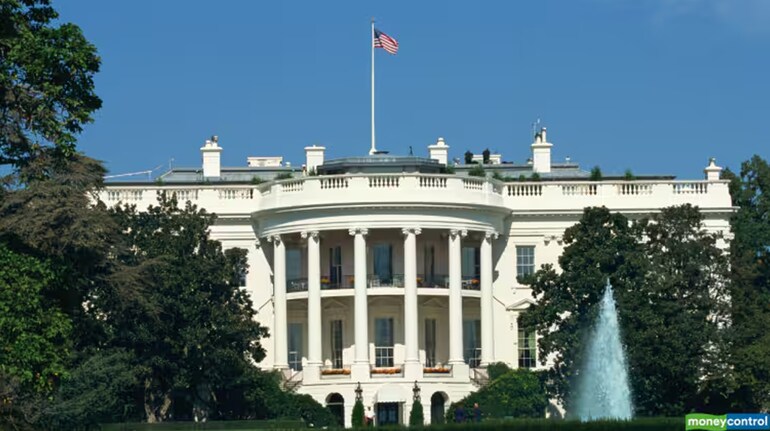

The underground complex beneath the White House East Wing traces its origins to 1941, when US President Franklin D. Roosevelt quietly ordered the construction of a bomb shelter after the attack on Pearl Harbor. Publicly, only the East Wing was acknowledged. Privately, a hardened, self-contained underground space was taking shape, designed to keep the president alive and in command during catastrophe.
Over time, that shelter evolved into what became known as the Presidential Emergency Operations Center, or PEOC, a fortified command hub built to function even in the aftermath of a nuclear strike, CNN reported.
How the space was actually used
Despite its ominous reputation, the bunker was rarely occupied by presidents. Roosevelt reportedly visited it just once. Later presidents were shown the space as a rite of passage, though its relevance faded after the Cold War.
That changed on September 11, 2001, when Vice President Dick Cheney was rushed there as the Pentagon was attacked. From the PEOC’s conference room, he helped coordinate the military response. The space has since featured in films and TV shows, often exaggerated but rooted in a real, hardened facility.
Structurally, it resembled what one former insider described as a “submarine built in the 1940s,” complete with independent power, water, air filtration, secure communications, sleeping quarters and an evacuation route out of the White House grounds.
Why it’s gone now
As part of the East Wing renovation tied to Trump’s ballroom project, demolition began last October. In the process, the aging underground complex was dismantled along with old utilities and adjacent security facilities used by the Secret Service and the White House Military Office.
Sources familiar with the site say the original PEOC and related subterranean structures are now entirely gone. While that might sound alarming, those same sources stress that presidential security has long relied on multiple redundant systems and locations, not a single bunker.
The secrecy around what replaces it
What comes next is where things become deliberately opaque. During a recent meeting of the National Capital Planning Commission, White House officials acknowledged that “top-secret” underground work was a key reason demolition began without the usual approvals.
In court filings responding to a lawsuit seeking to halt construction, the White House argued that stopping the underground work would endanger national security. The justification, it said, was laid out in a classified declaration not available to the public.
In short, the administration has confirmed the work exists while refusing to say what it involves.
A bunker for modern threats
Security experts expect any replacement facility to look very different from its 1940s predecessor. Rather than preparing solely for nuclear war, a modern underground complex would be designed to handle a wider spectrum of threats, from cyber and electromagnetic attacks to chemical, biological and kinetic strikes.
Jonathan Wackrow, a former Secret Service agent, has suggested such a facility would be built to operate quietly, adapt to future threats and avoid revealing its capabilities to adversaries.
Who’s likely involved
Trump has said the US military is heavily involved in the project. Construction firms with experience in sensitive sites, including the Pentagon after 9/11, are also believed to be part of the effort. Oversight likely spans the Secret Service, the Executive Office of the President and defence-related agencies.
What is clear is that this is not a routine renovation.
The question of cost
Trump has repeatedly cited ballooning figures for the ballroom above ground, now pegged at $400 million and reportedly funded by private donors. The underground work is a different matter.
Any new hardened security infrastructure beneath the White House will be paid for by taxpayers, and its true cost may never be known. As Wackrow put it, facilities built to meet future, classified threats rely on technologies and systems that are not commercially priced or publicly disclosed.
That makes one thing certain. Long after the ballroom opens and hosts its first event, the most consequential changes to the White House may remain unseen, buried beneath the East Wing, and officially unacknowledged.
Discover the latest Business News, Sensex, and Nifty updates. Obtain Personal Finance insights, tax queries, and expert opinions on Moneycontrol or download the Moneycontrol App to stay updated!
Find the best of Al News in one place, specially curated for you every weekend.
Stay on top of the latest tech trends and biggest startup news.