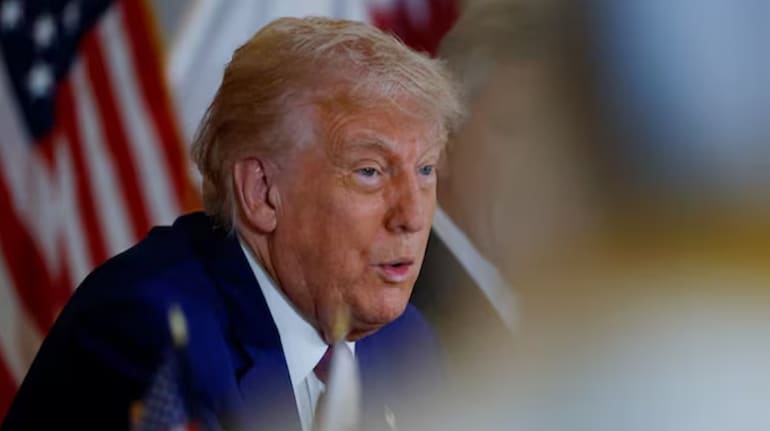
US President Donald Trump’s grip on the Republican Party looked shaky in recent weeks, as disagreements over policy and political strategy spilled into public view. Then came a sudden twist: the resignation of Representative Marjorie Taylor Greene, once one of his most loyal supporters and later one of his loudest critics. Her departure, announced in a fiery online video, demonstrated that Trump still has the power to push out those who challenge him. But the tone and message of her exit also signalled something bigger — a widening debate over the identity of the Republican Party in a post-Trump era, the New York Times reported.
A loyalist turned rebel
Greene rose to prominence as a fierce defender of Trump and a symbol of the MAGA movement. Over time, however, she became increasingly frustrated with what she described as broken promises, policy shifts and political compromises. Her announcement accused Trump and party leaders of abandoning the movement’s founding principles and ignoring ordinary supporters. She cast herself as the “true MAGA champion,” arguing that if she was being pushed aside, so were the voters who helped build the movement.
Avoiding defeat — and starting a fight
Her resignation also appears to have a practical motive. Facing a likely Trump-backed primary challenge in her conservative district, Greene chose to step down rather than risk a humiliating loss. Yet the dramatic framing of her departure turned it into something more than a personal political decision. By publicly questioning the direction of the party, she highlighted tensions that many Republicans have been quietly acknowledging.
Rising internal conflicts
Those tensions stretch across major issues: military intervention in Venezuela, tariffs and health care costs, immigration policy for skilled workers, continued support for Israel, the release of the Epstein files and the use of racist or antisemitic language in conservative politics. Media personalities such as Tucker Carlson, Ben Shapiro and Steve Bannon have clashed publicly, while institutions like the Heritage Foundation have faced internal turmoil over associations with white nationalist figures. These disputes represent the largest ideological rift within the party since Trump’s 2016 victory.
Fear of 2026
Some Republicans worry that Trump’s unpopularity could hurt them in next year’s midterm elections. Lawmakers in competitive districts have begun cautiously pushing back against certain White House policies. State-level Republicans in Indiana and Kansas resisted pressure to redraw congressional maps, and congressional Republicans ignored Trump’s calls to block the release of the Epstein files. Such moves suggest that self-preservation may now compete with loyalty.
Preparing for life after Trump
Though few Republicans will openly challenge the president, conversations about the party’s future have already begun. With Trump unable to seek a third term, attention is turning to 2028. Vice President JD Vance is widely seen as a leading contender, and different factions are already trying to influence him. Others eyeing future roles include Senator Ted Cruz, who has positioned himself as a defender of traditional support for Israel, and figures like Vivek Ramaswamy, who argue that the party must return to conservative principles such as meritocracy and limited government.
No clear ideology holding the party together
Critics within the party warn that once Trump leaves the stage, the coalition he built may splinter. The Republican agenda no longer rests on a clear set of policies, but rather on loyalty to Trump and opposition to his political enemies. Without him, some strategists argue, there may be nothing binding the movement together. As one Republican consultant put it, the party is not going to revert to the era of George W. Bush, and the traditional combination of fiscal restraint, social conservatism and hawkish foreign policy may no longer define it.
A moment of strength — and vulnerability
Trump’s ability to force out Greene shows he still dominates Republican politics. His fundraising capacity and loyal voter base give him enormous leverage. Yet Greene’s parting shot also revealed that the movement he built now contains competing visions and ambitions. The loudest message emerging from her resignation is not simply that Trump remains powerful, but that his influence is beginning to be questioned from within.
Whether this develops into a full reckoning or remains a whisper depends on what happens after Trump leaves office. For now, the Republican Party remains his — but the struggle over what comes next has already begun.
Discover the latest Business News, Sensex, and Nifty updates. Obtain Personal Finance insights, tax queries, and expert opinions on Moneycontrol or download the Moneycontrol App to stay updated!
Find the best of Al News in one place, specially curated for you every weekend.
Stay on top of the latest tech trends and biggest startup news.