






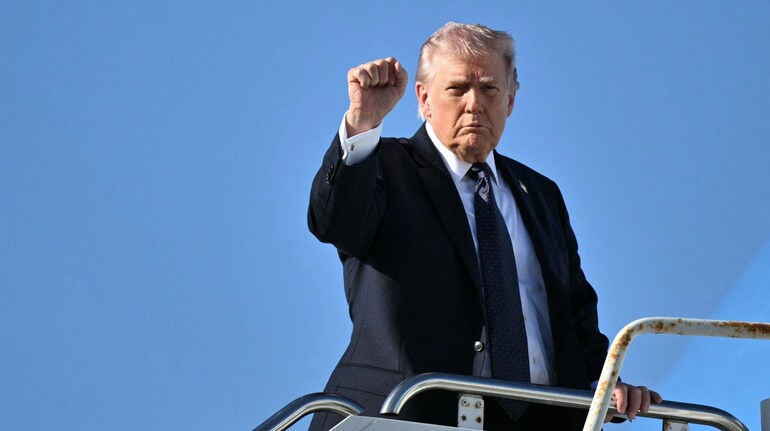
US President Donald Trump has announced a temporary 60-day waiver of the Jones Act, allowing foreign-flagged ships to transport fuel and other essential goods between US ports. The move comes as energy prices surge due to escalating tensions involving Iran and disruptions in global oil supply chains.
The White House said the decision is aimed at easing logistical bottlenecks and stabilising domestic energy markets during a period of heightened geopolitical risk.
Press secretary Karoline Leavitt said the waiver would “mitigate short-term disruptions to the oil market” and ensure the smooth movement of critical commodities, including oil, natural gas, fertiliser and coal across US ports.
What is the Jones Act?
The Jones Act, formally known as the Merchant Marine Act of 1920, governs domestic maritime trade in the United States. It requires that goods transported between US ports must be carried on ships that are US-built, US-owned and US-flagged.
Introduced after World War I to strengthen national security and protect the domestic shipping industry, the law has long been criticised for limiting competition and increasing transportation costs.
Why the waiver was introduced
The temporary suspension comes amid intensifying conflict in the Middle East, particularly involving Israel and Iran, which has disrupted global energy flows. A key pressure point is the Strait of Hormuz, a critical route for global oil shipments.
Recent instability has led to sharp increases in crude prices and strained supply chains worldwide. In the US, petrol and diesel prices have risen significantly, prompting urgent action from the administration.
By allowing foreign vessels to participate in domestic shipping, the waiver expands the pool of available tankers, potentially easing supply constraints.
The decision also aligns with broader efforts to stabilise oil markets, including easing certain sanctions on Venezuela’s state-owned oil company, Petroleos de Venezuela SA (PDVSA), to boost global crude supply.
Limited impact on fuel prices
While the waiver is expected to improve shipping flexibility, experts caution that its effect on fuel prices may be modest. Energy costs are largely driven by global crude prices, refining capacity and ongoing geopolitical risks.
However, analysts suggest the move could reduce transportation costs, particularly for shipments from the Gulf Coast to the US East Coast, and may offer temporary relief at the pump.
Strategic and political implications
The waiver is part of a broader strategy by the Trump administration to address rising fuel prices and inflation concerns. It also aims to ensure uninterrupted energy supplies for military operations and critical infrastructure.
“President Trump's decision to issue a 60-day Jones Act waiver is just another step to mitigate the short-term disruptions to the oil market as the U.S. military continues meeting the objectives of Operation Epic Fury,” Leavitt said. “The Administration remains committed to continuing to strengthen our critical supply chains.”
Despite its short-term benefits, the move has drawn criticism from maritime unions and shipbuilders, who argue that it undermines domestic industry protections.
Discover the latest Business News, Sensex, and Nifty updates. Obtain Personal Finance insights, tax queries, and expert opinions on Moneycontrol or download the Moneycontrol App to stay updated!
Find the best of Al News in one place, specially curated for you every weekend.
Stay on top of the latest tech trends and biggest startup news.









