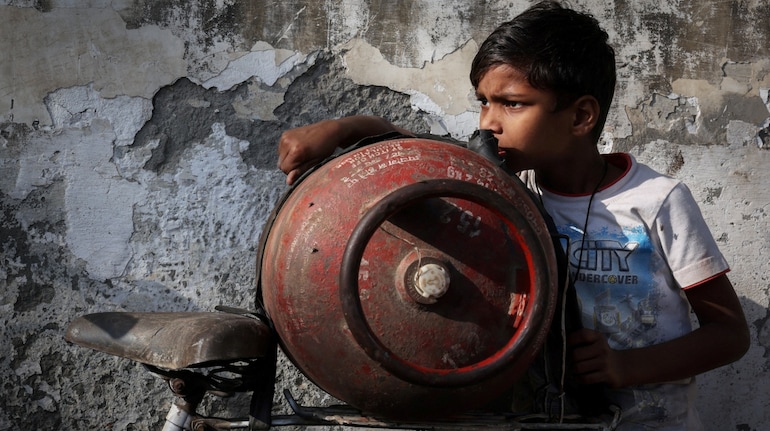

As tensions in West Asia disrupt key shipping routes and tighten energy supplies, India has been forced to act quickly to secure its cooking gas needs. What is emerging is not just a short-term adjustment, but a broader shift in how India approaches energy security.
At the centre of this shift is an unexpected partner -- Argentina.
A supply shock that forced quick decisions
India has long relied heavily on the Gulf for its LPG imports, with estimates suggesting nearly 90 percent of supplies come from the region. This dependence worked well under stable conditions, given the proximity and cost efficiency of Gulf producers.
However, the ongoing conflict involving Iran has disrupted movement through the Strait of Hormuz, one of the world’s most critical energy corridors. Tankers have faced delays, shipments have been held up, and supply chains have come under strain.
The impact was quickly felt within India. Supply pressures began to build, industries faced disruptions, and the government had to step in to ensure that household consumption remained protected. This created an urgent need for alternative sources.
Argentina steps in as a reliable fallback
In this moment of disruption, Argentina has emerged as a key backup supplier.
Shipments from Argentina have increased sharply since early 2026. Around 50,000 tonnes of LPG were delivered to India in just three months, according to reports by Argus Media and The Economic Times. This is more than double the total volume supplied in all of 2025.
The contrast is stark. Before 2024, there were virtually no LPG shipments from Argentina to India. The recent surge clearly reflects how quickly trade flows can realign during a crisis.
Even after the conflict intensified, Argentina continued to dispatch cargoes, helping India cushion the immediate impact of supply disruptions.
Why Argentina could scale up quickly
Argentina’s ability to respond at speed is rooted in its expanding energy sector.
The country has been increasing its natural gas output, supported by vast shale reserves such as Vaca Muerta. This has led to higher LPG production and the availability of exportable surplus.
Export hubs like Bahia Blanca have already been sending steady volumes to India, indicating that logistics and infrastructure are in place to support such trade.
In addition, Argentine companies are actively expanding processing capacity and looking to grow their presence in global energy markets. This combination of production strength and export ambition has allowed Argentina to step in at a critical moment.
A useful buffer, not a full replacement
While Argentina’s role has been important, it comes with limitations.
Shipping LPG from South America to India takes significantly longer compared to supplies from the Gulf. Freight costs are also higher, making it a less efficient option for routine imports.
More importantly, the scale required to fully replace Middle Eastern supplies is far beyond what Argentina can currently provide.
This means Argentina is best viewed as a strategic buffer rather than a long-term substitute.
A broader shift in India’s energy playbook
The real story lies in how India has responded.
Instead of remaining locked into a single region, India has moved quickly to diversify its sourcing. Alongside Argentina, suppliers such as the United States are also becoming part of the mix.
This reflects a more flexible and resilient approach. India is no longer relying solely on traditional partners but is building a wider network that can be activated when disruptions occur.
Such diversification reduces vulnerability and ensures that supply shocks in one region do not translate into domestic crises.
The larger takeaway
Argentina’s emergence as an LPG supplier to India highlights how quickly energy partnerships can evolve under pressure.
For India, the lesson is clear. Energy security in today’s world is not about dependence on one reliable source, but about having multiple options ready.
By adapting swiftly and expanding its supplier base, India has demonstrated an ability to navigate uncertainty while safeguarding domestic needs.
In a volatile global environment, that flexibility may prove to be its biggest strength.
Discover the latest Business News, Sensex, and Nifty updates. Obtain Personal Finance insights, tax queries, and expert opinions on Moneycontrol or download the Moneycontrol App to stay updated!





Find the best of Al News in one place, specially curated for you every weekend.
Stay on top of the latest tech trends and biggest startup news.