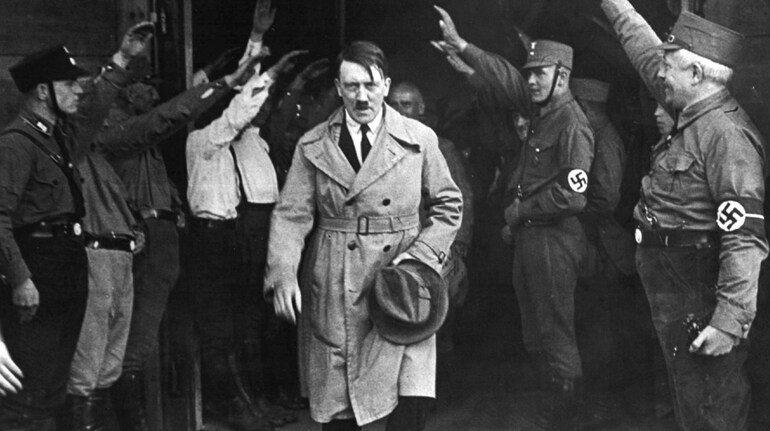

German journalist and author Hasnain Kazim did not expect a routine visit to the barber in Pakistan to become an awkward cultural encounter.
Sitting in a chair while an elderly barber worked carefully with a creaky pair of scissors and a comb, Kazim looked at his reflection and jokingly complained about the neat but rigid hairstyle.
“I said: ‘I look like Hitler.’”
Instead of laughing or correcting the remark, the barber looked at him in the mirror and responded approvingly.
“He looked at me in the mirror, gave a satisfied smile and said: ‘Yes, yes, very nice.’”
Kazim, in a German weekly news magazine Der Spiegel, writes that he quietly left the shop and tried to undo the strict parting himself at home, relieved that the conversation had not gone further.
The exchange, he suggests, captures something deeper and more uncomfortable that many German visitors experience in Pakistan and other parts of South Asia.
A recurring and awkward conversation for Germans
According to Kazim, discussions about Adolf Hitler often surface unexpectedly when people learn that someone is German.
“Pakistanis always hone in on that topic whenever they talk to Germans,” he writes.
The admiration often comes wrapped in a narrative about shared origins and perceived strength.
“‘We're Aryans too,’ they say, because there was an Indo-Germanic race, the Aryas. Besides, Hitler was a military genius, they add.”
Kazim says such conversations can quickly become awkward, especially when people believe they are paying Germans a compliment by praising the Nazi leader.
“It’s embarrassing because people here think they’re doing you a favor by expressing their admiration for the Nazi leader.”
He suspects many people in the region know little about the full historical reality of Nazi Germany.
“I suspect most Indians and Pakistanis have no idea what this man did. They see him as the bold Führer who took on the British and Americans.”
Anti-Israel sentiment and political narratives
Kazim argues that political narratives in parts of the Islamic world also shape how Hitler is sometimes viewed.
“In the Islamic world, not just in Pakistan but right across from Iran to northern Africa, anti-Semitic sentiment of course plays a role,” he writes.
Conversations, he notes, often shift toward the Israeli–Palestinian conflict.
“Conversations with German visitors rapidly turn to the injustice being suffered by the Palestinians who were robbed of their land.”
These political grievances sometimes blend with historical misunderstandings about Nazi Germany.
When the conversation turns uncomfortable
Kazim recounts another incident involving a German acquaintance who tried to challenge such admiration directly.
The friend, while riding in a taxi in Iran, told the driver that someone with darker skin would not have survived in Nazi Germany.
The response surprised him.
“The taxi driver looked at him surprised and said: ‘But I’m Aryan!’”
Moments like these, Kazim says, often leave visitors unsure how to respond.
Sometimes the only reaction is silent embarrassment.
He recalls a gathering with Pakistani relatives in London when a conversation unexpectedly turned to praise for Hitler’s leadership and military achievements.
“Our friends just sat there stony-faced and didn’t know what to say,” he writes, adding that his parents later apologised to them.
Fascination with Nazi imagery
Kazim says the fascination sometimes extends beyond casual conversation.
In Islamabad, he recently saw an old white Mercedes from the 1970s carrying a large family. On the back of the car was a sticker displaying a swastika.
Underneath it read: “I like Nazi.”
Such displays, he writes, are not limited to Pakistan or Muslim communities.
“A few years ago, a Hindu businessman in India opened a restaurant called ‘Hitler’s Cross,’ complete with a portrait of the Führer at the entrance.”
Another Indian entrepreneur, he says, sold bed linen decorated with swastikas as part of what was marketed as “The Nazi Collection.”
Books also play a role in shaping perceptions.
“English editions of Hitler’s ‘Mein Kampf’ can be found in bookshops even in the most remote parts of India,” he writes, adding that some school textbooks in the past have portrayed Hitler as a strong leader.
A name that stopped him mid-sentence
One moment, Kazim writes, still lingers in his memory.
While visiting the café at the historic Hotel Imperial in New Delhi with his wife, a waiter approached their table.
Kazim noticed something unusual on the name tag pinned to the young man’s uniform.
Curious, he asked why the waiter had such an uncommon name.
The young man replied matter-of-factly.
“Oh, my parents named me after a great historic person.”
Kazim looked again at the badge.
“The name, in black letters on a golden plate, read: Adolf.”

Discover the latest Business News, Sensex, and Nifty updates. Obtain Personal Finance insights, tax queries, and expert opinions on Moneycontrol or download the Moneycontrol App to stay updated!





Find the best of Al News in one place, specially curated for you every weekend.
Stay on top of the latest tech trends and biggest startup news.