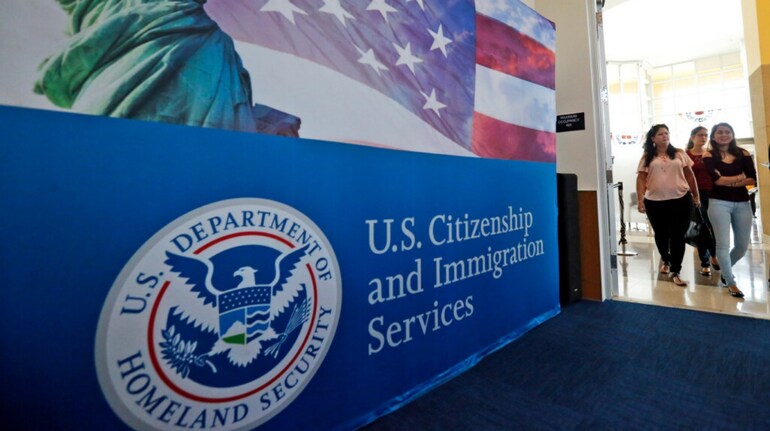
Becoming a US citizen has always required applicants to prove “good moral character.” This requirement dates back to the 1790 Naturalization Act and was traditionally understood to mean not having serious criminal convictions such as murder, felonies, or genocide. Even lesser offences, like drink driving, could be disqualifiers.
Now, the Trump administration has expanded the definition, ordering immigration officials to look at much more than just criminal history.
What has changed
In a new memo, the US Citizenship and Immigration Services (USCIS) asked officers to conduct a more “holistic” review of applicants. That means they must consider
Officials are told to weigh “positive attributes and not simply the absence of misconduct.” Applicants must show their character is “commensurate with the standards of average citizens of the community in which the alien resides.”
But the new rules also allow officers to bar applicants for “any other acts that are contrary to the average behaviour of citizens in the jurisdiction where aliens reside,” even if those acts are technically lawful.
USCIS will also examine applicants’ social media for signs of “anti-Americanism” or “antisemitic ideologies.”
“America’s benefits should not be given to those who despise the country and promote anti-American ideologies,” said USCIS chief spokesperson Matthew Tragesser. He added: “Immigration benefits, including to live and work in the United States, remain a privilege, not a right.”
Tragesser stressed that US citizenship should only go to the “best of the best,” calling it “the gold standard of citizenship.”
Why does it matter?
Critics see this as another Trump move to restrict immigration. Since 2015, around 600,000 to 1 million immigrants have become US citizens each year. There are now 25 million naturalised citizens in the US.
Experts warn the new guidance makes the process subjective and open to bias.
“They’re trying to increase the grounds for denial of US citizenship by kind of torturing the definition of good moral character to encompass extremely harmless behaviour,” said Doug Rand, a former senior USCIS official.
Gabriel J Chin, a law professor at the University of California, Davis, told The Washington Post the guidance is “so loose and discretionary that it is obviously susceptible to arbitrary enforcement.”
He added: “Many birthright US citizens do not have sufficient educational or economic achievements that would entitle them to a visa to immigrate to the United States. If they had not been born here, they would not make the cut.”
Jane Lilly Lopez, a sociology professor at Brigham Young University, said this shift “make it harder for noncitizens to obtain legal belonging in the United States” because officers are now asked to “evaluate something they cannot consistently describe or define.”
The bigger picture
The changes also come alongside Trump’s broader crackdown moves to challenge birthright citizenship, threats to denaturalise people, and deportations of students accused of being “pro-Hamas” or “anti-Israel”.
For example, Mahmoud Khalil, a Columbia student with a green card, was deported after advocating for Palestinian rights. Rumeysa Ozturk, a Turkish student, was detained after writing an op-ed urging her college to “acknowledge the Palestinian genocide.” A judge later ordered her release, ruling the government had no grounds to hold her.
The irony
Critics highlight the irony that Donald Trump himself is a convicted felon. In May 2024, he was found guilty on 34 counts of falsifying business records linked to hush money payments during the 2016 election. He has also been found liable for sexual abuse and defamation of E. Jean Carroll, and has been accused of harassment by dozens of women.
Despite this, Trump’s administration insists it can decide who meets the standard of “good moral character.”
What does this mean for applicants?
For anyone applying for a US visa or citizenship, experts warn the safest approach may be to avoid criticising Trump publicly and criticising Israel over the war in Gaza.
As one observer noted: the rules risk letting “stereotypes and prejudice and implicit bias take the wheel.”
Discover the latest Business News, Sensex, and Nifty updates. Obtain Personal Finance insights, tax queries, and expert opinions on Moneycontrol or download the Moneycontrol App to stay updated!
Find the best of Al News in one place, specially curated for you every weekend.
Stay on top of the latest tech trends and biggest startup news.