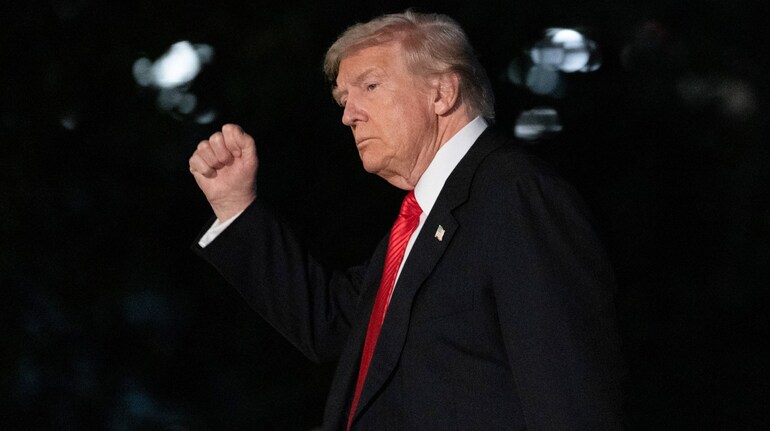

The US Supreme Court is expected to issue a major ruling today on the legality of sweeping tariffs imposed under President Donald Trump’s administration, a case that has been pending since oral arguments in November 2025.
These tariffs, enacted under the International Emergency Economic Powers Act (IEEPA), have prompted extensive litigation and debate over whether a president can levy broad import duties without explicit congressional authorisation.
The decision will determine whether the tariffs are lawful or whether they should be struck down as an unconstitutional overreach of executive authority, with significant ripple effects across the US economy, global trade, government revenue, and markets.
What the case is about
The core issue in the case is whether the International Emergency Economic Powers Act grants the president authority to impose broad-based tariffs. IEEPA was originally enacted to give the president certain powers during unusual and extraordinary threats, such as sanctions or freezing assets, but no prior president had ever used it to impose tariffs before Trump.
Lower courts have already weighed in: a federal trade court found that these tariffs exceeded presidential authority, and the Federal Circuit upheld that ruling but stayed it while the government appealed to the Supreme Court.
During oral arguments, several justices expressed skepticism about the administration’s use of an emergency statute to impose broad tax-like duties, suggesting that imposing tariffs is a power traditionally belonging to Congress under the Constitution’s tax and trade clause.
Scenarios the Supreme Court could announce
Court rules against the tariffs
If the Supreme Court strikes down the IEEPA-based tariffs, it would be a historic rebuke of the executive’s use of emergency powers in trade policy.
Companies and importers that paid the disputed duties could seek refunds or refunds claims, potentially sparking a massive financial reversal over the last year of tariff collections. Current estimates show that more than $175 billion in US tariff revenue could be at risk of refund if the tariffs are invalidated, according to the Penn-Wharton Budget Model.
The legal process for refunds would not be straightforward: importers could file claims with US Customs, and lawsuits are likely as businesses seek to recover duties already paid, and courts may need to sort out remedies.
A ruling against the tariffs could also reduce the tariff burden that has been passed mostly onto US consumers and businesses, according to studies showing Americans bore about 90 percent of the tariff costs despite claims that foreign producers would pay.
In this scenario, a ruling could provide relief to US importers and families: some analyses suggest households could see lower costs, with savings on certain goods if tariff barriers fall.
However, some tariffs imposed under other legal authorities, such as Section 232 and Section 301 statutes, would remain in place even if IEEPA tariffs are invalidated.
Court upholds the tariffs
If the Court upholds Trump’s tariffs, it would affirm that the president has broad authority under IEEPA or related doctrines to impose widespread tariffs without express congressional approval. The decision would be seen as a significant expansion of executive power over trade policy.
An upheld tariff regime would likely bring certainty to the administration and businesses already using the tariff framework. It could cement the policy as a staple of US trade strategy going forward.
For markets, this outcome could lower uncertainty, though analysts warn that the trade deficit has remained high despite aggressive tariffs, raising questions about their efficacy in achieving stated economic goals.
Impact and consequences
A ruling against the tariffs could spark sharp market reactions. Striking them down might boost equities and corporate cash flows as removal of costly import duties would improve profit margins, but it could also raise bond yields if government revenue shrinks due to refund obligations.
If the tariffs are upheld, it may reinforce confidence in longstanding tariff revenue streams, though questions about their impact on prices and trade balances remain salient. The US trade deficit continued to grow in 2025 despite tariffs, undermining one of the key policy rationales.
The refund debate
One of the most consequential questions in this case is refunds for tariffs already paid.
Supporters of overturning the tariffs argue that importers should be compensated for duties collected under an unlawful regime; these claims could amount to well over $150 billion to $175 billion, dwarfing some federal departmental budgets.
Yet even if refunds are ordered, getting money back will likely involve a lengthy legal and administrative process. The US Customs system does not have a simple mechanism for instant rebates, and many businesses may pursue litigation or complex claims processes to recover duties.
Discover the latest Business News, Sensex, and Nifty updates. Obtain Personal Finance insights, tax queries, and expert opinions on Moneycontrol or download the Moneycontrol App to stay updated!
Find the best of Al News in one place, specially curated for you every weekend.
Stay on top of the latest tech trends and biggest startup news.