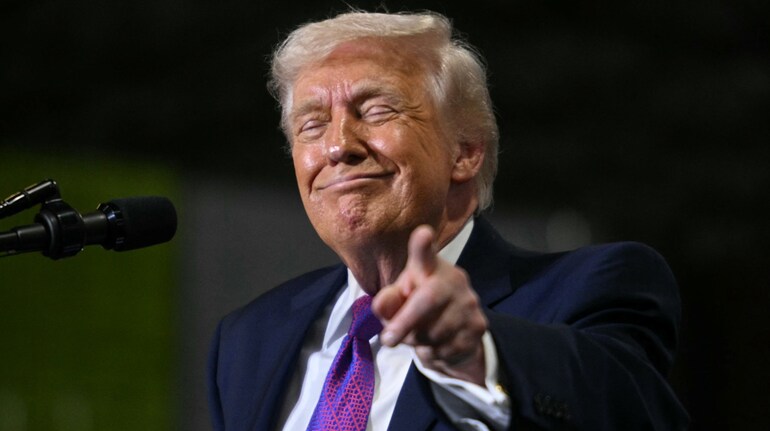

Three weeks after the United States and Israel launched major military strikes against Iran, President Donald Trump continues to insist that the campaign has been a success. At different moments he has claimed the war is “very complete” and that the United States has “won in many ways”. Yet the conflict continues to escalate, with Iranian retaliation, global economic disruption and growing uncertainty about how the war will actually end.
Analysts say the reality on the ground is far more complicated than the administration’s claims. A CNN analysis points to several reasons why Washington cannot yet declare victory in the Iran war. From unclear war goals to Iran’s continued resistance, the conflict shows few signs of reaching a quick conclusion.
Here are seven key reasons why Trump has not yet won the war.
1. There is still no clear definition of victory
One of the biggest problems facing the Trump administration is defining what “winning” actually means.
At various times, Trump has said the goal is to destroy Iran’s nuclear programme, dismantle its military capabilities and force regime change. He has also demanded “unconditional surrender” from Tehran.
But these objectives are extremely ambitious and may contradict each other. Even if Iran’s military infrastructure is damaged, that does not necessarily mean the country will surrender or collapse politically.
This lack of a clear end goal makes it difficult for the United States to claim success.
2. Iran is still fighting back
Despite heavy bombing and the killing of senior Iranian leaders, Iran has continued launching drones, missiles and other retaliatory attacks across the region.
The conflict has already triggered strikes on shipping routes, attacks on regional targets and disruptions to energy infrastructure.
Iran’s ability to continue fighting undermines the idea that the war has been decisively won.
Instead of collapsing, Tehran appears determined to prolong the conflict and impose costs on the United States and its allies.
3. The war is expanding beyond the battlefield
Another reason the conflict cannot be considered a victory is its widening economic and geopolitical impact.
The war has already disrupted global oil markets and contributed to a surge in energy prices. Oil prices have climbed above 100 dollars per barrel, partly due to instability around the Strait of Hormuz, a crucial route for global energy supplies.
Such economic shocks have global consequences and complicate the political calculus in Washington.
A war that destabilises the global economy is harder to portray as a clear success.
4. The US strategy lacks a clear exit plan
Another challenge is the absence of a clear strategy for ending the war.
Even within the Trump administration, officials have struggled to explain how the conflict will conclude. Some advisers have suggested the war could end soon, while others say the most intense phase is still ahead.
Trump himself has sent mixed signals. At one point he described the campaign as nearly finished. At another, he suggested that “the big wave hasn’t even happened”.
Such contradictions make it difficult for allies, markets and voters to understand the administration’s long term plan.
5. Intelligence agencies doubt regime change
Another obstacle to declaring victory is the resilience of Iran’s political system.
According to a classified assessment by the U.S. National Intelligence Council, even a large scale military offensive is unlikely to overthrow Iran’s entrenched leadership structure.
The report suggests that Iran’s political institutions and security forces are capable of maintaining regime continuity even if senior leaders are killed.
In other words, the removal of individual figures may not be enough to collapse the Iranian state.
6. Domestic support in the United States is uncertain
Wars are not only fought on the battlefield. They are also shaped by public opinion at home.
Recent polls show that many Americans remain skeptical about the conflict with Iran. A majority believe the war has not been clearly justified and fear its economic consequences, particularly rising fuel prices.
Such concerns could create political pressure on the administration if the war drags on.
Without strong domestic support, sustaining a long military campaign becomes more difficult.
7. The conflict risks becoming a prolonged war
Perhaps the most important reason victory remains elusive is the risk that the war could become long and unpredictable.
Despite the killing of Iran’s Supreme Leader Ali Khamenei in the initial strikes, the Iranian political system quickly replaced him and continued its military operations.
Meanwhile, Iranian retaliation and regional instability have already widened the conflict beyond its original scope.
Trump has repeatedly insisted that the United States is winning. But even he has acknowledged the uncertainty surrounding the conflict.
“We have won in many ways,” he said recently. “But we haven’t won enough.”
That remark reflects the central dilemma facing Washington. The United States may have achieved significant military successes, but those victories have not yet translated into a decisive political outcome.
Until the war’s objectives are clearly defined and Iran’s resistance is broken, analysts say the question of victory will remain unresolved.
Discover the latest Business News, Sensex, and Nifty updates. Obtain Personal Finance insights, tax queries, and expert opinions on Moneycontrol or download the Moneycontrol App to stay updated!
Find the best of Al News in one place, specially curated for you every weekend.
Stay on top of the latest tech trends and biggest startup news.