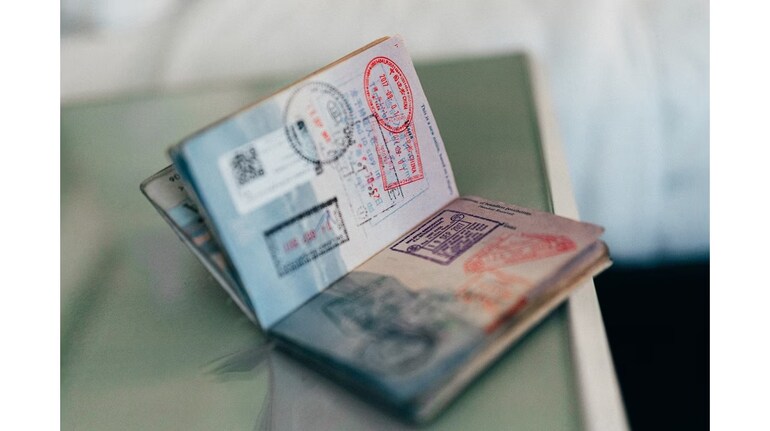
US President Donald Trump’s administration has added another element to its anti-India stance: the H-1B visa. This visa programme has long been a gateway for thousands of Indian professionals to work in the United States, especially in the technology and research sectors.
The H-1B visa allows American companies to hire skilled foreign workers for specialised jobs. It is a lifeline for firms such as Amazon, Google, and other tech giants that rely heavily on Indian talent. Every year, the number of visas is capped, and Indians consistently make up a large share of the applicants who are approved.
For years, critics in the US who oppose immigration have attacked the H-1B system, arguing that it takes away American jobs. Now, the Trump administration is signalling that it is ready to follow through.
Commerce Secretary Howard Lutnick told Fox News that he was directly involved in revising the programme. Calling the current system “terrible,” he echoed the host’s view that it was a “scam.” He also hinted that the government could target workers on the lower end of the income scale.
“I am involved in changing the H1B program because that is terrible. We are going to change the green card. The average American makes $75,000 a year, and the average green card recipient $66,000. So, we are taking the bottom quartile. Why are we doing that? That’s what Donald Trump is going to change. That’s the gold card that’s coming. We are going to start picking the best people to come into the country,” Lutnick said.
Here’s what this would mean for India and the United States:
Loss of talent and innovation: The H-1B programme feeds into America’s strength in science, technology, engineering, and mathematics. Indians have played a central role in building that ecosystem, powering leading research and keeping major tech companies ahead.
Unlike China, which has faced repeated accusations of intellectual property theft, Indian professionals have largely enjoyed a reputation for trustworthiness. Still, while Trump has openly said he would welcome hundreds of thousands of Chinese students, his administration is now looking to cut back on visas for Indians.
Economic consequences: H-1B visa holders are not just workers; they are also taxpayers and consumers. They keep companies running, pay federal and state taxes, and spend on housing, food, and services. Rolling back their presence would hurt US revenues and dampen economic activity, with knock-on effects for American workers too.
Reduced competitiveness: For decades, America’s global edge has come from attracting the brightest minds. Indian workers are a big part of that story. If the pipeline narrows, competitors such as China could step in to recruit skilled talent. Even close US allies such as Canada, the UK, and Australia are now courting students and professionals who may think twice about going to America.
Pressure on universities: Indian students are a vital part of the financial and intellectual life of US universities. Visa restrictions would cut into enrolment, weaken academic networks, and shrink an important revenue stream.
A blow to startups and job creation: Immigrant entrepreneurs, especially Indians, are behind some of America’s most exciting start-ups. Take Aravind Srinivas, an IIT Madras graduate who founded the fast-growing AI search firm Perplexity. If fewer Indians can move to the US, the country risks losing future founders like him. That would mean fewer start-ups and fewer jobs created on American soil.
Discover the latest Business News, Sensex, and Nifty updates. Obtain Personal Finance insights, tax queries, and expert opinions on Moneycontrol or download the Moneycontrol App to stay updated!





Find the best of Al News in one place, specially curated for you every weekend.
Stay on top of the latest tech trends and biggest startup news.