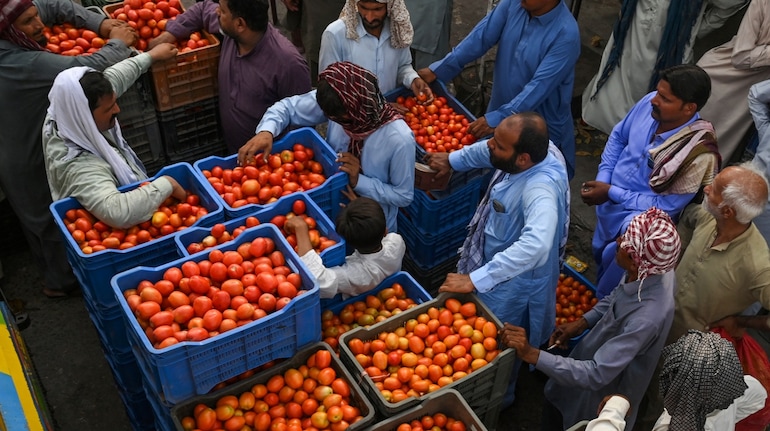
The ongoing closure of border crossings between Pakistan and Afghanistan has triggered a surge in the prices of essential goods, with tomatoes becoming the most visible symbol of the economic fallout. Since the fighting broke out between the two neighbours earlier this month, tomato prices in Pakistan have skyrocketed fivefold, hitting consumers hard and exposing the deep interdependence of the two economies.
What led to the border closure?
The crisis began after intense border clashes erupted on October 11 along the disputed 2,600-kilometre frontier. The violence included Pakistani airstrikes inside Afghanistan’s Paktika province, which killed dozens on both sides. It marked the worst escalation since the Taliban’s takeover of Kabul in 2021.
In response to the clashes, all border crossings were shut, halting the movement of people and goods. Despite a ceasefire being reached last weekend in talks mediated by Qatar and Turkey, trade and transit remain suspended.
Trade comes to a standstill
According to Khan Jan Alokozay, the head of the Pak-Afghan Chamber of Commerce in Kabul, both countries are paying a steep price for the closure. “With each passing day, both sides are losing around $1 million,” Alokozay told Reuters on Thursday.
Trade between Pakistan and Afghanistan is worth roughly $2.3 billion annually, dominated by agricultural produce and basic commodities such as fresh fruit, vegetables, minerals, medicine, wheat, rice, sugar, meat, and dairy products. The abrupt halt in cross-border commerce has disrupted supply chains, leaving thousands of tonnes of perishable goods stranded.
“We have around 500 containers of vegetables for export daily, all of which have spoiled,” Alokozay said, describing the extent of losses faced by traders. Pakistani officials at the main Torkham crossing confirmed that approximately 5,000 containers are stuck on both sides of the border.
Tomatoes become a luxury
Tomatoes, a staple in Pakistani households, have seen the steepest rise in prices. Retail rates have jumped by over 400 percent to around 600 Pakistani rupees ($2.13) per kilogram, according to traders and market reports. In some parts of the country, prices have even touched 700 rupees per kilogram, according to a report by Samaa TV.
The shortage is being felt across major cities. “There is already a shortage of tomatoes, apples, and grapes in the market,” a Pakistani customs official posted at Torkham told Reuters, adding that imports from Afghanistan form a crucial part of Pakistan’s fresh produce supply.
Apples and grapes, which mostly come from Afghanistan, have also become scarce, while local markets are struggling to absorb the sudden gap in supply.
Mutual dependence and economic strain
Pakistan heavily relies on Afghanistan for fresh produce such as tomatoes, onions, and apples, while Afghanistan depends on Pakistan for essential goods like wheat, sugar, medicines, and processed foods. The current standoff has therefore disrupted a lifeline that sustains both economies, particularly border communities.
Economists warn that prolonged closures could trigger inflationary pressure in Pakistan’s already fragile economy. The food inflation rate, which has been hovering above 25 percent this year, may rise further if trade does not resume soon.
Diplomatic efforts underway
A ceasefire agreement signed in Doha last week is currently holding, according to officials on both sides. The agreement emphasises “a complete ceasefire, mutual respect, no attacks on each other’s military or civilian infrastructure, and resolving issues through dialogue.”
However, border trade has not yet resumed. The next round of negotiations between Afghan and Pakistani officials is expected to take place in Istanbul on October 25, with the hope of reopening trade routes and easing the economic burden on citizens of both countries.
Until then, tomatoes and other essentials may remain out of reach for many in Pakistan, as traders continue to bear the cost of political and military tensions that have spilled into markets and households.
Discover the latest Business News, Sensex, and Nifty updates. Obtain Personal Finance insights, tax queries, and expert opinions on Moneycontrol or download the Moneycontrol App to stay updated!
Find the best of Al News in one place, specially curated for you every weekend.
Stay on top of the latest tech trends and biggest startup news.