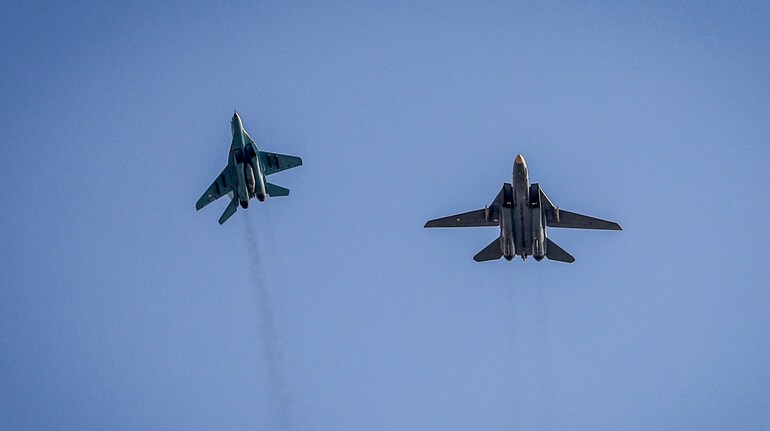

Long after the United States retired the iconic F-14 Tomcat, the fighter jet continues to roar into the air from bases inside Iran. It is one of the most unusual sights in modern military aviation. A Cold War era American jet, flown today by a country that has been Washington’s adversary for more than four decades.
The reason lies in history. Before the 1979 Islamic Revolution, Iran was a close US ally under Mohammad Reza Pahlavi. Fearing Soviet influence in the region, Washington agreed to sell Tehran one of its most advanced fighters. Between 1974 and 1978, Iran received 79 F-14A Tomcats, complete with the powerful AWG-9 radar and the long-range AIM-54 Phoenix missile. At the time, even many US allies could not buy the aircraft.
Everything changed after the revolution. The Shah was overthrown, ties with the US collapsed, and Iran was hit with sweeping sanctions. Military cooperation ended overnight. The Tomcats were left without spare parts, upgrades or official technical support. For most air forces, that would have meant the end of operations.
Iran chose a different path.
During the Iran-Iraq War, Iranian engineers began keeping the F-14 fleet alive by cannibalising damaged or grounded aircraft for parts. Over time, local workshops attempted to reproduce components domestically and adapt the jet to use other weapons available in Iran’s inventory. Some avionics were modified and older systems were patched together to extend service life.
The results have been uneven. Analysts believe only a fraction of the original fleet remains operational. Estimates vary, but most place the number of flyable jets somewhere between 15 and 30. The exact figure is unclear, especially after reports that several Tomcats were destroyed on the ground during Israeli strikes in 2025.
Today, Iran is the only country still flying the F-14. The United States Navy retired the aircraft in 2006, replacing it with the F/A-18 Super Hornet. Modern fighters now far outclass the Tomcat in sensors, stealth and electronic warfare. Designed in the 1960s, the F-14 is widely seen as outdated by today’s standards.
Yet its symbolic value remains strong.
The Tomcat once dominated the skies, proving its worth in several Cold War confrontations. In 1989, US Navy F-14s shot down Libyan MiG-23s over the Mediterranean, showcasing their long range interception power. For Iran, keeping the jet flying is less about matching modern air forces and more about survival, deterrence and national pride.
In a region shaped by sanctions and isolation, Iran’s F-14s are flying reminders of an earlier alliance and of a military forced to rely on improvisation rather than access.
Discover the latest Business News, Sensex, and Nifty updates. Obtain Personal Finance insights, tax queries, and expert opinions on Moneycontrol or download the Moneycontrol App to stay updated!





Find the best of Al News in one place, specially curated for you every weekend.
Stay on top of the latest tech trends and biggest startup news.