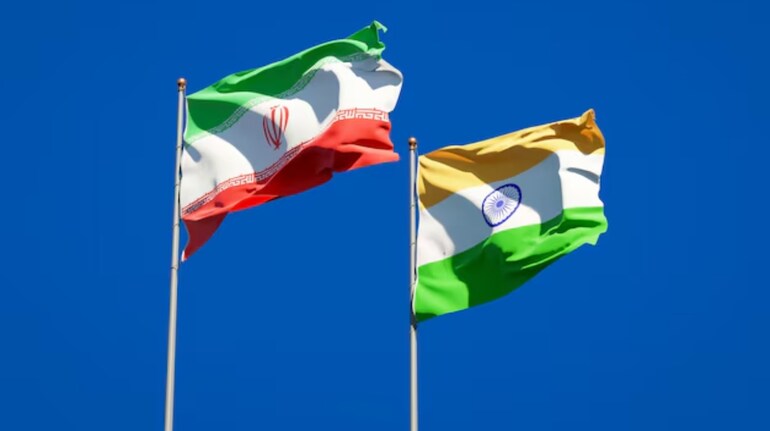

As protests driven by economic distress and political fatigue shake Iran’s clerical establishment, New Delhi is watching with growing concern. Iran has long been a quiet but critical pillar of India’s regional strategy. Geography, access and balance have bound the two countries together for decades. With Pakistan blocking India’s overland routes to Afghanistan and Central Asia, Iran has remained New Delhi’s only reliable western gateway. Tehran has also acted as a counterweight to Pakistan’s influence, especially during periods when Islamabad sought to weaponise jihadist networks against Indian interests.
A regime change or prolonged instability in Iran would not just upend West Asia. It could shrink India’s strategic room at a time when New Delhi is already grappling with Pakistan-backed terror, China’s expanding footprint, political churn in South Asia and unpredictable US policies under Donald Trump. For Pakistan and China, however, a weakened Iran could open new opportunities.
Why Iran matters to India
Chabahar and regional access
At the heart of India-Iran ties lies the Chabahar Port. Designed to bypass Pakistan, Chabahar gives India direct access to Iran’s coast and onward connectivity to Afghanistan and Central Asia through road and rail links. It is New Delhi’s only viable westward corridor.
But such corridors depend on political stability and long-term security guarantees. Any power struggle in Tehran could derail years of planning and investment.
Speaking to The Times of India, Rajan Kumar, a professor at Jawaharlal Nehru University, warned, “In a post-Khamenei power struggle, Chabahar risks becoming a hostage to instability rather than a strategic asset.”
India has already invested over $1 billion in Chabahar and related projects, restructuring timelines to comply with US sanctions. Regime change could put that investment, and Indian taxpayer money, at risk.
A check on Pakistan
Iran’s Shia leadership has historically restrained Pakistan’s regional ambitions. Despite being a Muslim-majority country, Tehran has been openly critical of Sunni extremist groups operating from Pakistan and pushing an anti-India agenda.
In the 1990s and early 2000s, India and Iran worked in tandem to counter the Taliban, which was backed by Pakistan in its quest for “strategic depth” in Afghanistan. This alignment blunted Islamabad’s influence and prevented it from monopolising Afghanistan’s political future. When Pakistan lobbied internationally against India over Kashmir in the mid-1990s, Iran backed New Delhi.
If Iran weakens internally, Pakistan stands to gain. A distracted or fragmented Tehran would lose its ability to act as a counterweight, allowing Islamabad more space to push its interests across West and South Asia.
Trade and economic stakes
India is Iran’s eighth-largest trading partner, with bilateral trade valued between $1.3 billion and $1.7 billion over the past year. Beyond trade, Chabahar remains India’s most visible economic and strategic footprint in Iran. Instability or regime change could freeze projects, disrupt trade and hand Pakistan and China an indirect win.
China’s expanding shadow
While Iran has often aligned with India against Pakistan’s regional games, its growing dependence on China is unmistakable. Beijing and Tehran signed a 25-year strategic cooperation pact in 2021. By 2025, China had become Iran’s largest trading partner, importing more than $14.5 billion worth of Iranian goods, largely oil sold at discounted rates due to Western sanctions.
China’s economic lifeline has translated into political influence. India’s presence at Chabahar acts as a modest counterbalance to this tilt. But if chaos persists, even a new Iranian regime is likely to lean heavily on Beijing for investment and security. According to a Times of India report, Iranian officials are already discussing Chinese-funded power plants and port projects in Khuzestan.
For New Delhi, that scenario would mean losing ground to China in a region critical for energy, trade routes and strategic depth.
India’s careful calculus
Former Indian diplomat Nirupama Menon Rao has urged caution as events unfold.
“It should keep a certain distance, because the situation in Iran has reached a point where outside actors cannot control the ramifications, nor reliably shape the outcome. The first duty is protection: the interests of Indian citizens in Iran, and in the wider region, must be safeguarded through strong consular readiness and contingency planning,” she said in a post on X.
Rao stressed the need for sober assessment over speculation. “What matters is not commentary but preparedness: understanding where this could go, what spillovers are most likely, and which channels of communication must remain open,” she said.
She also warned that instability in Iran would not remain confined. “If Iran tips into prolonged instability or fragmentation, the consequences will not stay contained. Chaos in West Asia can travel fast through energy markets, shipping routes, diaspora vulnerabilities, and the wider ecology of militancy and criminal networks. South Asia is not insulated from that.”
Who gains, who loses
For India, regime change in Iran threatens access routes, strategic balance and years of patient diplomacy. For Pakistan, it weakens a regional counterweight that has often constrained its ambitions. For China, it creates space to deepen influence through money, infrastructure and security guarantees.
As Iran stands at a crossroads, New Delhi’s challenge is to protect its interests without overreach, even as rivals quietly position themselves to benefit from Tehran’s turmoil.
Discover the latest Business News, Sensex, and Nifty updates. Obtain Personal Finance insights, tax queries, and expert opinions on Moneycontrol or download the Moneycontrol App to stay updated!
Find the best of Al News in one place, specially curated for you every weekend.
Stay on top of the latest tech trends and biggest startup news.