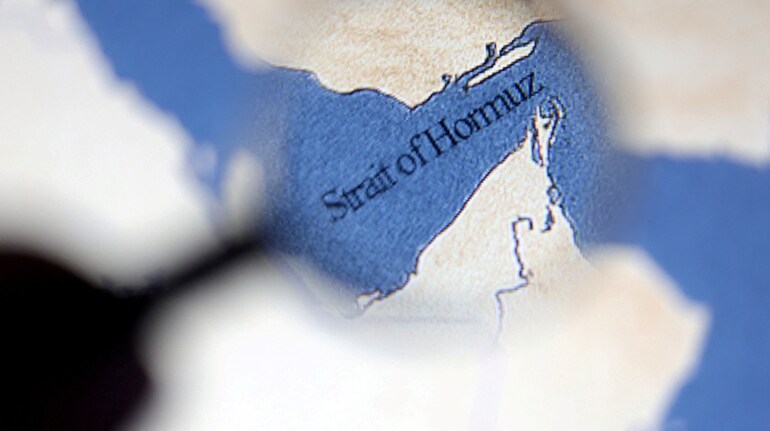

The shutdown of the Strait of Hormuz by Iranian forces has rattled global markets, disrupting a key maritime chokepoint that typically carries about a fifth of the world’s oil. With tensions high and no immediate breakthrough in sight, experts point to a handful of possible pathways -- each complex, risky, and uncertain -- that could allow shipments to resume.
Military escort operations remain a difficult option
One of the most discussed responses involves a US-led naval effort to secure passage for commercial vessels. Yet, even with a significant Western naval presence, the challenges are considerable. Ships attempting to transit face threats ranging from drones and missiles to sea mines, with multiple incidents already reported.
Nick Childs of the IISS described the current deployment as the “bare minimum number of warships” needed for escort duties. But officials stress that escort missions alone won’t suffice. As one UK defence official put it, “This is not just a maritime issue, and escort ships will not solve the problem alone... it would need a whole wrap around it, of air capability, maritime capability, crewed, uncrewed, long-range strike, short-strike, et cetera.”
The same official acknowledged the scale of the undertaking, calling it “a significant military challenge... This must be a multinational solution,” while adding, “We're not anywhere near that at the moment.”
Diplomacy offers a narrow but fragile pathway
Many governments still see diplomacy as the most viable route, though progress has been limited. Escalating attacks on energy infrastructure have hardened positions, reducing the likelihood of immediate talks.
Behind the scenes, some countries are engaging Tehran directly to coordinate limited shipping access. According to maritime analyst Richard Meade, discussions are underway regarding an “emerging IRGC registration and vetting system.” This arrangement would allow vessels to move through a monitored corridor approved by Iranian authorities.
“We know that several governments -- including China, but (also) India, Pakistan, Iraq, Malaysia -- they're all in direct talks with Tehran, coordinating vessel transits,” Meade said. Ships using this route pass near Larak Island for checks, and a small number have already done so.
Still, Meade cautioned that “negotiated safe passage... is unlikely to dramatically increase the trickle of tonnage,” suggesting only limited relief.
Some operators continue despite the risks
Not all shipping companies are waiting for formal guarantees. Certain operators are choosing to move cargo through the strait regardless of the dangers involved.
“Greek owners and operators have, typically, a higher risk appetite,” noted analyst Bridget Dyken, highlighting that some vessels are still transiting the area. Others appear to be relying on costly short-term insurance solutions. One approach reportedly involves paying a premium equivalent to “7.5 percent of hull value” for limited coverage during the crossing.
This strategy reflects a calculated gamble -- balancing potential profits against significant operational hazards.
Trade begins shifting to alternative routes
With the strait effectively constrained, global shipping patterns are already adjusting. Traffic is being rerouted through other maritime corridors, signaling what analysts describe as an early stage of rebalancing.
Routes via the Bab el-Mandeb strait and the Suez Canal have seen sharp increases in activity, while longer journeys around southern Africa are also becoming more common. These alternatives, however, come with added costs, delays, and logistical complications.
Waiting carries its own risks
For some shipowners, the safest option is to pause operations altogether. Without firm assurances from Iran or its Revolutionary Guards, many are unwilling to proceed -- even with naval escorts.
Dyken emphasized that operators may hold back without a “guarantee from Iran or the IRGC” that attacks will stop. Meanwhile, crews already stranded at sea face mounting difficulties. The International Chamber of Shipping has warned that supplies such as fuel and water are running low.
Adding to the uncertainty, Iran’s Parliament Speaker Mohammad-Bagher Ghalibaf signaled a long-term shift, stating that “the Strait of Hormuz won't return to its pre-war status”.
Taken together, these options illustrate a fragile and evolving situation, where no single solution offers a quick or comprehensive fix.
(With inputs from AFP)
Discover the latest Business News, Sensex, and Nifty updates. Obtain Personal Finance insights, tax queries, and expert opinions on Moneycontrol or download the Moneycontrol App to stay updated!
Find the best of Al News in one place, specially curated for you every weekend.
Stay on top of the latest tech trends and biggest startup news.