
The White House said the United States Navy has not escorted any oil tanker through the Strait of Hormuz, contradicting a brief online claim by a senior US official that was quickly withdrawn and adding to uncertainty surrounding global energy markets during the war with Iran.
"I can confirm that the US Navy has not escorted a tanker or a vessel at this time, though of course that's an option," White House Press Secretary Karoline Leavitt told reporters.
Her remarks came after a message from US Energy Secretary Chris Wright saying a US Navy escort had taken place appeared online and was deleted within minutes. The post had stated that the "US Navy successfully escorted an oil tanker through the Strait of Hormuz to ensure oil remains flowing to global markets."
The episode unfolded amid heightened tensions following the US-Israel war against Iran, which began on February 28 and has shaken energy markets worldwide.
Why escort claim caused confusion
Wright’s brief statement triggered immediate reaction in financial markets because it suggested the United States had already begun military protection of oil shipments through the strategic waterway.
That implication was significant because no American naval escort had been publicly confirmed since the conflict began.
After the message was removed, officials from the US Energy Department and the Pentagon did not immediately respond to requests for clarification.
Until Wright’s post appeared, no US official had said escorts were already happening. The White House clarification therefore reinforced that such a move remains only a possible future step rather than an ongoing operation.
The uncertainty came at a time when crude prices have been moving sharply. Oil prices jumped about 30 percent on Monday to nearly $120 per barrel before retreating, reflecting fears about supply disruptions from the conflict.
Prices then fell further after comments from President Donald Trump suggested the war might end soon, even as his defense secretary warned of the "most intense day of strikes inside Iran."
What makes Strait of Hormuz so critical
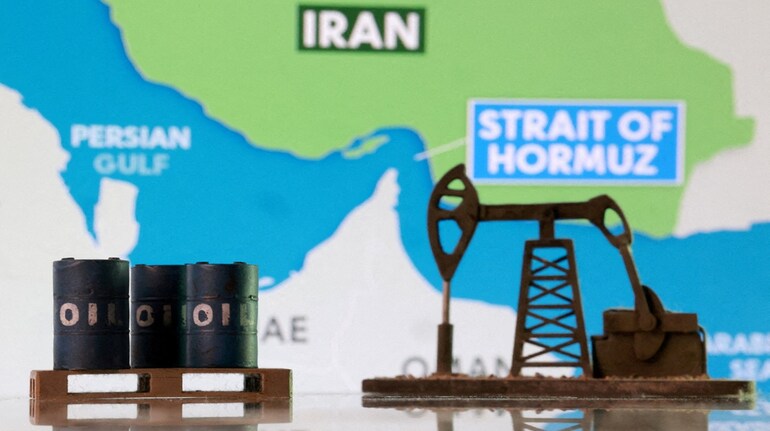
The Strait of Hormuz is one of the most strategically important shipping routes in the world. The narrow passage connects the Gulf with the Gulf of Oman and serves as the only maritime outlet for several major energy-producing states.
Countries including Kuwait, Iran, Iraq, Qatar and the United Arab Emirates rely on the waterway to export oil and gas to global markets.
Nearly one fifth of the world’s oil production normally moves through this channel. Liquefied natural gas shipments also depend heavily on it.
Any disruption in the strait therefore has immediate consequences for global energy prices and supply chains.
According to United Nations data, traffic through the strait has plunged by about 97 percent since the war started.
Before the conflict erupted, an average of 138 ships crossed the strait every day.
Since March 2, however, analysts using Marine Traffic tracking data detected just over 20 commercial vessels attempting the passage.
Among ships that transmitted signals during their crossing, nine were oil tankers and two were liquefied natural gas tankers.
Other vessels appear to have switched off their transponders to hide their positions, only reappearing on maritime tracking systems after leaving the danger zone.
How Iran has responded
Iran has issued direct threats against shipping in the area.
The country’s Revolutionary Guards warned that vessels passing through the strait could be targeted.
Tehran also declared that no oil would be exported from the Gulf while the war continues.
At least 11 ships have been attacked since the conflict began, according to available reports.
Even vessels that have not been struck face growing costs and risks. Insurance premiums for ships operating in the region have risen dramatically, in some cases by as much as 300 percent.
Those financial pressures, combined with the security threat, have caused many shipping companies to halt voyages through the corridor.
What US and allies are considering
Although the White House said no escorts have yet taken place, the US government has indicated that protecting commercial shipping remains under consideration.
President Donald Trump said on March 3 that the United States would provide protection for tankers traveling through the strait.
He also said he had directed the United States Development Finance Corporation to offer insurance and guarantees to shipping companies operating in the region.
Senior military leaders have confirmed that planning is underway.
The Pentagon is examining options for escorting ships safely through the strait, according to US Chairman of the Joint Chiefs of Staff General Dan Caine.
"We're looking at a range of options there," Caine told reporters.
Other governments are also discussing potential security missions.
French President Emmanuel Macron said several European countries, along with India and other Asian states, were considering a joint operation aimed at protecting shipping.
However, he indicated such a deployment would likely take place only after the conflict ends.
France has already begun positioning forces in the broader region. About a dozen naval vessels, including an aircraft carrier strike group, are being deployed to the eastern Mediterranean, the Red Sea and possibly the Strait of Hormuz.
Britain is also holding consultations with European partners.
British Prime Minister Keir Starmer has spoken with leaders in Germany and Italy about options to support commercial shipping, according to a government spokesperson.
Why strait is difficult to defend
Securing the waterway presents major military challenges.
Shipping lanes through the Strait of Hormuz are only about two nautical miles wide. Ships must also navigate a turn near Iranian islands and a mountainous coastline that provides natural cover for Iranian forces.
That geography allows a range of asymmetric threats.
Although Iran’s conventional navy has been weakened over the years, the Islamic Revolutionary Guard Corps retains significant capabilities.
Retired Royal Navy commander Tom Sharpe said the force still has weapons capable of disrupting shipping, including fast attack craft, unmanned surface vessels, speedboats, mini-submarines and naval mines.
He noted that even jet skis loaded with explosives could be used in attacks.
Iran also has a large drone production capacity. The Centre for Information Resilience estimates Tehran can produce around 10,000 drones each month.
Sharpe said escorting a small number of vessels daily could be possible in the short term.
Escorting three or four ships a day might require seven or eight destroyers providing air cover, he said, but sustaining such an operation over many months would demand significantly more resources.
Even if missile and drone threats were reduced, risks would remain.
Adel Bakawan, director of the European Institute for Middle East and North African Studies, warned that ships could still face suicide attacks.
Broader risks to global economy
The disruption has implications far beyond the energy sector.
United Nations officials have warned that high oil prices could spark another global cost-of-living crisis similar to the surge that followed Russia’s invasion of Ukraine in 2022.
Energy infrastructure has already been hit during the conflict, including strikes on oil depots in Iran and attacks affecting energy facilities in Gulf states that had previously been considered relatively secure.
The waterway is also critical for agricultural supply chains.
Around 33 percent of the world’s fertilisers — including sulphur and ammonia — move through the strait, according to analytics firm Kpler.
A prolonged interruption could therefore threaten food security by raising fertilizer costs and disrupting agricultural production.
Some analysts warn that if the war continues, the world could face economic turbulence similar to the oil shocks of the 1970s.
Despite the current uncertainty, experts believe international pressure will eventually push governments to ensure oil continues flowing from the Gulf.
"The world needs oil to flow through from the Gulf, and so there is planning ongoing to put protection measures in place," said Kevin Rowlands, editor of the RUSI Journal at the Royal United Services Institute.
(With inputs from Reuters)
Discover the latest Business News, Sensex, and Nifty updates. Obtain Personal Finance insights, tax queries, and expert opinions on Moneycontrol or download the Moneycontrol App to stay updated!
Find the best of Al News in one place, specially curated for you every weekend.
Stay on top of the latest tech trends and biggest startup news.