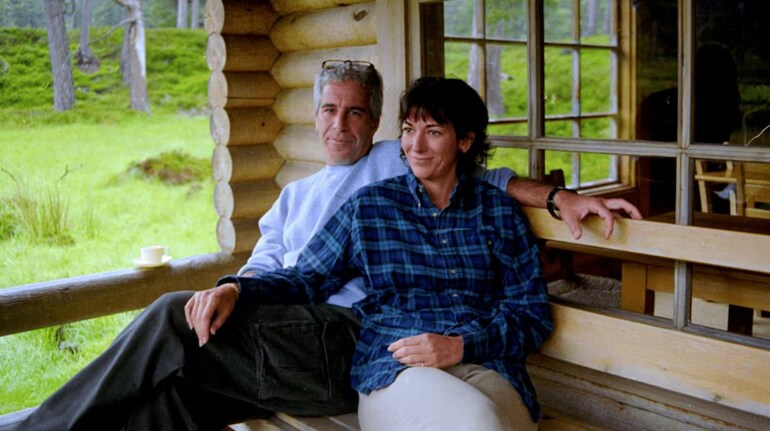

Ghislaine Maxwell, the longtime associate of convicted sex offender Jeffrey Epstein, is expected to refuse to answer questions at a congressional deposition scheduled for Monday.
According to a letter written by US Representative Ro Khanna to House Oversight Committee chair James Comer, Maxwell plans to invoke her Fifth Amendment right against self-incrimination and decline to answer all substantive questions.
“This position appears inconsistent with Ms. Maxwell’s prior conduct, as she did not invoke the Fifth Amendment when she previously met with Deputy Attorney General Todd Blanche to discuss substantially similar subject matter,” Khanna wrote.
Instead of answering questions, Maxwell is expected to read a prepared statement at the start of the deposition.
The development comes at a time when the US Department of Justice has released millions of internal documents related to Epstein, renewing focus on how he and Maxwell operated a sex trafficking network for decades.
How Epstein and Maxwell chose their targets
Survivor testimonies and court records show that Epstein and Maxwell did not randomly select victims.
They actively looked for girls and young women who were vulnerable. Many came from unstable homes, faced money problems, or were looking for opportunities to improve their lives.
Maxwell played a key role in identifying such targets. Survivors say she asked personal questions about family, finances, and future plans. This helped her assess who could be manipulated.
In one widely discussed case, a 14-year-old girl met Maxwell at a summer camp. She was gradually drawn into Epstein’s circle with promises of scholarships and support. What began as friendly attention turned into years of abuse.
Scholarships, cash and false promises
Money and opportunity were central tools in the grooming process.
Survivors have described several common tactics.
Cash for “massages”
Girls were offered hundreds of dollars for giving Epstein massages. These encounters often escalated into sexual abuse. Victims were told they could earn more money by bringing friends, creating a chain of recruitment.
Scholarship promises
Some girls were told Epstein could help them get into college or provide financial support for their education. These offers made the initial contact seem generous and life-changing.
Access to elite circles
In places like New York and Palm Beach, victims were told they might meet influential people or gain access to high-society networks if they stayed close to Epstein.
These tactics blurred the line between help and exploitation, keeping victims dependent and less likely to speak out.
The pyramid of abuse recruitment model
Investigators and prosecutors have described the operation as a pyramid of abuse.
Initial victims were encouraged or pressured to recruit other girls. In return, they were paid more money or given other rewards.
The more girls someone brought in, the more they earned. This structure allowed the abuse to expand while distancing Epstein from direct contact with new victims.
One survivor recalled being approached by a classmate who said she could make easy money by giving Epstein a massage. She did not know the reality until it was too late.
From innocent contact to exploitation
Many survivors say the abuse did not begin immediately.
It often started with small gestures. Ice cream outings, gifts, compliments, or casual conversations. Maxwell and others created an atmosphere where girls felt special, chosen, or indebted.
Prosecutors have said Maxwell helped normalise sexual behaviour. In some cases, she participated directly or directed victims on what to do, reinforcing control and reducing resistance.
Travel, isolation and control
Once recruited, many victims were flown or driven between Epstein’s properties.
These included his Palm Beach mansion, Manhattan townhouse, New Mexico ranch, and private island in the U.S. Virgin Islands.
Being moved across locations isolated victims from family and support systems. It also made reporting abuse more difficult and increased dependence on Epstein’s network.
Convictions and survivor voices
Epstein died by suicide in prison in 2019 while awaiting federal sex trafficking charges.
Maxwell was convicted in 2021 and sentenced to 20 years in prison in 2022 for helping recruit and abuse underage girls.
Despite convictions and compensation funds, survivors say the damage cannot be undone.
One survivor wrote in her journal, “It’s a horror story that I survived. I’m still so scared that Jeffrey is around every corner.”
Why this story still matters
Maxwell’s refusal to answer questions before Congress highlights the limits of accountability even after convictions.
The newly released Epstein files continue to expose how power, wealth, and systemic failures allowed abuse to continue for decades.
Survivor advocacy remains central to understanding the full scale of the crimes and ensuring such networks are not allowed to operate again.
Discover the latest Business News, Sensex, and Nifty updates. Obtain Personal Finance insights, tax queries, and expert opinions on Moneycontrol or download the Moneycontrol App to stay updated!
Find the best of Al News in one place, specially curated for you every weekend.
Stay on top of the latest tech trends and biggest startup news.