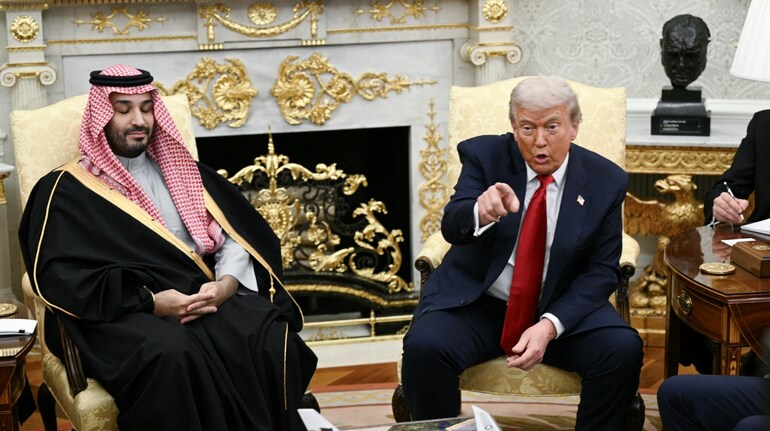

Saudi Arabia’s Crown Prince Mohammed bin Salman has reportedly been urging the United States to maintain pressure on Iran as the conflict involving Washington, Israel and Tehran enters its third week.
According to a report by The New York Times, the Saudi leader has been in frequent contact with US President Donald Trump and has encouraged him to continue military strikes against Iran.
Officials cited by the newspaper said Mohammed bin Salman, widely known as MBS, has told Trump to “continue hitting the Iranians hard” during their conversations as the war intensifies.
Saudi Arabia pushing Washington to press ahead
White House officials told The New York Times that Trump has been speaking regularly with several Arab leaders since the conflict began, with the Saudi crown prince emerging as one of the most prominent voices in those discussions.
The report said the advice from Riyadh reflects a long standing Saudi position on Iran. The stance echoes remarks made by Saudi Arabia’s late King Abdullah, who repeatedly urged Washington to confront Tehran and once famously told US officials to “cut off the head of the snake.”
Saudi Arabia has viewed Iran as its primary regional rival for decades. The rivalry spans political influence, military competition and sectarian divisions across the Middle East, often reflecting the broader Sunni-Shia divide in the region.
For Riyadh, analysts say, a weakened Iran would represent a significant strategic gain.
War enters a critical phase
The conflict between the United States, Israel and Iran has now entered its third week.
The fighting has killed more than 2,100 people, including 13 Americans, according to figures cited in the New York Times report. The war has also triggered a surge in global oil prices, which have approached $100 per barrel amid fears of supply disruptions.
Shipping through the Strait of Hormuz has been severely affected, raising concerns about the stability of global energy markets.
Despite the scale of the conflict, Washington has not yet achieved some of its key objectives. Iran’s stockpile of enriched nuclear fuel remains inside the country, and the new leadership in Tehran has vowed to continue fighting.
Risks for Saudi Arabia
While Saudi Arabia may favour continued pressure on Iran, the conflict has also created security risks for the kingdom and its neighbours.
According to the New York Times, drone attacks have already struck oil infrastructure in both Saudi Arabia and the United Arab Emirates during the war.
These incidents followed Israeli strikes on Iranian oil storage facilities near Tehran that reportedly took place despite warnings from US officials about potential escalation.
The attacks illustrate the delicate position Riyadh faces. While the weakening of Iran aligns with Saudi strategic interests, the conflict is already spilling into Gulf countries and threatening their energy infrastructure.
Trump’s shifting signals
President Trump has delivered mixed signals about how long the war may continue.
At times he has suggested that the conflict is close to being resolved. At other moments he has acknowledged that significant fighting still lies ahead.
Trump recently told reporters that he would know when it is time to end the war based on instinct.
“I’ll feel it in my bones,” he said when asked how he would decide the moment to stop the fighting.
Analysts say Trump’s eventual decision could be shaped by several factors including military assessments, political pressure at home and the advice of regional partners such as Saudi Arabia.
For now, with the war continuing and no clear diplomatic path emerging, the conversations between Washington and Riyadh are likely to remain an important factor in shaping the course of the conflict.
Discover the latest Business News, Sensex, and Nifty updates. Obtain Personal Finance insights, tax queries, and expert opinions on Moneycontrol or download the Moneycontrol App to stay updated!
Find the best of Al News in one place, specially curated for you every weekend.
Stay on top of the latest tech trends and biggest startup news.