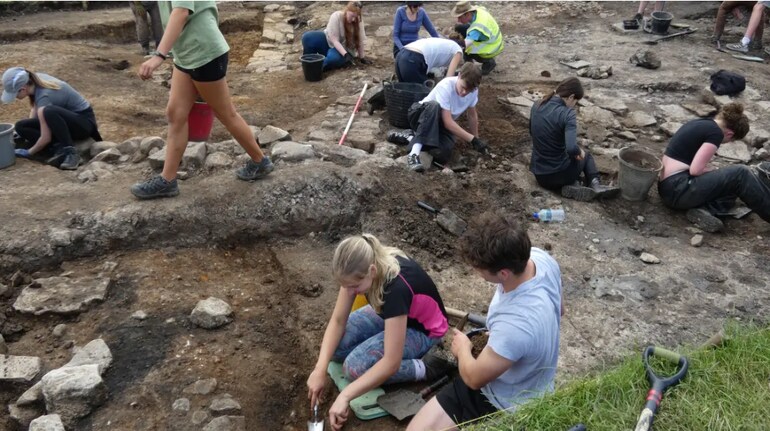
According to a recent posting from The New York Post, during excavation at Bremenium Fort in High Rochester, Northumberland, Archaeologists have made an astounding discovery: a 2,000-year-old fruit, believed to be of a plum, remarkably well-preserved. The find comes from one of Rome's most northerly outposts, just north of Hadrian's Wall, and it's part of a treasure trove that paints a vivid picture of life on the edge of the Roman Empire.
This excavation, joined by over 70 volunteers and archaeology students of various ages, has yielded a surprising variety of items: pots and amphorae imported from as far afield as northern Spain-most probably to ship olive oil-which give insight into ancient trade routes. Military artifacts emerged, too: a spearhead, lead shot used by slingers, and a votive oil lamp.
More personal items include a lead seal, perhaps for authenticating documents, and multiple intaglios, or engravings on gemstones. The intaglios feature images of animals and gods, indicating that both military personnel and civilians stationed at the fort admired fine jewellery. Various brooches and other complete ornamental items in the shape of dolphins were also uncovered by archaeologists, giving an idea of the aesthetic sense of the fort dwellers.
Chris Jones, Historic Environment Officer for Northumberland National Park, declared the range and condition of the finds to be "exceptional." Indeed, such an exceptional quality of finds is very unusual and gives great insights into everyday life at Bremenium, according to the excavation supervisor Bob Jackson from the Redesdale Archaeology Group.
But perhaps the most remarkable find of all was the preserved fruit. According to experts, the conditions of the soil in the fort may have served to delay decomposition processes, which is how the piece survived over so many ages. The plum provides a rare glimpse into the kind of fresh fruit that might have been consumed or kept by soldiers.
The excavation forms part of an ongoing program of investigation into the nature and role of Roman Britain's frontier systems. Despite the hostile climate and isolation of its location, Bremenium seems to have been a bustling centre of commerce and home life, with imported foodstuffs, military equipment, and personal items that attest to the cultural wealth of the Roman soldiers stationed far from Rome itself.
Discover the latest Business News, Sensex, and Nifty updates. Obtain Personal Finance insights, tax queries, and expert opinions on Moneycontrol or download the Moneycontrol App to stay updated!
Find the best of Al News in one place, specially curated for you every weekend.
Stay on top of the latest tech trends and biggest startup news.