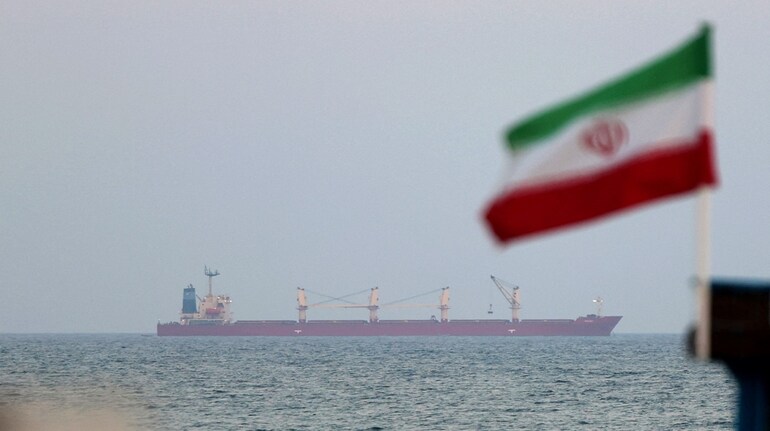

A US airstrike on March 7 targeting a desalination plant on Iran's Qeshm Island, cutting water supply to around 30 villages, has thrust the island into the heart of the West Asia conflict.
Once known for its surreal landscapes and rich history, and later developed as a tourism and trade hub, Qeshm has rapidly transformed into a fortified military outpost.
It is a key lever for Tehran to influence traffic through the Strait of Hormuz, one of the world’s most critical energy chokepoints.
Qeshm Island, the largest island in the Persian Gulf, spans roughly 1,445 sq km and sits just 22 km south of Bandar Abbas. Its location allows it to dominate the narrow Strait of Hormuz, through which a significant share of the world’s oil shipments passes.
Long celebrated as an "open-air geological museum", Qeshm is home to the Qeshm Geopark, the Namakdan Salt Cave, one of the world’s longest, and the Valley of Stars.
Beneath these landscapes, however, lies a vastly different reality - a network of subterranean military installations.
Over the past decade, Iran’s Islamic Revolutionary Guard Corps (IRGC) has built extensive underground facilities across Qeshm, often referred to as "missile cities". These hardened complexes, reinforced with concrete, equipped with ventilation, emergency power and internal transport systems, are designed to survive airstrikes and enable rapid deployment of weapons.
According to reports by Al Jazeera, the island hosts a wide array of weaponry:
>> Anti-ship cruise missiles such as the Chinese-origin HY-2 "Silkworm" and longer-range systems like Ghadir variants, aimed at targeting naval vessels in the strait
>> Ballistic missiles, including the Qiam-1, Khaybar Shekan, and medium-range Ghadr missile and Emad missile
>> Precision-guided munitions, with Iran claiming thousands of advanced strike systems capable of evading electronic warfare
Not just this.
Beyond missiles, Qeshm also hosts hidden naval bases, sometimes described as "floating cities", housing fast-attack craft armed with rockets and mines, tailored for asymmetric warfare.
Iran enjoys a decisive tactical advantage, capitalising on Qeshm’s geography.
The island acts as a forward platform to monitor, control, or potentially choke traffic through the Strait of Hormuz. Its shallow waters, averaging around 200 feet in depth, are ideal for deploying sea mines. Small IRGC vessels can quickly emerge from concealed coastal positions, making detection difficult.
Rather than imposing a full blockade, Iran appears to be using Qeshm to regulate shipping. Reports indicate that vessels must now follow designated routes between Qeshm and nearby islands like Larak, effectively seeking clearance from Tehran before transit.
Analysts at the EOS Risk Group say the strait is not formally closed, but passage has become increasingly conditional, turning Qeshm into a "gatekeeper" for global energy flows.
The island has emerged as a flashpoint in the ongoing conflict. On March 7, US airstrikes targeted a desalination plant on Qeshm, cutting off water supplies to around 30 villages, according to Iranian authorities. Tehran condemned the attack as a violation targeting civilian infrastructure.
In retaliation, the IRGC launched strikes on US-linked targets in Bahrain, escalating tensions across the Gulf.
The targeting of water infrastructure highlights a dangerous new dimension of the conflict. Experts told AFP that attacks on desalination plants, which are critical in the water-scarce Middle East, could trigger severe humanitarian and economic consequences if escalated. The region accounts for about 42% of global desalination capacity, making such facilities highly strategic.
Designated a free trade-industrial zone in 1989, Qeshm was once positioned as a commercial and tourism hub. Today, analysts describe it as Iran’s "unsinkable aircraft carrier", a heavily fortified outpost projecting power across the Gulf.
Its size allows Iran to disperse and conceal military assets, complicating any attempt to neutralise them through conventional strikes. Retired military experts cited by regional media say the island’s underground networks are specifically designed to ensure Iran retains the ability to control or shut the strait even under sustained attack.
Qeshm’s strategic importance is not new. Known historically as Oaracta by Greek explorer Nearchus, the island has long attracted empires.
In 1301, the rulers of Hormuz shifted their court to the island for protection. The Portuguese built a fort there in 1621 before being expelled by a Persian-English alliance a year later. The British later established a naval base, underlining Qeshm’s enduring geopolitical value.
Today, Qeshm sits at the heart of a 21st-century energy confrontation. As tensions continue to flare up, the island’s underground missile infrastructure and control over shipping lanes give Iran a powerful lever over global markets and military dynamics.
By combining geography, hidden firepower, and control over a critical chokepoint, Qeshm has evolved from a natural wonder into Tehran’s most potent strategic asset, a "trump card" that can shape the course of conflict in the Gulf.

Discover the latest Business News, Sensex, and Nifty updates. Obtain Personal Finance insights, tax queries, and expert opinions on Moneycontrol or download the Moneycontrol App to stay updated!
Find the best of Al News in one place, specially curated for you every weekend.
Stay on top of the latest tech trends and biggest startup news.