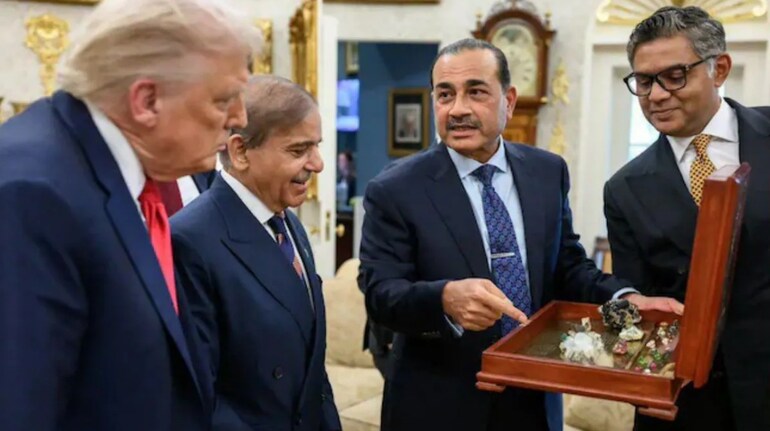

Pakistan’s attempt to project itself as a mediator in the US-Iran conflict is unfolding against a backdrop of confusion and contradiction, with Donald Trump’s claims of active negotiations being repeatedly rejected by Tehran. Even as Islamabad pushes to host talks and its army chief Asim Munir engages directly with Trump, Iran has flatly denied that any such diplomacy is underway, exposing the shaky premise of Pakistan’s outreach.
The episode underscores how Pakistan’s military-led mediation is less about credible peacemaking and more about inserting itself into a narrative driven by Trump’s shifting claims, even as those claims are publicly dismantled by Iranian leaders.
Munir-Trump outreach built on shaky ground
At the centre of Pakistan’s mediation push is army chief Asim Munir’s direct engagement with Donald Trump, a move that once again highlights the military’s dominance over foreign policy. Munir’s outreach appears aimed at positioning Pakistan as a key intermediary, but it is built on claims from Washington that are increasingly being challenged by Tehran.
According to Financial Times, Munir spoke with Trump on Sunday, while Pakistani Prime Minister Muhammad Shehbaz Sharif held talks with Iranian President Masoud Pezeshkian on Monday.
Iran rejects Trump’s claims outright
Iran has categorically denied any negotiations with the United States, contradicting Trump’s narrative. According to Iranian officials, no direct talks have taken place since the war began.
Iran’s parliament speaker Mohammad Bagher Ghalibaf went further, dismissing Trump’s claims as fabricated. He said “no negotiations” had been held and described such assertions as “fakenews” aimed at manipulating oil markets and helping the US and Israel “escape the quagmire.”
The Iranian foreign ministry has echoed this stance, insisting that while messages may have been relayed through intermediaries, there have been no actual negotiations, and Tehran’s positions remain unchanged.
Pakistan’s mediation risks looking performative
This outright denial from Tehran puts Pakistan in an awkward position. Islamabad has pitched itself as a venue for talks and a key channel between Washington and Tehran, but if one side denies talks altogether, the credibility of that role becomes questionable.
Munir’s involvement, rather than strengthening Pakistan’s position, reinforces the perception of a military establishment trying to stay relevant by aligning with Trump’s claims, even when those claims are disputed. It also exposes Pakistan’s tendency to overstate its diplomatic leverage in crises where it has limited real influence.
Economic and political compulsions remain central
Despite the shaky diplomatic ground, Pakistan’s motivations remain clear. The war threatens to trigger a severe oil shock, inflate its import bill, and worsen an already fragile economy. At the same time, rising prices and shortages are fuelling domestic unrest, putting pressure on the military leadership.
This explains why Islamabad is eager to push mediation, even if the process itself appears uncertain or overstated. The goal is less about resolving the conflict and more about preventing spillover effects that could destabilise Pakistan internally.
Analysts remain sceptical about Islamabad’s role. Sanam Vakil of Chatham House, speaking to Finacial Times, noted that multiple countries are “scrambling” to de-escalate the conflict but cautioned against reading too much into these efforts. “I don’t take this as any signal the war is coming to an end,” she said. She also underscored the lack of compromise on either side, adding, “I don’t think Trump can walk away from this crisis of his making.”
Mediation shaped by Trump’s unpredictability
Pakistan’s strategy is also tied to its need to stay in favour with Trump, whose rhetoric has swung between escalation and claims of diplomacy. While Trump speaks of progress and potential agreements, Iran’s consistent denials suggest a widening gap between perception and reality.
For Islamabad, this creates a risky situation. By aligning itself with Trump’s narrative and inserting Munir into the process, Pakistan risks being seen as complicit in a diplomatic storyline that lacks credibility on the ground.
With Iran rejecting Trump’s claims and denying negotiations altogether, Islamabad’s role risks being reduced to that of a facilitator for talks that may not even exist, exposing both its limitations and its reliance on an increasingly unreliable US narrative.
Discover the latest Business News, Sensex, and Nifty updates. Obtain Personal Finance insights, tax queries, and expert opinions on Moneycontrol or download the Moneycontrol App to stay updated!
Find the best of Al News in one place, specially curated for you every weekend.
Stay on top of the latest tech trends and biggest startup news.