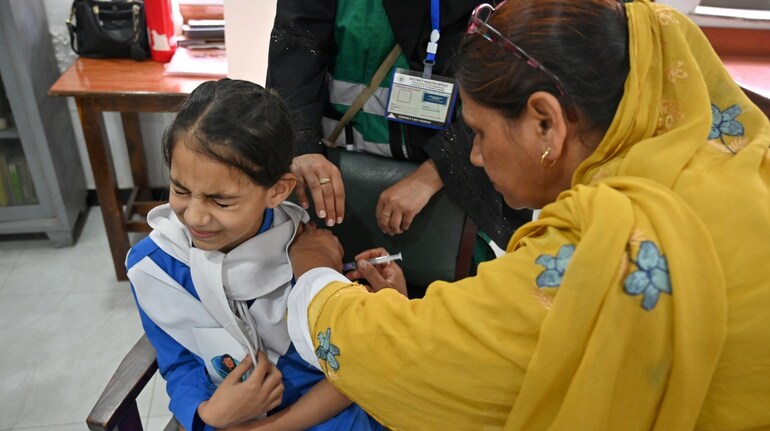

Pakistan’s fragile healthcare system is facing fresh pressure after the disruption of cost-effective vaccine supplies from India, a fallout of the military conflict between the two neighbours in May 2025. The halt in affordable imports has sharply increased Pakistan’s financial burden and exposed its long-standing dependence on external aid and foreign manufacturing for basic public health needs. With no domestic vaccine production and international support set to taper off, Islamabad now faces the prospect of soaring import bills at a time when its economy is already under strain.
Health Minister Mustafa Kamal acknowledged on Saturday that the stoppage of Indian vaccine supplies has begun to hurt Pakistan’s economy. Pakistan had earlier accessed low-cost vaccines through the Global Alliance for Vaccines and Immunisation, or GAVI, which acts as a global purchasing and funding platform for poorer countries.
“Right now, Pakistan imports vaccines at an annual cost of around $400 million, out of which 49% of the cost is covered by international organisations that operate through GAVI,” Kamal said.
“Pakistan contributes 51% of the cost now, and unless we start local production of vaccines, we will face an annual import bill of $1.2 billion by 2031,” he added, warning that international support for vaccine procurement will end by that year.
Kamal admitted that Pakistan’s access to affordable vaccines depended heavily on India. “Pakistan has traditionally procured cheap vaccines for immunisation and other requirements through GAVI, which used to come from India,” he said.
Acknowledging India’s role indirectly, the minister said GAVI had enabled Pakistan to obtain cost-effective, high-quality vaccines manufactured by Indian pharmaceutical companies despite tense bilateral relations. He also noted that during the COVID-19 pandemic, GAVI helped procure millions of doses from India under the COVAX facility.
Pakistan currently provides 13 vaccines free of charge to its citizens, yet none are manufactured domestically. With a population of nearly 240 million and around 6.2 million births annually, demand for vaccines continues to rise sharply, making the absence of local production a serious vulnerability.
Kamal said international assistance had so far kept import costs manageable but warned the situation could deteriorate rapidly without urgent action. He claimed the government has begun preparatory work to achieve self-sufficiency in vaccine production rather than waiting for donor support to lapse.
The supply disruption followed India’s launch of Operation Sindoor on May 7 last year, which targeted terror infrastructure in Pakistan and Pakistan-occupied Kashmir in retaliation for the Pahalgam attack that killed 26 civilians. The strikes led to four days of intense clashes before both sides agreed to halt military action on May 10.
The episode has underlined how Pakistan’s economic and healthcare vulnerabilities are closely tied to regional tensions, leaving critical public services exposed to geopolitical shocks.
Discover the latest Business News, Sensex, and Nifty updates. Obtain Personal Finance insights, tax queries, and expert opinions on Moneycontrol or download the Moneycontrol App to stay updated!
Find the best of Al News in one place, specially curated for you every weekend.
Stay on top of the latest tech trends and biggest startup news.