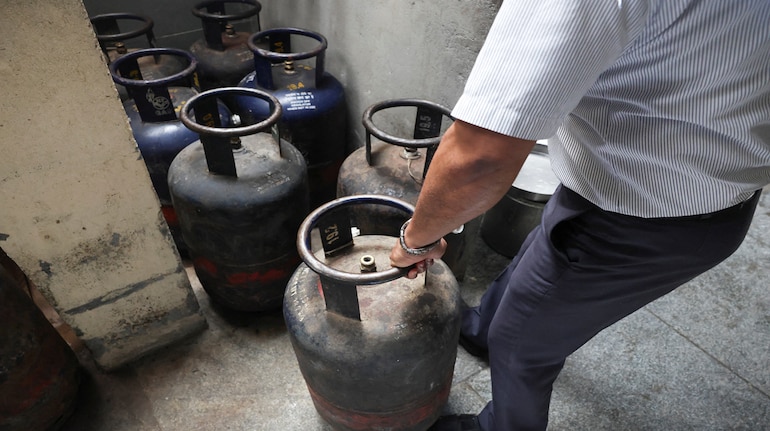
For most Indian households, cooking still means lighting an LPG stove. The familiar red cylinder has been the centre of the kitchen for decades. But over the past few years, induction cooktops have quietly entered many homes, especially in cities. This naturally raises a practical question many people ask. Is it actually cheaper to cook on gas or induction?
Let us start with LPG. A standard 14.2 kg domestic LPG cylinder currently costs roughly Rs 900 to Rs 950 in many cities, although prices vary slightly across states. For a small family, one cylinder usually lasts around a month. In homes where cooking is heavier or where meals are made several times a day, it can run out faster.
Induction cooking works differently because it runs on electricity. Instead of producing a flame, the induction plate uses magnetic energy to heat the vessel directly. If you have ever used one, you will notice the pan heats up quickly while the surrounding surface stays relatively cool.
That difference matters because of efficiency. A gas stove loses a lot of heat to the air around it. Anyone who has stood next to a burner for a long time can feel that wasted heat. Induction cooktops send most of the energy straight into the cookware. In technical terms, induction can use close to 85 to 90 percent of its energy for cooking, while LPG stoves typically utilise only about 35 to 40 percent.
When you translate that into cost, the picture becomes interesting. Roughly speaking, cooking equivalent to one LPG cylinder might consume around 70 to 80 units of electricity on an induction cooktop. If electricity costs about Rs 7 to Rs 8 per unit in many cities, that comes to around Rs 550 to Rs 650. On paper, that makes induction cooking slightly cheaper.
But kitchens do not run on theory alone. Electricity tariffs vary widely, and once a household moves into higher tariff slabs the cost per unit can rise sharply. In such cases, induction cooking may not remain cheaper.
Cooking style also matters more than people realise. Long simmering, deep frying, or preparing food for a large family increases electricity consumption. Gas sometimes handles those tasks more comfortably.
Then there is the starting cost. Buying an induction cooktop and compatible utensils can cost several thousand rupees. Many traditional aluminium or copper vessels will not work unless they have a magnetic base.
Because of these factors, many households today use both. Gas remains the main stove for everyday cooking, while induction is used for quick tasks like boiling milk, reheating food or making tea.
In the end, induction can be slightly cheaper in many urban homes because it wastes far less heat. But the final bill still depends on electricity prices, cooking habits and how often the kitchen is in use.
Discover the latest Business News, Sensex, and Nifty updates. Obtain Personal Finance insights, tax queries, and expert opinions on Moneycontrol or download the Moneycontrol App to stay updated!
Find the best of Al News in one place, specially curated for you every weekend.
Stay on top of the latest tech trends and biggest startup news.