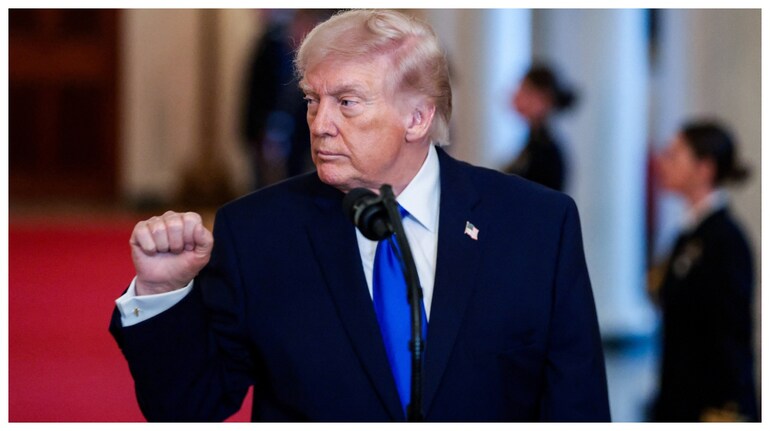

US President Donald Trump had pledged that 2026 would deliver strong economic growth, but recent data on employment, fuel prices and financial markets point to a more uncertain start to the year.
In his State of the Union address less than two weeks ago, Trump said the US economy was “roaring like never before.” However, recent economic indicators show job losses, rising gasoline prices and a pullback in equities, developments that come amid ongoing tariff tensions and a widening conflict involving Iran.
Trump had celebrated employment gains earlier in the year. After the January jobs report showed 130,000 new jobs added, he posted on social media on February 11: “WOW! The Golden Age of America is upon us!!!”
Subsequent labour market data has shown weaker momentum.
The February employment report released on Friday showed the US economy lost 92,000 jobs. Data for January and December were also revised lower, with December revised to a loss of 17,000 jobs.
Monthly employment data can fluctuate, but recent figures suggest softening conditions. Excluding gains in the healthcare sector, the US economy would have lost roughly 202,000 jobs since Trump took office in January 2025.
The administration has pointed to hiring in construction outside the housing sector as a potential indicator of future employment growth.
Trump has frequently argued that tightening immigration policies would result in more jobs for US-born workers. However, the latest data shows the unemployment rate for US-born workers has risen over the past year to 4.7 percent from 4.4 percent.
Energy prices have also moved higher following geopolitical tensions in the Middle East.
In a speech in Texas in February, shortly before US and Israeli strikes on Iran, Trump said lowering energy costs was central to reducing inflation.
“Slashing energy costs is among the most important actions we can take to bring down prices for American consumers,” Trump said.
However, fuel prices have risen since the military strikes on February 28.
Gasoline prices have climbed 19 percent over the past month to a national average of $3.45 per gallon, according to the American Automobile Association (AAA).
Goldman Sachs said in a research note that sustained higher oil prices could lift US inflation from 2.4 percent in January to about 3 percent by the end of the year.
Officials in the administration have said they expect the pressure on energy prices to be temporary.
Energy Secretary Chris Wright told CNN’s “State of the Union” that supply disruptions linked to the conflict should be short-lived.
“We never know exactly the time frame of this,” Wright said. “But in the worst case, this is weeks, this is not months.”
The administration is seeking to stabilise energy supplies, including efforts to ensure continued tanker traffic through the Strait of Hormuz, a key route for global oil shipments.
Equity markets have also declined from recent peaks.
Trump said last week that the Dow Jones Industrial Average had reached a record of 50,000. However, the index has fallen roughly 5 percent over the past month.
The stock market remains higher during Trump’s presidency, but recent volatility has emerged amid geopolitical tensions and shifting economic expectations.
The administration has promoted broader stock market participation through initiatives such as “Trump accounts” designed to encourage investment for children.
Consumer sentiment data suggests diverging perceptions of the economy.
Joanne Hsu, director of the University of Michigan’s Surveys of Consumers, said February data showed stronger sentiment among people who own stocks, while sentiment declined among households without market exposure.
Trump has frequently criticised economic performance under former president Joe Biden, describing it as a period of stagflation during remarks at the World Economic Forum in Davos in January.
Economic data shows the US economy expanded at an annual rate of 2.8 percent in 2024, the final year of the Biden administration.
In 2025, the first year of Trump’s current term, growth was 2.2 percent.
Inflation, measured by the Federal Reserve’s preferred personal consumption expenditures (PCE) price index, stood at 2.6 percent in both 2024 and 2025.
The latest economic indicators arrive as the administration enters the early phase of the year and ahead of mid-term elections in which Trump’s Republican Party will seek to maintain its majorities in the US House of Representatives and Senate.
(With inpouts from Associated Press)
Discover the latest Business News, Sensex, and Nifty updates. Obtain Personal Finance insights, tax queries, and expert opinions on Moneycontrol or download the Moneycontrol App to stay updated!
Find the best of Al News in one place, specially curated for you every weekend.
Stay on top of the latest tech trends and biggest startup news.