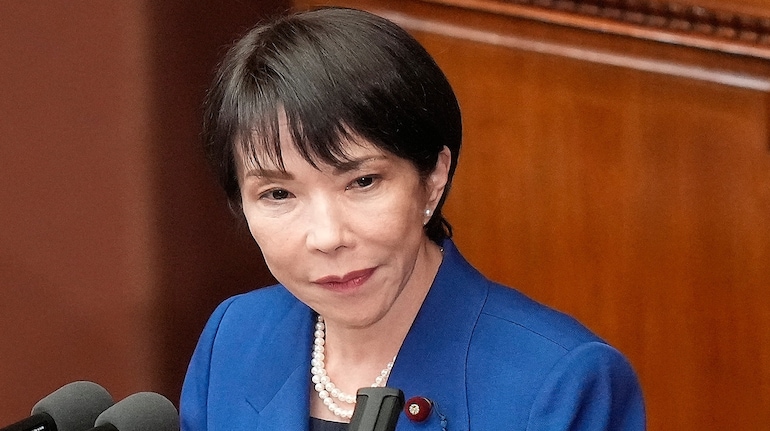
Japan will begin releasing oil from its strategic reserves as early as Monday to ease pressure on global fuel prices triggered by the escalating conflict in the Middle East, Prime Minister Sanae Takaichi announced on Wednesday.
Speaking to reporters, Takaichi said Tokyo would act immediately to calm markets rather than wait for a coordinated international decision.
“Without waiting for a formal decision on coordinated international stock releases with the International Energy Agency, Japan has decided to take the lead in easing supply-and-demand in the international energy market by releasing strategic reserves as early as the 16th of this month,” she said.
The move comes as the ongoing war in West Asia has raised fears of disruptions to global energy supplies, particularly through the Strait of Hormuz, one of the world’s most critical oil shipping routes.
Oil markets have become increasingly volatile as tensions escalate across the Gulf region. Any disruption in shipments through the Strait of Hormuz could significantly affect global supply, as a large share of the world’s crude exports passes through the narrow waterway.
Japan, which relies heavily on imported energy, is particularly vulnerable to supply shocks in the region. The decision to release reserves is aimed at easing pressure on gasoline and other energy prices domestically while helping stabilise global markets.
Tokyo had earlier signalled its readiness to take emergency measures if the situation worsened.
“We confirmed that we are prepared to take necessary measures, including releasing stockpiles, to support global energy supply,” Minister of Economy, Trade and Industry Ryosei Akazawa told reporters earlier this week after participating in an online meeting with energy ministers from the Group of Seven.
Energy security has become a key concern among advanced economies as the Middle East conflict threatens to disrupt the global oil trade. Ministers from G7 countries have held multiple discussions on possible joint responses, including coordinated releases from strategic petroleum reserves.
The International Energy Agency has also been assessing potential emergency measures. According to reports, the agency proposed that member nations release more oil than the 182 million barrels deployed in 2022 following the Russian invasion of Ukraine.
While the proposal is still under discussion among IEA members, Japan has decided to act first in an effort to calm markets and demonstrate leadership on energy security.
Earlier, Akazawa had said a coordinated release of reserves by IEA member states would be an “effective way to stabilise the international market,” indicating Japan would support such an initiative if it materialised.
Japan last released oil from its reserves in 2022 as part of an international effort to counter supply disruptions after the war in Ukraine triggered a spike in global energy prices.
The current decision signals growing concern that the expanding conflict in the Middle East could trigger a similar shock in global energy markets.
By moving ahead with an early release, Tokyo hopes to ease supply concerns, curb volatility in oil prices and reassure markets that major consuming nations are prepared to intervene if necessary.
Discover the latest Business News, Sensex, and Nifty updates. Obtain Personal Finance insights, tax queries, and expert opinions on Moneycontrol or download the Moneycontrol App to stay updated!
Find the best of Al News in one place, specially curated for you every weekend.
Stay on top of the latest tech trends and biggest startup news.