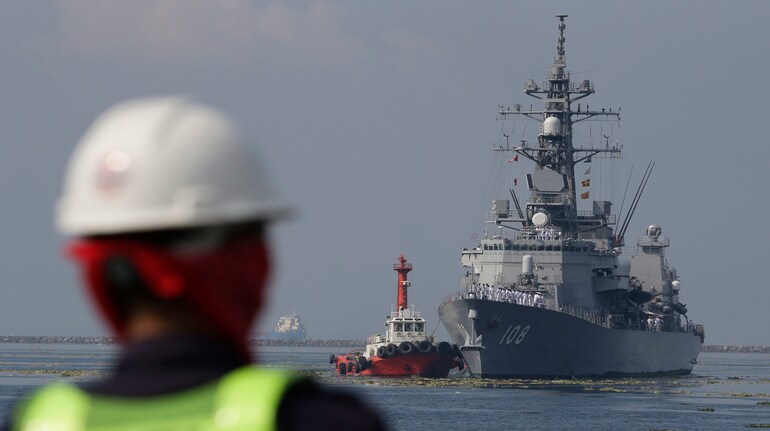
Japan is undertaking its most aggressive effort in decades to revive its ailing shipbuilding sector, proposing a ¥1tn ($7bn) national fund and consolidating its top players in a bid to challenge China’s near-total dominance in the global market. The move, backed by both political and business leaders, is seen as vital to protecting Japan’s maritime economy and national security amid growing concerns over China’s control of global shipping lanes and production, the Financial Times reported.
Consolidation to build global muscle
Imabari Shipbuilding, Japan’s largest shipbuilder by revenue, announced last week it will acquire a 60% controlling stake in Japan Marine United (JMU), creating the world’s fourth-largest shipbuilder. The deal is part of a wider industrial consolidation that aims to strengthen Japan’s competitive edge against China State Shipbuilding Corporation and South Korea’s HD Hyundai Heavy Industries.
The two companies had already teamed up in 2021 to form Nihon Shipyard, a commercial design venture. But the decision to bring JMU under Imabari’s full control signals an escalation of Japan’s industrial strategy, as global ship orders increasingly flow to rivals with larger capacities and greater government support.
Tokyo eyes ‘national shipyards’ and joint US fund
A special committee under Japan’s ruling party has recommended a massive public-private investment fund to modernise shipbuilding infrastructure and create “national shipyards” that would be leased to private players. Prime Minister Shigeru Ishiba is reviewing the proposal amid increasing geopolitical concerns about supply chain vulnerabilities.
The initiative comes as the United States looks to bolster allied industrial capabilities. Japanese officials have floated the idea of a joint US-Japan shipbuilding fund as part of broader tariff negotiations—an idea reportedly welcomed by the Trump administration. Japan also stands to benefit from U.S. sanctions or penalties targeting Chinese-made ships, which could shift orders toward more politically aligned partners.
China’s surge leaves Japan in its wake
China now commands 70% of global ship orders, up from 32% just seven years ago, and delivered four times more ships than Japan in 2023, according to shipping data provider Clarksons. Meanwhile, Japan’s share of global deliveries fell to just 12% last year, and it secured less than 7% of new orders, despite booming demand for fleet replacements worldwide.
Japanese yards have struggled to expand capacity due to spatial constraints, labour shortages, and a long-standing reluctance to subsidise industry at the level seen in China and South Korea. “If left unaddressed, Japan risks losing its shipbuilding industry, much like Europe and the US,” a ruling party report warned.
Labour challenges and strategic goals
The country’s ageing population remains a major obstacle. Japan’s shipbuilding workforce numbers around 76,000, and nearly 20% are now immigrant workers—up from virtually none a
decade ago. Industry leaders say bolstering the workforce and investing in automation are necessary steps.
Imabari Shipbuilding President Yukito Higaki, who now chairs the Japan Shipbuilding Industry Association, has set a target of doubling Japan’s global market share to 20% by the 2030s and leading in the development of low-emission vessels powered by ammonia or methanol.
But the country’s cost structure—driven by higher wages and raw material prices—makes competing with heavily subsidised Korean and Chinese rivals difficult. “As long as the Chinese and South Korean governments continue to subsidise shipyards, Japan will not be able to gain an advantage,” said Tomohisa Takei of the Sasakawa Peace Foundation. “It is unlikely that any country would oppose Japan doing the same.”
Japan’s renewed push marks a turning point for an industry once seen as in terminal decline. Whether it can reclaim its former leadership will depend not only on bold investment and policy reform, but also on international dynamics shaping the future of global trade and security.
Discover the latest Business News, Sensex, and Nifty updates. Obtain Personal Finance insights, tax queries, and expert opinions on Moneycontrol or download the Moneycontrol App to stay updated!
Find the best of Al News in one place, specially curated for you every weekend.
Stay on top of the latest tech trends and biggest startup news.