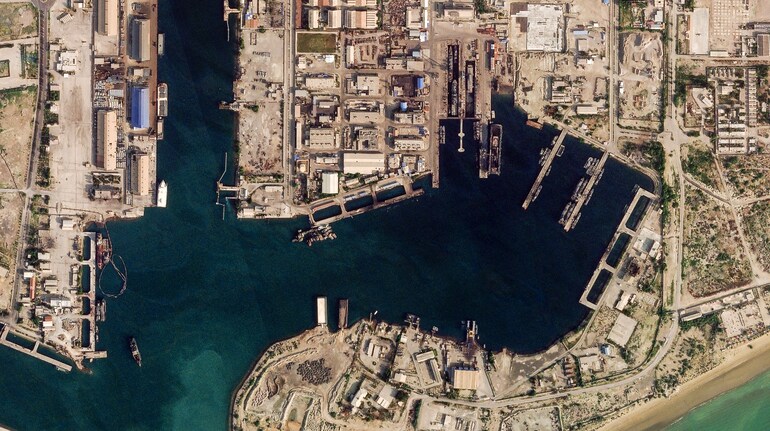

The war between Iran and the United States and Israel has opened a new and dangerous chapter in the conflict: the possible mining of the Strait of Hormuz. Intelligence reports cited by international media, including CNN, suggest that Iran has begun placing naval mines in the narrow waterway that serves as the most important energy corridor in the world.
The move has heightened fears that the conflict could disrupt global oil flows on a massive scale and push energy markets into deeper turmoil.
The Strait of Hormuz carries roughly one fifth of the world’s oil supply each day. Any attempt to mine the channel could make the waterway extremely risky for commercial ships and could effectively paralyse global energy shipments.
What intelligence reports say
According to the CNN report, US intelligence officials believe Iran has begun deploying sea mines in the strategic waterway. Early estimates suggest that only a limited number of mines have been laid so far, possibly a few dozen devices.
However, analysts warn that Iran retains the capability to deploy hundreds more if it decides to escalate.
Iran reportedly still controls most of its small naval craft and mine laying vessels, meaning it could rapidly expand the operation if required.
The United States military has already targeted vessels suspected of laying mines. American forces destroyed several Iranian mine laying boats near the strait as tensions escalated.
Despite those strikes, analysts say Iran’s overall mine laying capability remains largely intact.
Why the Strait of Hormuz matters
The Strait of Hormuz is a narrow passage connecting the Persian Gulf to the Gulf of Oman and the wider Arabian Sea. Oil producers in the Gulf depend heavily on the route to export crude to international markets.
Nearly 20 million barrels of oil and large volumes of liquefied natural gas pass through the strait each day.
A disruption to this flow would affect energy supplies to major importers including China, India, Japan and South Korea.
Because so much global energy trade depends on this single corridor, even the perception of danger in the strait can trigger sharp swings in oil prices and shipping insurance costs.
Why naval mines are so dangerous
Naval mines are among the simplest yet most effective weapons for disrupting maritime traffic.
These devices are typically placed underwater and explode when a ship passes nearby or comes into contact with them. Some mines are anchored to the seabed while others drift with ocean currents, making them difficult to detect and neutralise.
Iran is believed to possess thousands of naval mines and has trained extensively in deploying them quickly using small boats and specialised vessels.
Military analysts say that even a small number of mines could halt commercial shipping because tanker operators and insurers would refuse to risk entering the area.
As one analyst warned in coverage of the crisis, once mines are deployed “the strait doesn’t just close, it becomes impassable.”
Rising attacks on shipping
The mining fears come as attacks on commercial vessels near the Strait of Hormuz have already increased.
Several ships have been struck by projectiles or drones in recent days, further discouraging tanker operators from using the route.
In response to these incidents, many shipping companies have suspended transits through the strait and global insurers have raised risk premiums dramatically.
These developments have contributed to the surge in global oil prices since the war began.
Could the strait actually be closed?
Mining the strait would not necessarily mean a complete blockade, but it would make commercial shipping extremely dangerous.
Clearing naval mines is a slow and technically complex operation that can take weeks or even months depending on the scale of the deployment.
For this reason, the mere threat of mining can be enough to disrupt maritime traffic.
Iran has historically used this tactic before. During the Iran Iraq war in the 1980s, naval mines damaged several vessels operating in the Persian Gulf.
Today, the stakes are much higher because the global economy is far more dependent on energy flows from the Gulf region.
A strategic pressure tool
Analysts believe Iran may be using the threat of mining the strait as leverage in the wider conflict.
By raising the risk to global oil supplies, Tehran can increase economic pressure on the United States and its allies.
At the same time, Iran must balance this strategy carefully. A heavily mined strait would also restrict Iran’s own oil exports.
For now, intelligence officials say the mining appears limited. But the situation remains highly volatile and could escalate quickly if the conflict intensifies.
Discover the latest Business News, Sensex, and Nifty updates. Obtain Personal Finance insights, tax queries, and expert opinions on Moneycontrol or download the Moneycontrol App to stay updated!
Find the best of Al News in one place, specially curated for you every weekend.
Stay on top of the latest tech trends and biggest startup news.