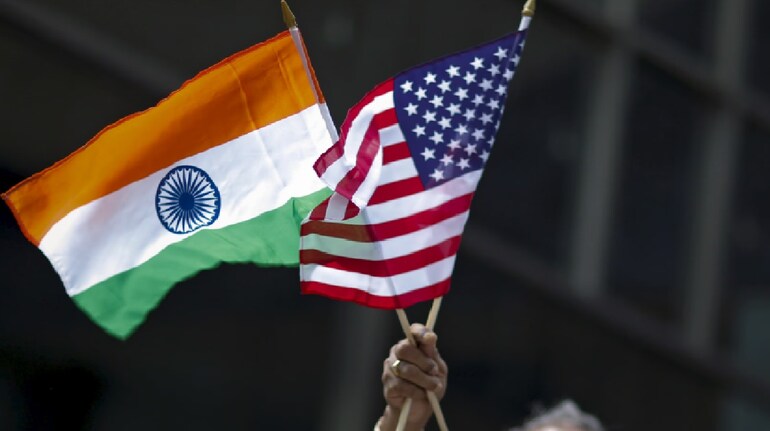
Both India and the US want to expedite negotiations for the proposed bilateral trade agreement (BTA) as the two countries seek to promote two-way commerce, an official statement said on Thursday.
Both nations have decided to hold sector-specific talks starting this month to finalize the structure of the agreement. The urgency to expedite discussions follows the US decision to impose an additional 27% import duty on Indian goods from April 9 this year.
"Discussions are ongoing between Indian and US trade teams for the expeditious conclusion of a mutually beneficial, multi-sectoral BTA… We remain in touch with the Trump administration on these issues and expect to take them forward in the coming days," the commerce ministry said.
Through the agreement, both countries aim to increase market access for their goods, reduce tariff and non-tariff barriers, and deepen supply chain integration. A team of US officials, led by Assistant US Trade Representative for South and Central Asia Brendan Lynch, visited India last month to finalize the contours and terms of reference for the proposed pact. The goal is to more than double bilateral trade to $500 billion by 2030, up from the current $191 billion.
Although both sides have set a deadline to conclude the first phase of the agreement by fall 2025 (September-October), the complex nature of trade negotiations may extend the process for years. A government official noted that India was the only country where the Trump administration had sent a dedicated team for trade talks.
The official expressed optimism that India could navigate the additional 27% import duty imposed by the US from April 9. "With the BTA in the pipeline, we are in a zone where we should not be overly worried about these tariffs," the official added.
When asked if issues like rules of origin would be included in the pact, the official confirmed that the BTA would encompass standard elements of any trade agreement. "We have been progressing well," the official said.
Trade agreements typically involve significant reductions or eliminations of customs duties on most traded goods, easing norms to facilitate trade in services and boost investments. While the US has sought duty concessions on certain industrial goods, automobiles, wines, petrochemical products, dairy, and agricultural items such as apples, tree nuts, and alfalfa hay, India is likely to push for duty cuts in labor-intensive sectors like textiles.
"India has an early-mover advantage. It is engaged deeply in the BTA discussions, and we are ahead of the curve. A lot of work has already been done," the official said.
India-US Trade Snapshot (2024)
In 2024, India’s top exports to the US included:
Drug formulations and biologicals – $8.1 billion
Telecom instruments – $6.5 billion
Precious and semi-precious stones – $5.3 billion
Petroleum products – $4.1 billion
Gold and precious metal jewelry – $3.2 billion
Ready-made cotton garments – $2.8 billion
Iron and steel products – $2.7 billion
India’s top imports from the US included:
Crude oil – $4.5 billion
Petroleum products – $3.6 billion
Coal and coke – $3.4 billion
Cut and polished diamonds – $2.6 billion
Electric machinery – $1.4 billion
Aircraft, spacecraft, and parts – $1.3 billion
Gold – $1.3 billion
In 2023-24, the US was India’s largest trading partner, with $119.71 billion in bilateral trade, comprising $77.51 billion in exports and $42.19 billion in imports, leading to a $35.31 billion trade surplus for India.
Additionally, India has received $67.8 billion in foreign direct investment (FDI) from the US between April 2000 and September 2024.
Discover the latest Business News, Sensex, and Nifty updates. Obtain Personal Finance insights, tax queries, and expert opinions on Moneycontrol or download the Moneycontrol App to stay updated!





Find the best of Al News in one place, specially curated for you every weekend.
Stay on top of the latest tech trends and biggest startup news.