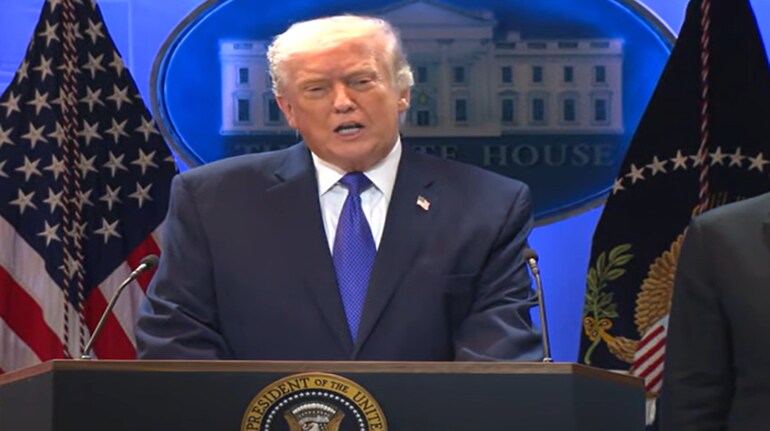
When Donald Trump returned to office in the US, he promised huge reductions in federal spending and gave Elon Musk’s Department of Government Efficiency a central role in shrinking government. At the time, supporters called it a long overdue cleanup. Critics said it was blunt force cost cutting dressed up as reform.
Now, with the United States pulled into a widening conflict with Iran, those cuts are being looked at in a very different light.
Current and former officials told CNN that the problem is not that the US military suddenly lacks bombs, planes or operational funding. The problem is that war readiness is bigger than the Pentagon. It also depends on consular staff who can help stranded citizens, cyber teams that can warn critical industries, emergency agencies that can prepare for retaliation at home, and information networks that can communicate with audiences abroad.
That is where the strain is showing.
Why the US State Department is under scrutiny
One of the clearest examples came when Americans were stranded across the Middle East after flights were disrupted. The State Department did create a 24-hour task force, but early public messaging created confusion and alarm.
At one point, Americans were told not to rely on the US government for evacuation even as commercial routes were collapsing. Evacuation flights began only days later. Former officials told CNN that the agency’s response reflected the loss of experienced personnel who had handled past crises.
The State Department disputes that staffing cuts affected overseas operations. But the union representing foreign service officers says the department has lost deep reserves of regional knowledge, crisis management experience and language expertise at exactly the wrong moment.
How domestic preparedness may have weakened
The concern is not limited to diplomacy. Former and current officials also say cuts at the US Department of Homeland Security have reduced the government’s ability to share cyber threat information quickly with private companies.
That matters because any conflict with Iran carries the risk of retaliation beyond the battlefield, including hacking attempts or attacks on US infrastructure.
At the Federal Emergency Management Agency too, officials say the loss of experienced staff, training capacity and operational support has made preparedness harder. One official told CNN that instead of focusing fully on readiness, teams are spending too much time patching staffing gaps and dealing with internal constraints.
Why information warfare matters too
There is another layer that gets less attention in wartime but still matters. Voice of America, long used as a tool of US soft power, has been weakened after months of cuts and attempted layoffs. Employees told CNN that even when some staff returned, the damage had already been done.
You can rebuild a team on paper. You cannot instantly rebuild audience trust, technical capacity or momentum.
The larger point emerging from this moment is simple. Governments do not only need military force during war. They need functioning institutions around it. Critics of the cuts say that is exactly what was hollowed out. Supporters still argue waste was removed, not capability.
But as the Iran war expands, the debate is no longer abstract. It is now about whether the US trimmed fat or cut into muscle.
Discover the latest Business News, Sensex, and Nifty updates. Obtain Personal Finance insights, tax queries, and expert opinions on Moneycontrol or download the Moneycontrol App to stay updated!
Find the best of Al News in one place, specially curated for you every weekend.
Stay on top of the latest tech trends and biggest startup news.