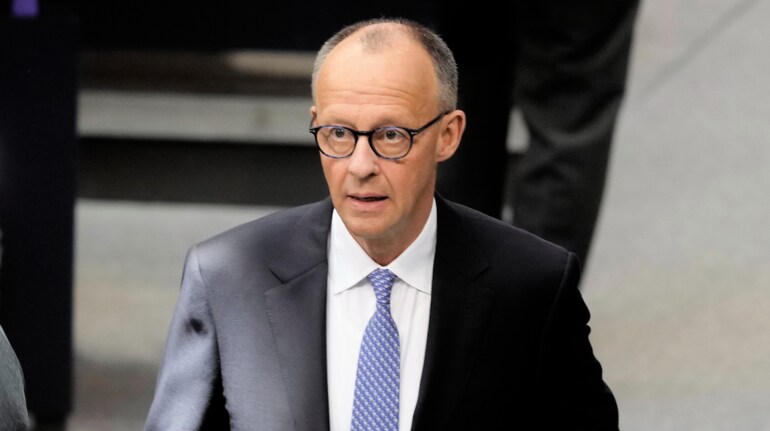
After a tense and drawn-out political transition, Friedrich Merz has officially become Germany’s chancellor. But the road to power has already been anything but smooth — and the challenges facing his new government appear to be mounting by the day, the New York Times reported.
Merz’s ascension, finalised Tuesday after a failed first vote in Parliament and a narrow victory on the second, comes at a moment of political, economic, and geopolitical instability for Europe’s largest economy. His first hours in office were shadowed by signs of trouble: a weakening coalition, rising support for the far-right Alternative for Germany (AfD), and growing pressure from US President Donald Trump’s escalating trade war.
A shaky start for a fragile coalition
In an unprecedented setback for modern Germany, Merz failed to secure enough votes from his own governing coalition during the first round of parliamentary voting, with 18 lawmakers withholding support. Though he ultimately clinched the position hours later, the episode underscored the fragile unity of his alliance — and cast early doubts on his ability to govern effectively.
Analysts say the moment weakened Merz’s domestic authority and raised concerns among Germany’s European partners, especially as the continent looks to Berlin for leadership on military spending, economic stabilization, and EU cohesion.
“This government starts out in extreme instability,” declared Bernd Baumann of the AfD in Parliament on Tuesday. “And it will remain unstable. That is the opposite of what Germany needs.”
Trump’s tariffs deepen economic uncertainty
Merz’s task was already formidable. He inherits a stalled German economy that shrank last year and has failed to grow in inflation-adjusted terms for half a decade. And Trump’s protectionist trade policies have only compounded the difficulty.
German manufacturers, especially exporters, are struggling to navigate Trump’s 145 percent tariffs on a range of goods. The economic blowback has forced Merz to make growth a central priority. He plans to streamline regulations, tighten migration policies, and spend heavily on defence and infrastructure. But each of these moves will require legislative support — a tall order given the shaky coalition backing him.
His broader challenge is to reassure Germans disillusioned with what they see as decades of stagnant, establishment politics. His initial failure in Parliament only amplifies the sense that little has changed.
AfD gains strength amid public frustration
The far-right AfD — declared an extremist party by German intelligence — is now polling neck-and-neck with Merz’s Christian Democrats. If elections were held today, the AfD could even emerge as the largest party in Parliament. Its rise reflects deep frustration with the political status quo and growing anxiety over immigration, the economy, and Germany’s global role.
AfD leaders wasted no time in pouncing on Merz’s rocky start. They painted the governing coalition as dysfunctional and out of touch, even as they continued to benefit from support among Trump-aligned American political circles.
International stakes and uncertain alliances
Foreign leaders, especially in Paris and Warsaw, are watching Merz’s early steps closely. European leaders hope Germany will lead on collective defence in light of Trump’s repeated threats to scale back US commitments to NATO. Merz’s first full day in office included high-level meetings in both cities, where he affirmed Germany’s commitment to European security.
But Merz’s ability to challenge Trump’s economic policies or forge new transatlantic deals may be limited. With his domestic base already wobbly and his international standing uncertain, he faces the delicate task of criticising Washington while trying to maintain personal rapport with the American president.
No euphoria, just expectations
Despite the historic nature of Merz’s election — the first centre-right chancellor since Angela Merkel — the public mood remains subdued. A Berliner Morgenpost headline summed it up bluntly: “Friedrich Merz’s big day — but no euphoria in Germany.”
With the AfD surging and the economy faltering, Merz has little time to prove that he can deliver more than promises. The coalition that nearly cost him the chancellorship on day one may yet decide how long he keeps the job.
Discover the latest Business News, Sensex, and Nifty updates. Obtain Personal Finance insights, tax queries, and expert opinions on Moneycontrol or download the Moneycontrol App to stay updated!
Find the best of Al News in one place, specially curated for you every weekend.
Stay on top of the latest tech trends and biggest startup news.