
The war involving Iran is no longer just a geopolitical or military crisis - it is rapidly morphing into a global food emergency. Disruptions to aid routes, energy markets, and fertiliser supply chains are converging at a critical moment for global agriculture, raising the risk of record hunger levels, soaring food prices and widespread shortages.
The conflict is increasingly spilling beyond geopolitics into a full-blown food security threat.
An analysis by the World Food Programme (WFP) warns that if the conflict continues through June, an additional 45 million people could fall into acute hunger, pushing the global total beyond the current record of 319 million.
Aid routes choked, costs surge
The crisis is being driven in part by disruptions to humanitarian supply chains.
The WFP says key aid routes have been choked since US-Israeli attacks on Iran began on February 28, delaying life-saving shipments to some of the world’s most vulnerable regions.
Shipping costs have already risen by 18%, with vessels being rerouted due to security risks. At the same time, donor countries are increasingly diverting funds toward defence spending, adding further strain on already stretched aid budgets.
The chokepoint that connects energy and food
At the centre of the crisis is the Strait of Hormuz, one of the world’s most critical maritime passages. Roughly 20% of global oil and gas flows through this narrow corridor. After the escalation, Iranian officials indicated that the strait was effectively “closed”, sending oil prices above $100 per barrel.
The impact goes far beyond energy markets.
Rising oil prices increase the cost of transporting food, running farm machinery and maintaining irrigation systems. But more importantly, the disruption is choking the movement of fertilisers, a vital input for global agriculture.
The hidden fertiliser crisis
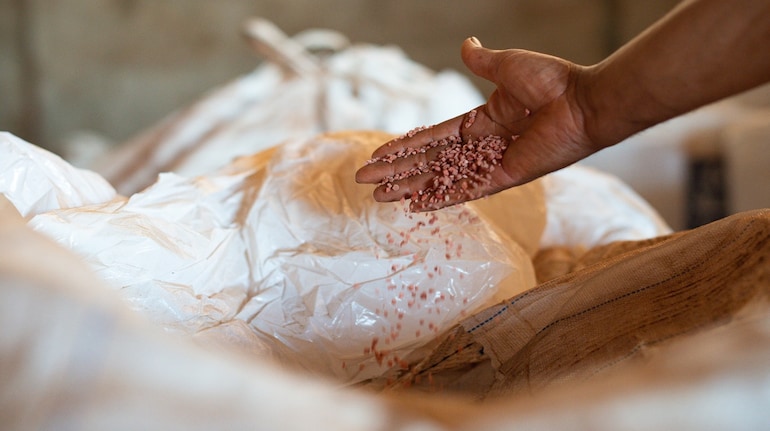
While oil dominates headlines, the more dangerous threat to food security lies in fertilisers. Nearly half of the world’s traded urea, the most widely used fertiliser, is shipped from Gulf countries through Hormuz. The region produces about one-fifth of global fertilisers and accounts for nearly half of global urea supply.
Qatar Fertiliser Company alone contributes around 14% of global urea output, highlighting how concentrated supply is in the region. As conflict disrupts shipping and gas supplies, fertiliser production has been hit hard. Qatar halted output at its massive urea facilities after LNG operations were affected, while plants across the Gulf and beyond have been forced to cut or suspend production.
Prices have reacted sharply.
Urea export prices from the Middle East have surged by about 40% in recent weeks and are now nearly 60% higher than a year ago. Analysts warn that nitrogen fertiliser prices could double from current levels, with phosphate prices also expected to rise steeply. With as much as one-third of global fertiliser trade at risk of disruption, the consequences for agriculture are profound.
LNG disruptions are rippling across continents
In addition, the fertiliser shock is being amplified by a shortage of liquefied natural gas, the key feedstock used to produce nitrogen-based fertilisers. The war has curtailed LNG exports from the Gulf, particularly from Qatar, one of the world’s top suppliers.
This, in turn, has triggered a chain reaction across countries dependent on these supplies.
India has reduced output at multiple urea plants, while Bangladesh has shut down most of its fertiliser factories due to gas rationing, as per a Bloomberg report. Gas availability for India’s fertiliser sector has dropped to about 70% of its requirement, forcing producers to scale back operations.
Even temporary shutdowns pose a long-term risk, as restarting fertiliser plants can take weeks, delaying supply during a critical period.
The worst possible timing for farmers
The disruption has come at a particularly damaging moment.
The Northern Hemisphere is in the middle of its key sowing season, when farmers apply fertilisers to maximise yields. This period, stretching from mid-February to early May, is crucial for determining global crop output.
Without adequate fertiliser, farmers face difficult choices. Many may reduce application rates or skip fertiliser use altogether due to soaring costs. This directly translates into lower yields for staple crops such as rice, wheat, maize and soybeans, tightening global food supply in the months ahead.
Major food producers in the danger zone
The countries most dependent on Gulf fertilisers are also among the world’s largest food producers, amplifying the global risk.
India, which imports more than 40% of its fertilisers from the Middle East, is a major exporter of rice, wheat and sugar. Brazil, which accounts for nearly 60% of global soybean exports, relies almost entirely on imported fertilisers, much of which passes through Hormuz.
Meanwhile, China, another agricultural powerhouse, has already begun releasing fertiliser stockpiles to stabilise domestic supply.
Any disruption in these countries’ agricultural output will ripple across global markets. Lower production in key exporters reduces global availability of staple foods, pushing up prices and increasing the risk of shortages, particularly in import-dependent regions.
Rising costs and the threat of inflation
The war is already driving up costs across the agricultural value chain.
Fertiliser prices are surging, fuel is becoming more expensive, and shipping disruptions are adding further pressure. For farmers, this means higher input costs at a time when margins are already under strain.
Farmers in the U.S. have voiced growing concern about affordability and availability.
In large economies such as India, rising fertiliser costs could increase subsidy burdens and feed into broader inflation. Higher crop prices will likely follow, affecting consumers worldwide. In vulnerable countries, rising food prices can quickly escalate into food insecurity and social unrest.
A fragile system pushed closer to collapse
Also to be noted, the global fertiliser system was already under stress before the West Asia conflict.
The Russia-Ukraine conflict had disrupted energy and fertiliser supplies, while export restrictions by major producers like China tightened global availability.
The current crisis is only compounding these existing pressures. Even if shipments continue through Hormuz, rising freight and insurance costs may make trade economically unviable, further restricting supply. The concentration of fertiliser production in a few regions leaves the global food system highly exposed to geopolitical shocks.
The unfolding crisis only brings into the spotlight how quickly a regional conflict can cascade into a global emergency.
Disruptions to energy supplies are driving fertiliser shortages, which in turn threaten agricultural production. Lower yields will tighten food supply, pushing up prices and increasing hunger worldwide.
The warning from the World Food Programme is stark. If the conflict continues, the world could see hunger reach unprecedented levels. What begins as a war in one region risks ending as a food crisis for millions across the globe.

Discover the latest Business News, Sensex, and Nifty updates. Obtain Personal Finance insights, tax queries, and expert opinions on Moneycontrol or download the Moneycontrol App to stay updated!
Find the best of Al News in one place, specially curated for you every weekend.
Stay on top of the latest tech trends and biggest startup news.