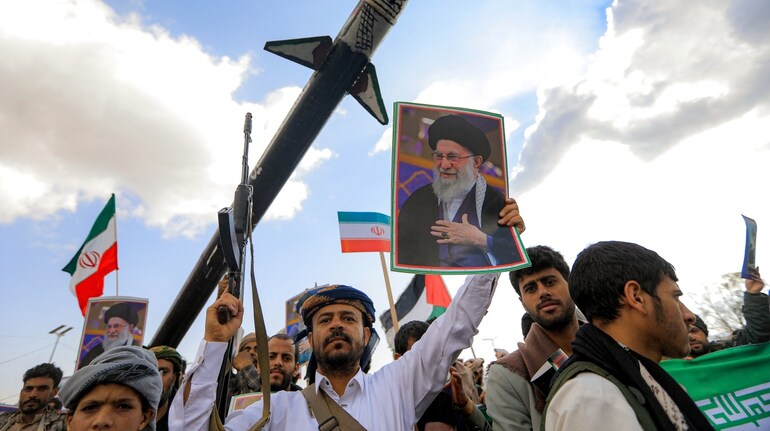

As the conflict involving the United States, Israel and Iran enters its second week, attention is increasingly turning to Iran’s regional allies and whether they will widen the war. Among the groups being closely watched are the Houthi rebels in Yemen.
While Iran-aligned forces in Lebanon and Iraq have already joined the fighting, the Houthis have so far stayed on the sidelines despite possessing the ability to disrupt shipping routes and strike regional targets.
War intensifies in the region
The broader war has continued to escalate. According to US Defence Secretary Pete Hegseth, the United States and Israel have struck more than 15,000 targets since the conflict with Iran began late last month.
At the same time, Israeli military activity has expanded beyond Iran. At least eight people were killed in Israeli strikes in southern Lebanon on Friday, according to local media reports, as Israel intensified operations in the area.
In Iran, Mojtaba Khamenei has taken charge as the country’s Supreme Leader following the death of his father Ayatollah Ali Khamenei. Five days after assuming power, he issued his first public statement on March 12.
In that message, the younger Khamenei warned that Iran could use the closure of the Strait of Hormuz as leverage against global energy supplies.
As tensions rise, analysts are watching whether the Houthis might join the conflict and open another front in the region.
Who are the Houthis?
The Houthis are a powerful armed movement that emerged from northern Yemen and has fought a long insurgency against the Yemeni government.
Their influence expanded after the 2011 Arab Spring protests destabilised the country. Taking advantage of the political turmoil, the group captured the capital Sanaa in 2014.
The following year, Saudi Arabia led a coalition of Arab states that intervened militarily in Yemen in an attempt to remove the Houthis from power.
Over the course of the conflict, the group demonstrated significant missile and drone capabilities. They launched attacks on oil facilities and key infrastructure in Saudi Arabia and the United Arab Emirates.
After years of fighting that created one of the world’s worst humanitarian crises, the United Nations brokered a truce in 2022 between the Houthis and their opponents. The ceasefire has largely held since then.
Attacks in the Red Sea
The Houthis gained global attention again after the October 7, 2023 attack on Israel by the Palestinian militant group Hamas.
In response to Israel’s military campaign in Gaza, the Houthis began targeting international shipping in the Red Sea. They said the attacks were carried out in support of the Palestinians.
The group also launched missiles and drones toward Israel. Israel responded with air strikes on Houthi positions, while the United States also carried out military operations against the group.
The attacks on shipping ended after a US-brokered ceasefire between Israel and Hamas in October 2025.
Why they have not joined the war
Despite their aggressive posture in the past, the Houthis have not officially entered the current war involving Iran.
On March 5, Houthi leader Abdul Malik al-Houthi warned that the group was ready to act if needed.
“Regarding military escalation and action, our fingers are on the trigger at any moment should developments warrant it,” he said in a televised speech.
However, unlike Hezbollah in Lebanon or armed groups in Iraq, the Houthis have not announced that they are joining the fight.
Experts say one reason may lie in ideology. The Houthis do not follow Iran’s supreme leader in the same religious framework as Hezbollah and some Iraqi militias.
Although Iran describes them as part of its regional “Axis of Resistance,” analysts say the Houthis remain primarily focused on domestic political goals in Yemen.
The United States has accused Iran of arming and funding the group and helping train its fighters through Hezbollah. The Houthis deny being an Iranian proxy and say they develop their own weapons.
What could happen next
Analysts remain divided over whether the Houthis will eventually join the war.
Some diplomats believe the group may have already carried out limited attacks against targets in neighbouring countries, although such claims have not been independently verified.
Others argue the Houthis may be waiting for a strategically advantageous moment to enter the conflict in coordination with Iran.
If the Strait of Hormuz remains effectively closed, forcing Gulf countries to rely more heavily on the Red Sea for exports, the Houthis could gain significant leverage over global energy flows.
At the same time, many experts believe the group may decide not to enter the war at all. Yemen is already under severe economic pressure, and joining the conflict could invite heavy retaliation from the United States, Israel and possibly Saudi Arabia.
For now, the Houthis remain a powerful but unpredictable factor in a war that is already reshaping the balance of power across West Asia.
Discover the latest Business News, Sensex, and Nifty updates. Obtain Personal Finance insights, tax queries, and expert opinions on Moneycontrol or download the Moneycontrol App to stay updated!
Find the best of Al News in one place, specially curated for you every weekend.
Stay on top of the latest tech trends and biggest startup news.