






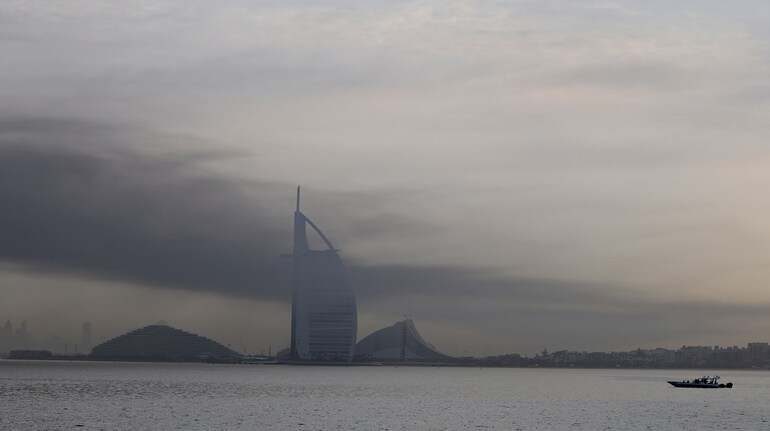
The United Arab Emirates (UAE) has stepped up efforts to reinforce the message that "Dubai is safe" after the spillover of the Iran war disrupted travel and raised security concerns in the Gulf’s leading tourism and business hub.
Officials, businesses and social media influencers have joined a coordinated push to project normalcy in the city, even as regional tensions and missile threats unsettle visitors and temporarily slow tourist activity.
Dubai’s markets, beaches, and waterfront promenades, usually packed during the peak tourism season, have seen noticeably thinner crowds in recent days. Popular areas such as the Al Seef waterfront market along Dubai Creek and beaches near luxury resorts like the Burj Al Arab have recorded fewer visitors, according to observations reported by AP.
The slowdown comes as the broader conflict involving Iran, Israel, and their allies disrupts air travel across the Middle East, with airlines rerouting flights and some travellers postponing trips to the region.
Authorities have responded with an aggressive communications campaign aimed at reassuring residents, investors, and tourists that daily life in Dubai continues as normal.
Dubai’s official social media accounts have circulated posts repeating the message “Dubai is safe, will always be safe,” while public figures and influencers have echoed similar sentiments.
Kuwaiti-American entrepreneur and reality television personality Ebraheem Alsamadi, known from Dubai Bling, posted a video saying he would remain in the country despite travel advisories.
“This has been my home for the past 16 years and I’m not going to leave it in 16 seconds,” he said. “It is the safest country in the world.”
The UAE has long promoted itself as a haven of stability in an often volatile region, highlighting strict security, low crime rates and a business-friendly environment to attract tourists, expatriate professionals and global investors.
The escalating conflict, however, has begun to test that carefully cultivated image.
According to figures cited by AFP, Iran has launched more than 1,800 missiles and drones toward the UAE since hostilities intensified. Emirati air-defence systems have intercepted most of the projectiles, limiting damage on the ground.
Even so, the attacks have heightened perceptions of risk among travellers and investors.
Tourism, one of Dubai’s main economic pillars, is particularly sensitive to security concerns. Reports suggest foot traffic has declined at major attractions, including Dubai Mall and Jumeirah Beach Residence, as some visitors cut short their trips or delayed travel plans.
Analysts say preserving the perception of safety is crucial for the UAE’s economic model.
Nearly 90 percent of the country’s population is expatriates, many working in sectors such as tourism, finance, and real estate that underpin the country’s strategy to diversify beyond oil.
"Authorities are hoping the war will be short enough that people won’t associate conflict with the country," Ryan Bohl, a geopolitical analyst at RANE Network, told AFP.
To maintain a sense of normality, property developer Emaar, which operates Dubai Mall and several major retail complexes, has urged shops and restaurants to continue operating regular hours during the conflict.
Authorities have also tightened restrictions on information related to the attacks.
Dubai police warned residents against spreading "rumours" online or sharing images of sensitive sites. The UAE’s attorney general ordered the arrest and urgent trial of several individuals accused of posting videos of missile interceptions or publishing what officials described as "misleading content".
Similar measures have been adopted elsewhere in the Gulf region. In Qatar, authorities said more than 300 people had been detained for spreading false information during the crisis.
Analysts warn that such restrictions could draw criticism abroad. "This approach could backfire with audiences used to freedom of expression," Bohl said.
The reassurance campaign intensified after Iran warned that US-linked economic assets in the Gulf could become targets, prompting some companies to temporarily relocate staff from Dubai’s financial district.
For Dubai, which relies heavily on tourism, services and foreign investment rather than oil revenues, maintaining global confidence is essential. "If major investors begin to doubt that their investments are safe, the impact on the UAE’s economic diversification plans could be significant," Bohl said.
For now, authorities are betting that projecting stability and repeating the message that Dubai remains safe will help protect the city’s status as the Middle East’s premier tourism and business hub even as the wider conflict continues.
Discover the latest Business News, Sensex, and Nifty updates. Obtain Personal Finance insights, tax queries, and expert opinions on Moneycontrol or download the Moneycontrol App to stay updated!
Find the best of Al News in one place, specially curated for you every weekend.
Stay on top of the latest tech trends and biggest startup news.









