






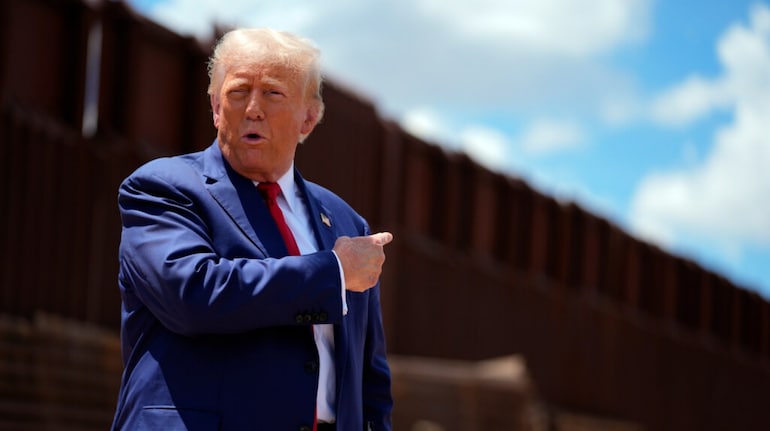
Taking his hardline approach to deporting immigrants a step further, United States President Donald Trump has announced a proposed social media policy, sending ripples of concern through non-native communities in the United States, particularly among Indian green card holders.
The proposed policy seeks green card holders and asylum seekers in the US to disclose their social media accounts as part of their immigration process. The move is aimed at enhancing identity verification and bolstering national security measures.
As of now, the US government has mandated the visa applicants to provide their social media handles during the application process. The US Citizenship and Immigration Services (USCIS) is set to extend their requirement to individuals already residing in the US with green cards or those seeking asylum. The department estimates that this policy could impact over 3.5 million individuals.
Brief overview of the proposed policy
“This collection of information is necessary to comply with section 2 of the Executive order (E.O.) entitled “Protecting the United States from Foreign Terrorists and Other National Security and Public Safety Threats”, which directs implementation of uniform vetting standards and requires the collection of all information necessary for a rigorous vetting and screening of all grounds of inadmissibility or bases for the denial of immigration-related benefits. In a review of information collected for admission and benefit decisions, U.S. Citizenship and Immigration Services (USCIS) identified the need to collect social media identifiers (“handles”) and associated social media platform names from applicants to enable and help inform identity verification, national security and public safety screening, and vetting, and related inspections,” reads a part of the notice issued by the USCIS on the official government website.
The aim of the proposed policy is to identify and deny entry or residency to those deemed to hold views or engage in activities that could pose a threat to national security or public safety. Under this, a broader range of social media platforms and posts would be subject to review.
The policy appears to allow for a degree of subjective interpretation of social media content, potentially leading to inconsistent application. Individuals may be required to provide extensive documentation and explanations for their social media activity.
Possible implications for Indian green card holders
Indian nationals represent a significant portion of the US immigrant population, particularly among H-1B visa holders transitioning to green card status.
1. Mandatory disclosure of social media accounts raises issues regarding personal privacy. Indian green card holders may feel apprehensive about government scrutiny of their online activities.
2. The policy could lead to self-censorship, as individuals might alter their online behavior to avoid potential misinterpretation by immigration authorities.
3. Compiling and providing a comprehensive list of social media handles can be time-consuming and may pose challenges for applicants with extensive online presences.
4. Cultural nuances and context-specific expressions common in Indian social media interactions might be misunderstood by US officials, potentially leading to unwarranted scrutiny.
Immigration lawyers have expressed concerns about the policy's potential infringement on privacy rights and its alignment with existing legal frameworks. There is a possibility of legal challenges questioning the constitutionality of such measures.
Discover the latest Business News, Sensex, and Nifty updates. Obtain Personal Finance insights, tax queries, and expert opinions on Moneycontrol or download the Moneycontrol App to stay updated!
Find the best of Al News in one place, specially curated for you every weekend.
Stay on top of the latest tech trends and biggest startup news.









