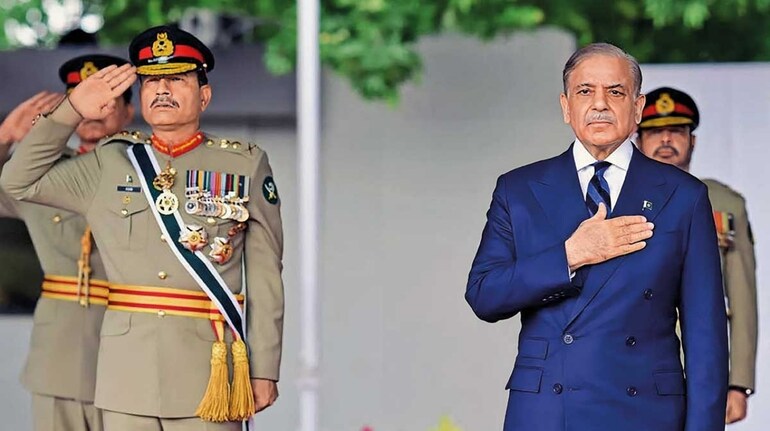

Pakistan has moved swiftly to deny that its recent diplomatic outreach signals any change in its traditional regional positions, as questions mount over Islamabad’s participation in a US-backed “Board of Peace” proposed by President Donald Trump. During the Foreign Office’s weekly briefing in Islamabad, Pakistani officials attempted to draw a firm line between engagement with Washington and any recalibration on Israel or Gaza.
Responding to speculation, Ministry of Foreign Affairs spokesperson Tahir Andrabi said Pakistan “will not join the Abraham Accords,” rejecting claims that Islamabad is moving toward normalising ties with Israel. He insisted that participation in the peace board should not be read as recognition of Israel or as a departure from Pakistan’s long-standing position on Palestine.
Andrabi also dismissed reports suggesting Pakistan had joined an international stabilisation or security force for Gaza. Such claims, he said, were “incorrect and misleading,” as quoted by CNN-News18.
Taliban blame sharpened as violence persists
While seeking to downplay speculation over Israel, the Pakistani spokesperson adopted a far more aggressive tone on Afghanistan. Andrabi said there was a “clear and continuing trend” of terrorists involved in attacks inside Pakistan originating from Afghan territory.
Contradicting assurances from the Taliban regime in Kabul, he claimed Afghan nationals were actively planning and carrying out attacks on Pakistani soil, using Afghan territory as a staging ground. Terrorism emanating from Afghanistan, he said, “has to stop,” reflecting Islamabad’s growing frustration with a regime it once openly supported.
Complaints against India revisited
The briefing also revisited Pakistan’s long-standing grievances with India. Andrabi alleged a “marked difference” in how Pakistani diplomats are treated in New Delhi, calling on India to ensure “normal and civilised” behaviour in line with diplomatic norms.
He expressed hope that Pakistan’s High Commission in New Delhi would be able to hold National Day celebrations without obstruction, framing the issue as one of diplomatic courtesy rather than substance.
Intelligence sources see tactical denial
Indian intelligence sources, however, paint a different picture. According to assessments accessed by CNN-News18, Pakistan is attempting to edge closer to Western power centres and Trump-linked initiatives while avoiding the domestic political fallout of acknowledging Israel or alienating conservative religious constituencies.
These sources describe Islamabad’s posture as a calculated balancing act driven by internal insecurity rather than strategic clarity. They also argue that Pakistan’s repeated emphasis on terrorism from Afghanistan functions as a deflection, given the country’s long record of supporting cross-border militant groups when it aligned with its strategic objectives.
The assessment further suggests that Pakistan’s distancing from militancy has historically occurred only under international pressure, including the threat of sanctions and financial isolation.
What the Abraham Accords represent
The Abraham Accords are US-backed agreements launched in 2020 to normalise relations between Israel and several Arab states. Countries including the UAE, Bahrain, Morocco and Sudan established diplomatic ties with Israel, breaking with decades of policy that linked recognition to the creation of a Palestinian state.
Supporters argue the accords promote regional stability and economic integration, while critics contend they sideline the Palestinian issue and weaken collective leverage over Israel.
A familiar pattern
Pakistan’s latest denials follow a familiar pattern. Islamabad seeks Western engagement while publicly clinging to old red lines for domestic consumption. As CNN-News18 has reported, this dual-track messaging reflects a state struggling to reconcile internal ideological pressures with external diplomatic realities.
Discover the latest Business News, Sensex, and Nifty updates. Obtain Personal Finance insights, tax queries, and expert opinions on Moneycontrol or download the Moneycontrol App to stay updated!
Find the best of Al News in one place, specially curated for you every weekend.
Stay on top of the latest tech trends and biggest startup news.