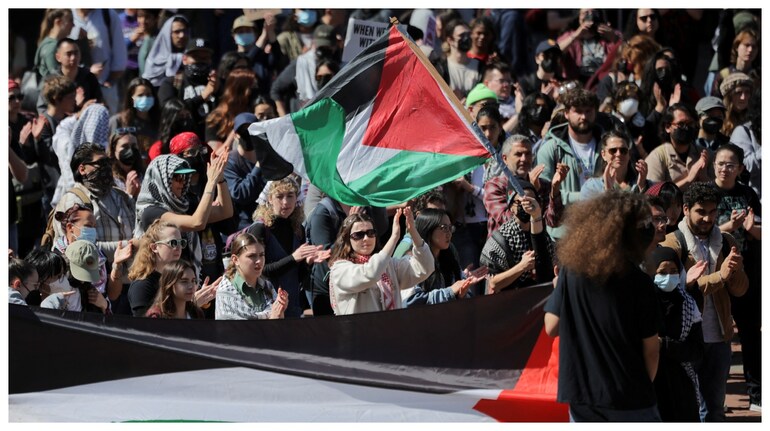
Columbia University is struggling with a severe political and financial crisis following the cancellation of $400 million in federal grants and contracts by the Trump administration. The action comes in response to charges that the university did not adequately protect its Jewish students from pro-Palestinian protesters, heightening both outside criticism and internal conflict within the university, as reported by the Wall Street Journal.
Federal action over antisemitism charges
The Trump administration made the move amid months of fear about how Columbia treated pro-Palestinian demonstrations, especially after the Gaza crisis. The atmosphere was tense last weekend when Mahmoud Khalil, a Columbia student, was arrested by Homeland Security officials as the first person held for his actions in campus demonstrations.
White House press secretary Karoline Leavitt said Khalil's actions, along with those of other unnamed students, are in line with pro-Hamas sentiment. She faulted Columbia for not cooperating with federal attempts to identify those taking part in "anti-American, antisemitic, and pro-Hamas" activities. "Trump is not going to tolerate that," Leavitt asserted. "We expect all America's colleges and universities to be in line with this administration's policy."
The loss of federal funding has already had a significant impact. Faculty members were informed on Monday about the frozen funds, causing widespread frustration. “People are very angry, people are in tears. They are so frustrated,” said Brent Stockwell, chair of the Department of Biological Sciences. “It feels like you’re on a bus that’s going over the cliff and you’re just asking for someone to take charge and drive.”
Widening faculty rifts
The crisis also exposed wide divisions among Columbia's faculty. Last February, seven Jewish professors at Columbia's schools of engineering, medicine, and business sat down with interim President Katrina Armstrong to call for more stringent controls over campus protests. Among their recommendations were prohibitions on mask-wearing at demonstrations. But Armstrong was seen to be dragging her feet.
Armstrong was defended by a university representative, who said that she and her staff "have taken firm actions to fight antisemitism, strengthen Columbia's educational mission, and secure our community."
But frustration remains among the faculty. Scientists and engineers, who devoted much of their time to academic pursuits, now feel they are being unfairly penalized by the budget cuts. "We're actually quite busy. We're actually doing our job," said cancer researcher Larisa Geskin. "We are trying to save lives. We don't have the time to ruminate on all this."
In contrast, humanities academics, some spurred by Columbia's postcolonial studies tradition, have been more vociferous in their calls for Palestinian rights. These faculty have pushed back against attempts to apply more draconian protest regulations, citing the need for free speech and academic freedom.
Leadership under pressure
The university's campus became a hotpoint in the controversy surrounding the Israeli-Palestinian conflict. There were heightened tensions in April to the point of shifting classes to online, prompting a rabbi on campus to advise Jewish students not to go back after Passover for reasons of safety. The row hit its peak as President Minouche Shafik resigned in August.
Interim President Armstrong is now under increasing pressure from faculty, students, and federal officials. Others, such as Ari Shrage, co-founder of the Columbia Jewish Alumni Association, believe that the leadership of the university did not act boldly enough. "Because of the failure of leadership at the university who did not pay many, many warnings any heed, Trump had no choice," Shrage stated.
A turning point for Columbia
As Columbia faces both outside political pressure and internal conflict, its future hangs in the balance. Some anticipate that the crisis will bring better leadership and clearer policies. Others caution that federal intervention would undermine academic freedom and exacerbate rifts.
Until now, Columbia has been at a crossroads, with difficult choices regarding the balance of free expression, campus security, and political realities.
Discover the latest Business News, Sensex, and Nifty updates. Obtain Personal Finance insights, tax queries, and expert opinions on Moneycontrol or download the Moneycontrol App to stay updated!
Find the best of Al News in one place, specially curated for you every weekend.
Stay on top of the latest tech trends and biggest startup news.