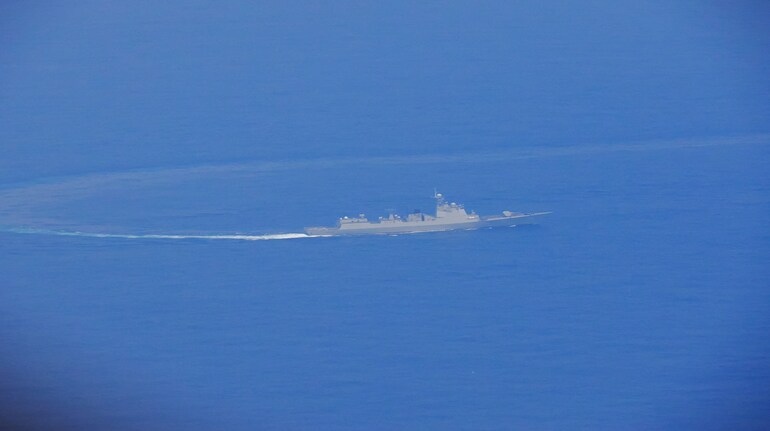
A new report from the Washington-based Center for Strategic and International Studies (CSIS) has exposed how China is quietly using civilian fishing boats to advance military goals in the Taiwan Strait.
The study, published earlier this month and reported by the Taipei Times, reveals that Beijing’s so-called 'maritime militia,' a fleet of unmarked, dual-use fishing vessels, is increasingly being deployed for surveillance, intimidation, and information-gathering near Taiwan’s waters.
These operations, analysts say, allow China to exert pressure on Taiwan and its allies while avoiding open military confrontation, a tactic often described as gray zone warfare.
315 vessels under watch and hundreds behaving suspiciously
The CSIS team tracked GPS and automatic identification system (AIS) data from 315 China-flagged fishing boats to distinguish legitimate commercial vessels from those acting under military direction.
Their findings were striking: between 128 and 209 ships were flagged as 'suspicious.' Many spent over 30 percent of their time in PLA training zones, areas with little to no fishing activity, or less than 10 percent in actual fishing waters.
Even more concerning, 209 vessels displayed AIS irregularities, including 'going dark' (switching off their tracking systems), changing identifiers, or altering route data during Chinese military drills.
One vessel, according to CSIS, used 11 different maritime identification numbers and changed them 1,300 times in a single year, a red flag for intelligence analysts tracking covert naval movements.
Disappearing identities, shell companies, and a digital trail
Some vessels reportedly changed their registered names in international databases during signal blackouts, suggesting an organised effort to obscure their activities.
The think tank’s researchers said these ships are likely operated through a web of shell companies connected to Chinese state-controlled entities. They urged Western intelligence agencies to map and expose these ownership networks to identify the real actors behind them.
“Publishing and penalising a continually updated blacklist of repeat offenders through sanctions on owners, insurers, and operators would increase costs and diminish deniability,” CSIS recommended as per the Associated Press report.
Taiwan’s growing concern, and its technological pushback
The revelations come as Taiwan’s Ministry of National Defense reported a sharp escalation in Chinese military activity. From January to September this year, the People’s Liberation Army (PLA) conducted 3,003 sorties across the Taiwan Strait’s median line and sent 2,000 vessels into Taiwan’s exclusive economic zone (EEZ).
China’s military movements around Taiwan have now become a near-monthly affair, according to the report. In response, Taipei is developing long-range uncrewed reconnaissance vehicles equipped with optical and infrared sensors, radar, and real-time data feeds to strengthen air and naval surveillance.
A quiet war on the water
For years, maritime analysts cited by Associated Press, have warned that China’s fishing fleets double as an unofficial naval force, capable of harassment, data collection, and supply support, without technically crossing into acts of war.
This latest CSIS report underscores that point: China’s 'gray zone' strategy is not about firing weapons, but about shaping perceptions, testing limits, and stretching Taiwan’s defense resources thin.
The blurred line between fishermen and foot soldiers is turning the Taiwan Strait into one of the world’s most complex strategic flashpoints, where the next confrontation might not begin with missiles, but with boats that shouldn’t even be there.
Discover the latest Business News, Sensex, and Nifty updates. Obtain Personal Finance insights, tax queries, and expert opinions on Moneycontrol or download the Moneycontrol App to stay updated!
Find the best of Al News in one place, specially curated for you every weekend.
Stay on top of the latest tech trends and biggest startup news.